來源Engadget•較早收集於 50m
Android 數位車鑰匙的安全性分析
#mobile-security#authentication#hardware-securityandroid-digital-car-keyandroidgoogle
💡了解 Android 如何處理安全的硬體支援驗證,這是行動安全開發者的關鍵模式。
⚡ 30 秒速覽
有什麼變化
利用硬體支援的安全模組進行金鑰儲存
為什麼重要
隨著基於行動裝置的驗證成為標準,開發者必須了解硬體安全與行動作業系統權限之間的交集。
下一步行動
查閱 Android Keystore 系統文件,了解如何在您自己的應用程式中實作安全的憑證儲存。
誰應關注:Developers & AI Engineers
關鍵要點
- •利用硬體支援的安全模組進行金鑰儲存
- •整合 UWB 與 NFC 協定以進行安全的近場驗證
- •分析基於行動裝置存取的威脅向量與緩解策略
🧠 深度解析
背景與延伸:來自公開資料,非原文內容。引用 29 個來源。
🔑 增強重點摘要
- •The Car Connectivity Consortium (CCC) Digital Key standard, which Android digital car keys adhere to, has evolved through several releases (2.0, 3.0, 4.0), progressively integrating NFC, Bluetooth Low Energy (BLE), and Ultra-Wideband (UWB) to enhance security, convenience, and cross-platform interoperability.
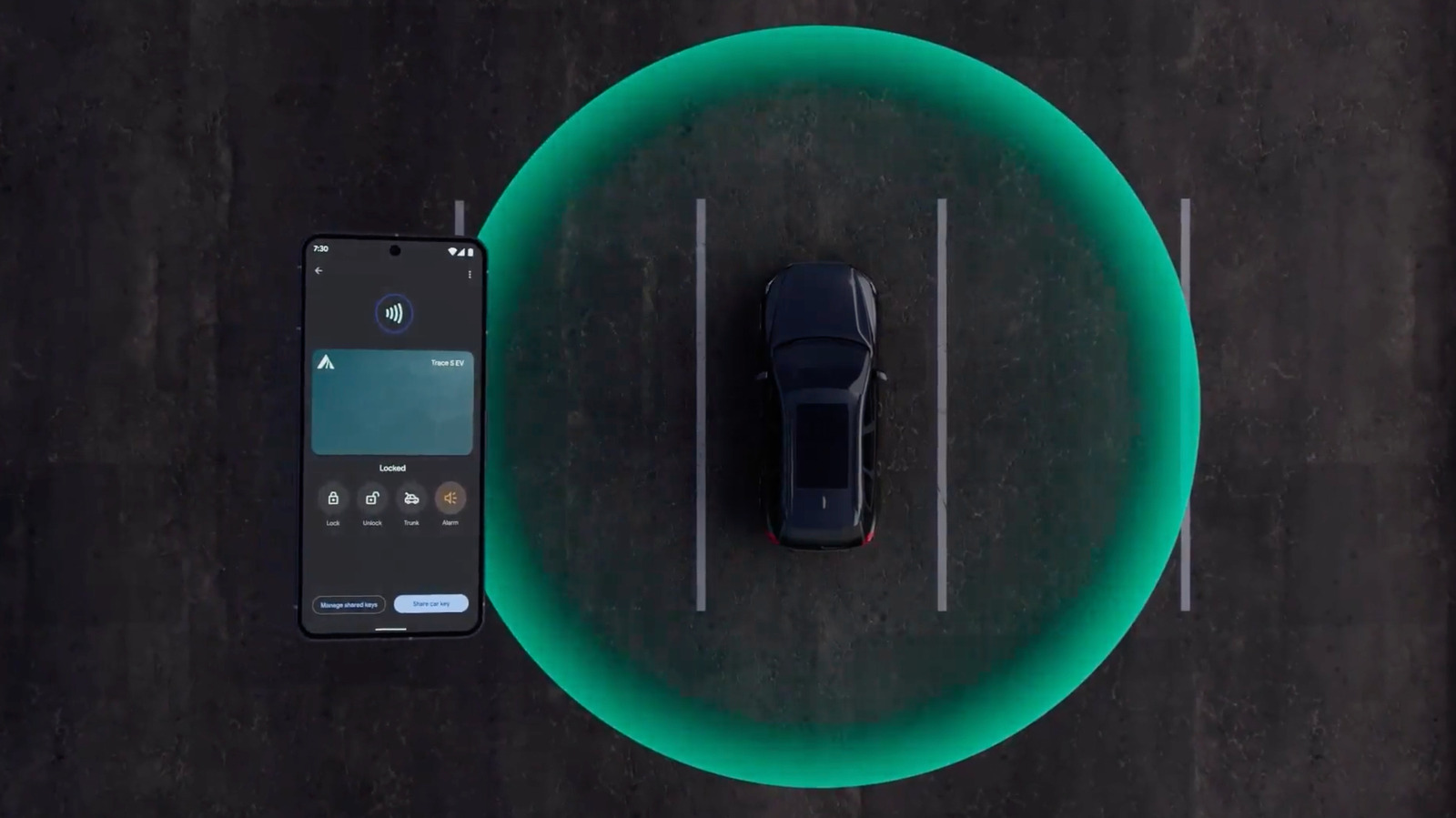
- •Digital car keys leverage UWB's precise time-of-flight (ToF) measurements for secure ranging, making them highly resistant to relay attacks, a common vulnerability in traditional key fobs. This UWB-based distance bounding, combined with cryptographic security, ensures the vehicle unlocks only when the authenticated device is physically nearby.
- •Modern digital car key implementations, such as those in Google Wallet, offer granular key sharing capabilities, allowing owners to grant different levels of access (e.g., co-owner, guest, service) with specific permissions, which can be remotely revoked or suspended, providing superior control compared to physical keys.
- •Secure Elements (SEs) in both smartphones and vehicles are fundamental to the security architecture, isolating cryptographic keys and protecting them from tampering, cloning, and side-channel attacks, ensuring a high level of protection for digital key credentials.
- •The CCC Digital Key framework establishes a secure communication channel between the mobile device and the vehicle, utilizing public key protocols and end-to-end encryption, with the owner device signing the friend device's digital key and obtaining necessary OEM server approvals for secure sharing.
📊 競品分析▸ Show
markdown
| Feature/Aspect | Android Digital Key (Google Wallet) | Apple CarKey | Samsung Digital Key (Samsung Wallet) |
|---|---|---|---|
| Supported Protocols | NFC, UWB, BLE | NFC, UWB, BLE | NFC, UWB |
| Key Storage | Hardware-backed Secure Element | Secure Element (NFC/ApplePay chip) | Integrated Secure Element, Samsung Knox |
| Key Sharing | Yes, with granular permission levels (co-owner, guest, service) | Yes, via Messages.app with customizable access levels | Yes, with identity verification (fingerprint) |
| Offline Functionality | Yes, for payments, transit, hotel, and car keys | Yes, including Power Reserve mode for low battery | Yes, NFC for low battery |
| Relay Attack Mitigation | UWB with Time-of-Flight (ToF) measurements | UWB with cryptographic timestamps | UWB proximity detection |
| Device Compatibility | Pixel 6+, Samsung Galaxy S21+, select Android 12+ devices | iPhone XR+, Apple Watch Series 5+ | Galaxy S20 series (excluding S20 FE), Note20 series, S21+, Z Flip/Fold series (Android 13+ for new features) |
| Data Collection | Google collects usage info, crash logs, personal/device identifiers (encrypted in transit) | Apple states no data is sent to Apple when using CarKey | Not explicitly detailed, but keys are securely stored locally |
🛠️ 技術深入
- Secure Element (SE) Integration: Digital keys are stored in a hardware-backed Secure Element within the mobile device, providing a tamper-resistant environment for cryptographic keys. This protects against hardware and software-based attacks, including tampering, cloning, and side-channel attacks.
- Multi-Protocol Authentication: The system utilizes a combination of wireless technologies:
- Bluetooth Low Energy (BLE): Used for initial discovery and establishing a secure connection between the vehicle and the smartphone.
- Ultra-Wideband (UWB): Provides highly accurate distance measurement (centimeter-level precision) using Time-of-Flight (ToF) measurements. This is crucial for preventing relay attacks by verifying the true proximity of the device to the vehicle. UWB signals can also determine direction.
- Near Field Communication (NFC): Serves as a secure backup method, especially for low-battery situations, requiring the device to be tapped close to the car's reader due to its very short operational range, which inherently reduces relay attack risk.
- Cryptographic Standards: Elliptic Curve Cryptography (ECC) is used for key pair generation and public key infrastructure (PKI), while Advanced Encryption Standard (AES) is employed for encrypting communications between the smartphone and the vehicle.
- Secure Ranging: UWB implements secure ranging through Scrambled Timestamp Sequences (STS) and encrypts data with AES to prevent spoofing of timestamps, ensuring the vehicle accurately calculates the distance to the digital key.
- Key Lifecycle Management: The system supports secure key creation, provisioning, revocation, and expiration, often managed through a secure channel with the vehicle OEM server. Shared keys can be instantly revoked or temporarily suspended.
- Offline Operation: Digital keys are designed to function even without a network connection, with NFC often enabling access when the smartphone's battery is critically low.
🔮 前景展望基於引用來源的 AI 分析
UWB will become a ubiquitous standard for secure passive entry in vehicles.
The superior accuracy and relay attack resistance of UWB, as integrated into CCC Digital Key 3.0 and 4.0, are driving its adoption, with predictions of UWB-enabled keys in approximately 40% of cars by 2030.
Digital key technology will expand beyond automotive to other access control systems, such as smart homes.
Samsung has already launched Digital Home Key in March 2026, leveraging similar NFC and UWB technology and secure elements within Samsung Wallet to unlock compatible smart door locks, indicating a broader trend towards consolidated digital access.
Increased interoperability and standardization will accelerate the global adoption of digital keys.
The Car Connectivity Consortium (CCC) is actively working on cross-platform and cross-version interoperability with standards like Digital Key 4.0, which aims for seamless functionality across different devices and vehicle manufacturers, reducing user friction and fostering wider acceptance.
⏳ 時間線
2019-07
Early R&D projects exploring smartphone-based car key applications with BLE encryption and session tokens for security.
2020-06
Apple officially announces Car Key feature for iOS 14, with the 2021 BMW 5 Series being the first to support it.
2020-09
CCC Digital Key 2.0 standardizes NFC-based vehicle access.
2021-07
CCC Digital Key 3.0 specification finalized, adding BLE and UWB for secure hands-free unlocking and enhanced security against relay attacks.
2023-12
CCC Digital Key Certification becomes available for NFC implementation.
2025-07
CCC Digital Key 4.0 specification announced, focusing on cross-platform and cross-version interoperability, integrating NFC, BLE, and UWB.
2026-03
Samsung launches Digital Home Key in Samsung Wallet, expanding digital key capabilities beyond vehicles to smart homes.
2026-05
Google Wallet updates digital car key sharing with new permission levels (co-owner, guest, service) and easier key transfer between user devices.
📎 來源 (29)
Factual claims are grounded in the sources below. Forward-looking analysis is AI-generated interpretation.
- vicone.com
- carconnectivity.org
- carconnectivity.org
- nextgen-technology.com
- android.com
- nxp.com
- helpnetsecurity.com
- qorvo.com
- firaconsortium.org
- androidpolice.com
- androidauthority.com
- android.com
- commoncriteriaportal.org
- samsung.com
- autoevolution.com
- carconnectivity.org
- apple.com
- applemagazine.com
- samsung.com
- wwdcnotes.com
- samsung.com
- samsung.com
- bgr.com
- google.com
- mobokey.com
- wirelesscar.com
- samsungmobilepress.com
- carconnectivity.org
- transparencymarketresearch.com
📰
AI 週報
閱讀本週精選 AI 大事摘要 →
👉相關動態

AI 策展新聞聚合。所有內容版權歸原始發布者所有。
原始來源: Engadget ↗
每週電子報
每週一封,可隨時退訂。