Search PDF Charts Without OCR
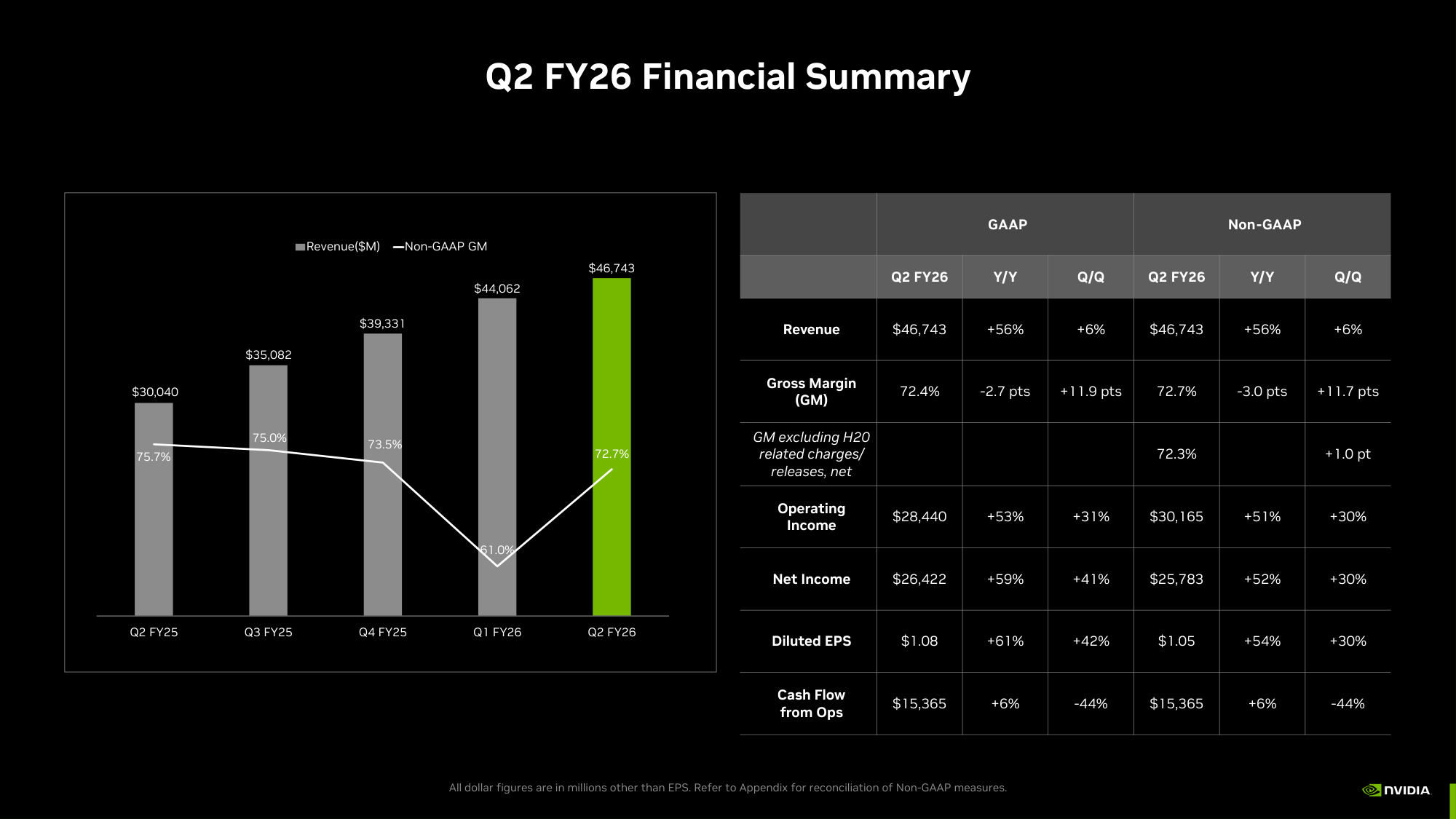
💡Learn how to make chart-heavy PDFs searchable without OCR, chunking, or text extraction.
⚡ 30-Second TL;DR
What Changed
Targets charts and tables in PDFs, which are difficult for traditional RAG pipelines to process.
Why It Matters
This approach could improve retrieval quality for visually structured documents where text-only indexing loses important context. AI teams building document assistants may be able to simplify ingestion pipelines and preserve more page-level information.
What To Do Next
Prototype a Weaviate index using late-interaction multi-vector retrieval on a sample set of chart-heavy PDFs, then compare it with your current OCR-based RAG pipeline.
Key Points
- •Targets charts and tables in PDFs, which are difficult for traditional RAG pipelines to process.
- •Uses late-interaction multi-vector retrieval to search based on the visual appearance of PDF pages.
- •Eliminates the need for OCR, document chunking, and conventional text extraction in the proposed workflow.
🧠 Deep Insight
Background and context from public sources — not the original article. 6 sources cited.
🔑 Enhanced Key Takeaways
- •The industry is shifting toward treating PDFs as visual layouts rather than text-based documents, addressing the 'dark data' problem where 80% of enterprise information remains trapped in non-searchable formats.
- •The methodology leverages the ChartNet dataset, a million-scale multimodal training foundation released in June 2026, to improve AI reasoning capabilities for visual data.
- •This approach aligns with the rise of Intelligent Document Processing (IDP), a market sector projected to reach up to $90 billion by the early 2030s due to the high costs of manual data extraction.
- •Unlike legacy OCR engines like Tesseract or AWS Textract, this visual-first retrieval method avoids the structural failures common when converting complex tables and charts into flat text.
- •The workflow integrates with modern AI frameworks, allowing document parsing to function as a 'typed tool call' for agentic retrieval systems, similar to recent advancements in Mistral's Agentic Search.
📊 Competitor Analysis▸ Show
| Feature | Weaviate (Visual Retrieval) | Docling / LlamaParse | Legacy OCR (Tesseract/Textract) |
|---|---|---|---|
| Core Approach | Late-interaction multi-vector | Vision-based parsing | Character recognition |
| Pricing | Open-source/Managed | Tiered/Usage-based | Per-page/API cost |
| Benchmarks | High (Visual context) | High (Structural parsing) | Low (Complex layouts) |
🛠️ Technical Deep Dive
- Utilizes late-interaction multi-vector retrieval to map visual page embeddings directly to query vectors.
- Bypasses traditional text-extraction pipelines, reducing latency associated with OCR-based document indexing.
- Employs vision-based model architectures capable of interpreting spatial relationships in charts and tables without converting them to intermediate text formats.
- Designed for integration with AI agent frameworks to enable multi-step retrieval loops for complex document navigation.
🔮 Future ImplicationsAI analysis grounded in cited sources
⏳ Timeline
📎 Sources (6)
Factual claims are grounded in the sources below. Forward-looking analysis is AI-generated interpretation.
Weekly AI Recap
Read this week's curated digest of top AI events →
👉Related Updates
AI-curated news aggregator. All content rights belong to original publishers.
Original source: Weaviate Blog ↗
This is a summary, not the original. Read the source, or get the weekly briefing.
Weekly AI briefing
One email a week. Unsubscribe anytime.