🇨🇳cnBeta (Full RSS)•Stalecollected in 10h
Samsung Warns Memory Shortage to 2027
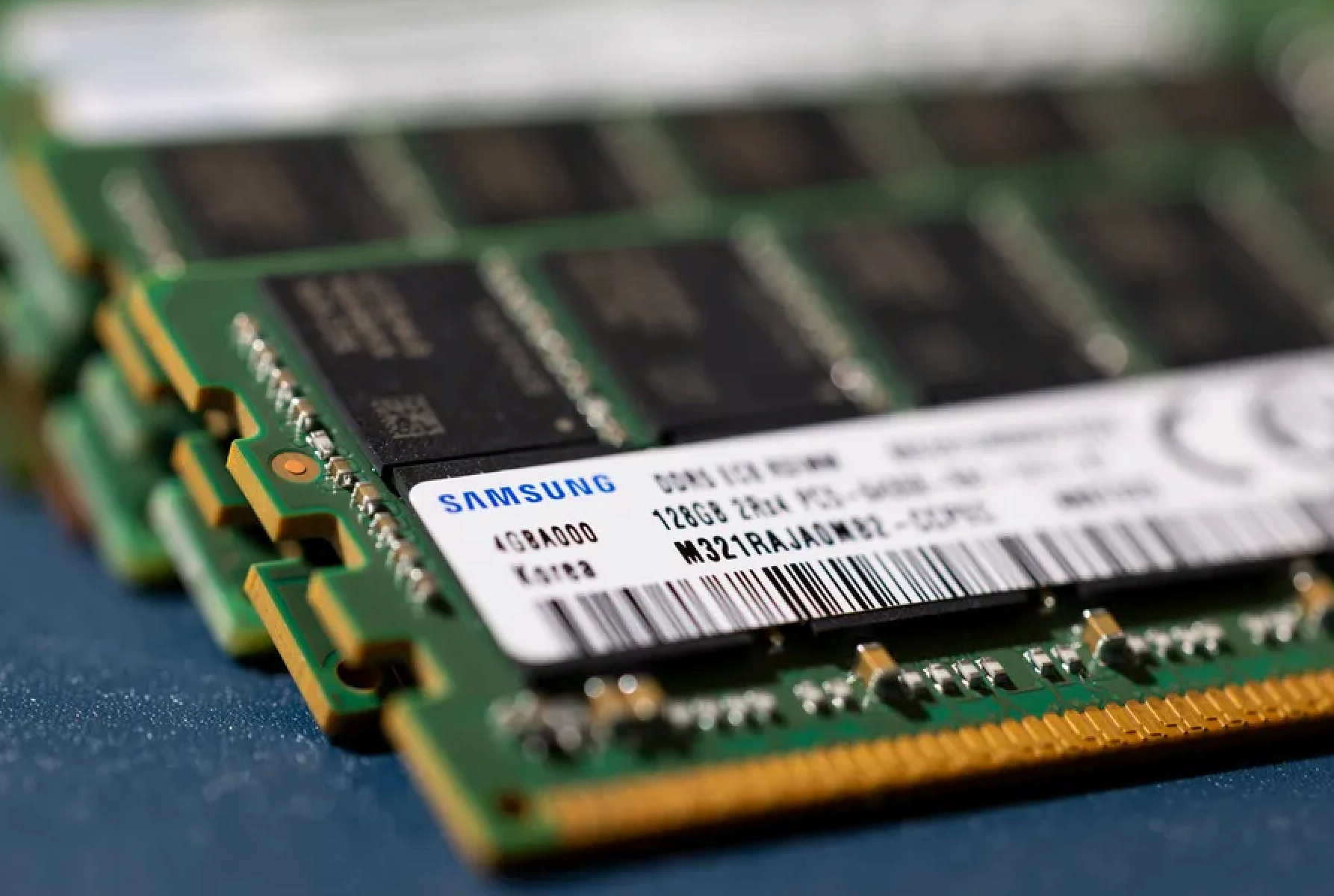
💡AI data center memory crunch to 2027 hikes costs—plan supply now
⚡ 30-Second TL;DR
What Changed
Memory shortage expected to last until 2027
Why It Matters
AI practitioners face higher hardware costs and delays in scaling data centers. Securing memory supply becomes critical for long-term AI infrastructure planning.
What To Do Next
Secure long-term HBM contracts from Samsung or alternatives for AI cluster builds.
Who should care:Enterprise & Security Teams
Key Points
- •Memory shortage expected to last until 2027
- •Primarily driven by surging AI data center demand
- •Impacts phones, handhelds, and broader electronics
- •Pushing up prices across multiple product categories
🧠 Deep Insight
AI-generated analysis for this event.
🔑 Enhanced Key Takeaways
- •Samsung is prioritizing High Bandwidth Memory (HBM3E and HBM4) production capacity to satisfy hyperscaler demand, which is cannibalizing wafer allocation for legacy DDR4 and DDR5 consumer-grade DRAM.
- •The supply constraint is exacerbated by a transition period in lithography equipment, specifically the slow ramp-up of high-NA EUV scanners required for sub-10nm process nodes.
- •Industry analysts note that Samsung's capital expenditure (CapEx) strategy has shifted toward 'AI-first' fab conversion, intentionally limiting the supply growth of NAND flash to stabilize falling average selling prices (ASPs) in the storage sector.
📊 Competitor Analysis▸ Show
| Feature | Samsung Electronics | SK Hynix | Micron Technology |
|---|---|---|---|
| HBM Market Position | Aggressive capacity expansion | Current market leader in HBM3E | Focused on high-capacity HBM3E |
| Process Node | 1b nm DRAM | 1b nm DRAM | 1-gamma (1γ) DRAM |
| AI Strategy | Vertical integration (Foundry + Memory) | Pure-play memory focus | High-density HBM focus |
🛠️ Technical Deep Dive
- •HBM3E architecture utilizes 12-high and 16-high stacks to achieve bandwidths exceeding 1.2 TB/s per stack.
- •Implementation of Advanced Thermal Compression Non-Conductive Film (TC-NCF) to manage heat dissipation in high-density 3D-stacked DRAM modules.
- •Transition to 1b-nanometer process technology for DRAM, utilizing multi-patterning EUV lithography to improve bit density and power efficiency.
- •Integration of CXL (Compute Express Link) 2.0/3.0 controllers to enable memory pooling and expansion in AI server architectures.
🔮 Future ImplicationsAI analysis grounded in cited sources
Consumer electronics manufacturers will face a minimum 15-20% increase in bill-of-materials (BOM) costs for memory components through 2026.
The diversion of wafer capacity to high-margin HBM products creates a structural supply deficit for standard DRAM, granting suppliers significant pricing power.
Smartphone OEMs will shift toward lower-capacity memory configurations in mid-range devices to offset rising component costs.
To maintain retail price points, manufacturers are likely to reduce base RAM specifications to mitigate the impact of sustained memory inflation.
⏳ Timeline
2023-05
Samsung announces mass production of 12nm-class DRAM to address AI-driven demand.
2024-02
Samsung unveils 36GB HBM3E 12-high stack, targeting next-generation AI accelerators.
2025-01
Samsung shifts focus to HBM4 development, signaling a pivot toward custom AI memory solutions.
2025-11
Samsung reports record-high HBM revenue share in Q4 earnings call, confirming supply constraints.
📰
Weekly AI Recap
Read this week's curated digest of top AI events →
👉Related Updates
Same topic
Explore #memory-shortage
Same product
More on samsung-memory
Same source
Latest from cnBeta (Full RSS)
Taobao expands instant retail 'Convenience Store' network
虎嗅•Jul 29

Samsung Secures $200B Broadcom AI Infrastructure Deal
cnBeta (Full RSS)•Jul 25

PACA: Open-source tool for ancient fossil coordinate mapping
cnBeta (Full RSS)•Jul 28
First atmosphere detected on habitable-zone exoplanet
cnBeta (Full RSS)•Jul 25
AI-curated news aggregator. All content rights belong to original publishers.
Original source: cnBeta (Full RSS) ↗