Samsung Unveils Next-Gen 3D Memory for Data Centers
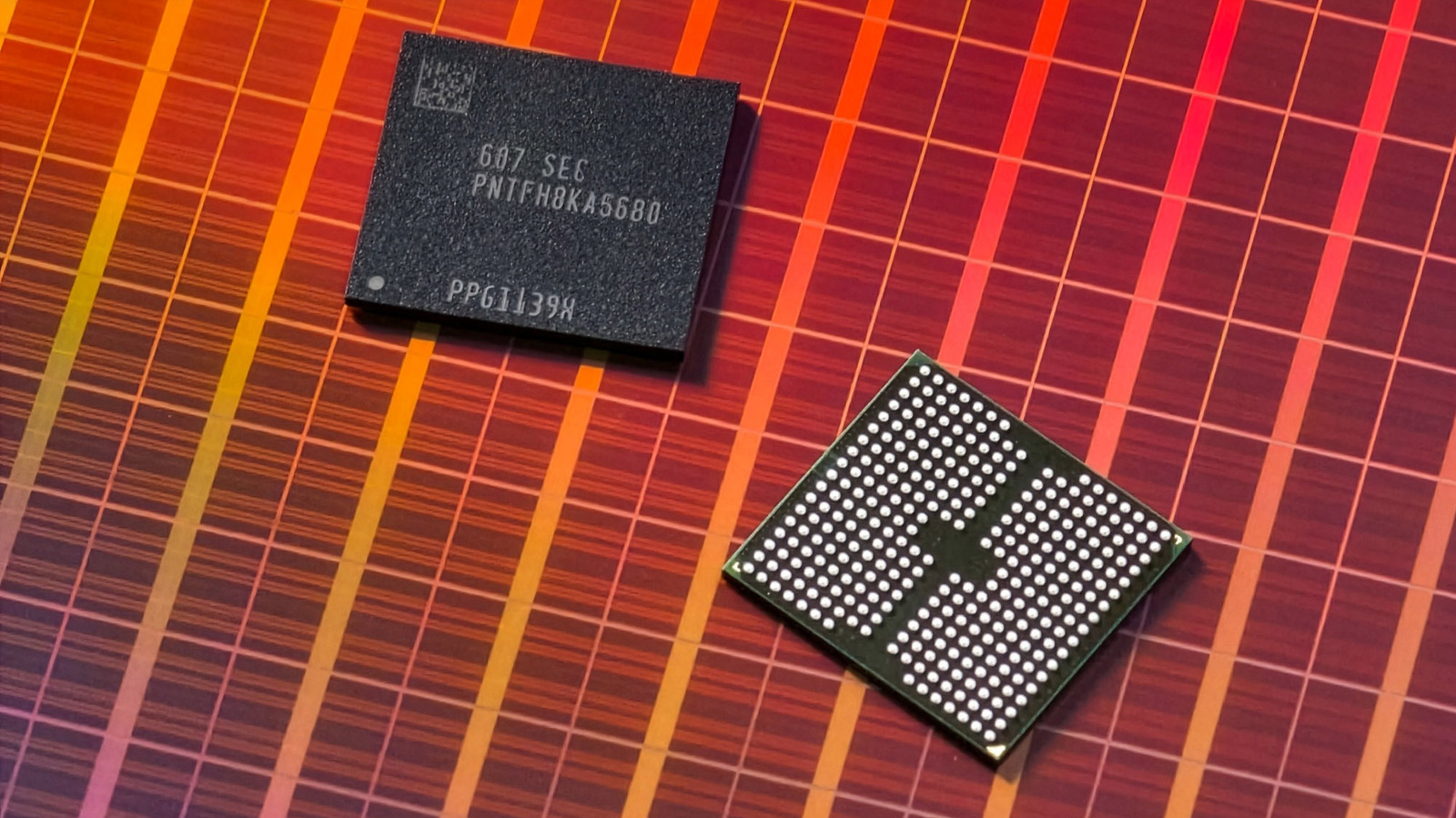
Samsung's 3D memory could shape future AI data-center capacity, even if it will not lower DDR5 prices soon.
30-Second TL;DR
What Changed
Samsung's new memory technology uses a 3D design approach.
Why It Matters
Higher-capacity and more advanced memory could support future AI infrastructure and data-center deployments. However, consumer AI developers may see little immediate benefit because the announcement is not focused on affordable PC memory.
What To Do Next
Track Samsung's detailed specifications and compare its future data-center memory bandwidth and capacity against the requirements of your AI inference workloads.
Key Points
- •Samsung's new memory technology uses a 3D design approach.
- •The products are primarily targeted at data-center workloads.
- •The announcement offers no immediate solution for high DDR5 prices in PCs and consoles.
Deep Insight
AI-generated analysis for this event — not the original article.
Enhanced Key Takeaways
- •The new architecture utilizes Samsung's proprietary 'Vertical Channel Transistor' (VCT) structure to mitigate leakage current and improve cell density.
- •This memory generation integrates advanced CXL (Compute Express Link) 3.1 interfaces to enable memory pooling and expansion across server racks.
- •Samsung has optimized these modules for AI inference workloads, specifically targeting the high-bandwidth requirements of Large Language Model (LLM) processing.
- •The manufacturing process leverages a transition to 10nm-class (1c) DRAM nodes, marking a significant shift in lithography efficiency for high-capacity modules.
- •Thermal management is addressed through a new integrated heat spreader design that utilizes synthetic diamond-like carbon (DLC) coatings for improved heat dissipation.
Competitor Analysis
- Samsung 3D Memory
- 3D VCT DRAM
- SK Hynix HBM3E/4
- HBM3E/4 Stacked
- Micron CXL/DDR5
- Standard/CXL DRAM
- Samsung 3D Memory
- Density/Efficiency
- SK Hynix HBM3E/4
- Bandwidth/AI
- Micron CXL/DDR5
- Cost/Scalability
- Samsung 3D Memory
- Hyperscale Data Centers
- SK Hynix HBM3E/4
- AI Accelerators
- Micron CXL/DDR5
- Enterprise/Consumer
| Feature | Samsung 3D Memory | SK Hynix HBM3E/4 | Micron CXL/DDR5 |
|---|---|---|---|
| Architecture | 3D VCT DRAM | HBM3E/4 Stacked | Standard/CXL DRAM |
| Primary Focus | Density/Efficiency | Bandwidth/AI | Cost/Scalability |
| Market Segment | Hyperscale Data Centers | AI Accelerators | Enterprise/Consumer |
Technical Deep Dive
- Architecture: Utilizes a 3D stacked DRAM cell structure that eliminates the need for capacitor-less designs in specific tiers.
- Interface: Supports CXL 3.1 protocol, allowing for cache-coherent memory expansion and direct memory access (DMA) optimization.
- Node: Fabricated on the 1c DRAM process node, providing a 20% improvement in power efficiency compared to 1b nodes.
- Capacity: Modules are designed to support up to 1TB per DIMM slot in specific server configurations.
- Latency: Optimized for near-memory computing, reducing data movement overhead by approximately 15% in AI inference tasks.
Future ImplicationsAI analysis grounded in cited sources
Timeline
- 2023-05Samsung announces development of CXL 2.0-based memory modules.
- 2024-02Samsung showcases 36GB HBM3E memory for AI applications.
- 2025-01Samsung begins mass production of 1c DRAM nodes.
- 2026-03Samsung expands its CXL memory portfolio to include high-capacity 3D-stacked solutions.
Weekly AI Recap
Read this week's curated digest of top AI events →
Related Updates

AI-curated news aggregator. All content rights belong to original publishers.
Original source: Engadget ↗
This is a summary, not the original. Read the source, or get the weekly briefing.
The weekly digest
One email a week. Unsubscribe anytime.