Samsung Poised to Reclaim Smartphone Leadership
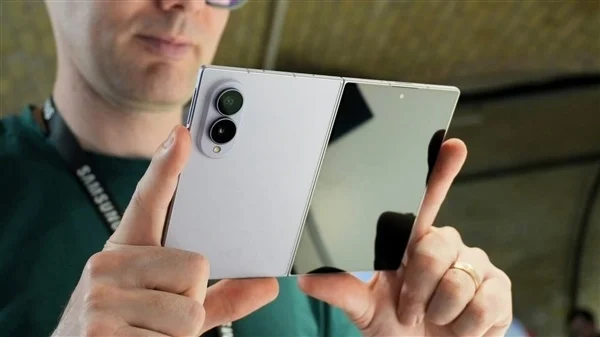
💡Samsung’s supply-chain resilience offers clues for managing AI hardware memory costs and shortages.
⚡ 30-Second TL;DR
What Changed
Counterpoint Research expects Samsung to retake the global smartphone leadership position.
Why It Matters
Samsung’s resilience highlights the strategic value of controlling memory supply and distribution during component shortages. AI companies and hardware startups should expect continued pressure on memory availability and procurement costs.
What To Do Next
Review your next two quarters of DRAM and HBM procurement assumptions, and model inference costs under a 14.3% component-market contraction scenario.
Key Points
- •Counterpoint Research expects Samsung to retake the global smartphone leadership position.
- •Global smartphone shipments are forecast to fall 14.3% in 2026 amid worsening memory shortages.
- •Samsung is expected to increase shipments by 0.8%, outperforming most competitors.
- •Its vertically integrated supply chain and established distribution network may reduce exposure to memory price inflation.
🧠 Deep Insight
Background and context from public sources — not the original article. 16 sources cited.
🔑 Enhanced Key Takeaways
- •Global smartphone shipments declined 6% year-over-year in Q1 2026, with Apple leading for the first time with a 21% market share, while Samsung's shipments also declined 6% year-over-year, holding a 20% market share, attributed to a delayed Galaxy S26 launch and weakness in the entry-tier segment.
- •The ongoing memory crunch, primarily driven by the reallocation of manufacturing capacity towards high-bandwidth memory (HBM) for AI data centers, is projected to persist until late 2027, significantly impacting the supply and increasing costs of general-purpose memory for smartphones.
- •Samsung's strategic focus for 2026 prioritizes market share expansion and enhancing the competitiveness of its Device eXperience (DX) business over immediate profitability, leveraging its unique position as both a major memory manufacturer and a smartphone OEM.
- •In Q2 2026, Samsung secured a 22% global market share with 60.5 million shipments, marking a 5% increase from Q2 2025, while major Chinese brands such as Xiaomi, OPPO, and Vivo experienced double-digit declines in shipments during the same period.
- •The premium smartphone segment (devices with a wholesale average selling price of $600 and above) demonstrated resilience, growing 5% year-over-year in H1 2026 and reaching a record 29% share of overall global smartphone sales, as rising memory costs disproportionately impacted lower- and mid-tier segments.
📊 Competitor Analysis▸ Show
| Competitor | Q2 2026 Global Market Share | Q2 2026 Shipment Trend (YoY) | Impact of Memory Shortage |
|---|---|---|---|
| Samsung | 22% (or 24%) | +5% (or strongest growth among top five) | Less impacted due to integrated supply chain and memory manufacturing capabilities; prioritizing market share over profit. |
| Apple | 20% | +24% | Relatively insulated due to ultra-premium positioning and highly integrated supply chain; strong demand for iPhone 17 series. |
| Xiaomi | 11% | -26% | Heavily impacted due to reliance on budget segments and rising component costs. |
| OPPO | Not specified (double-digit decline) | Double-digit decline, -17% (shipments) | Heavily impacted due to reliance on budget segments and rising component costs. |
| Vivo | Not specified (double-digit decline) | Double-digit decline, -18% (shipments) | Heavily impacted due to reliance on budget segments and rising component costs. |
| Honor | Not specified (grew in specific regions) | +35% in Middle East, +53% in Africa, +15% in Southeast Asia (H1 2026) | Showing growth in specific emerging markets despite overall market decline. |
🛠️ Technical Deep Dive
- Samsung's vertical integration strategy enables it to control and produce a significant portion of its smartphone components in-house, including memory chips and semiconductors. This reduces dependency on external suppliers, lowers manufacturing costs, and ensures a stable supply of critical components.
- This in-house production capability allows Samsung to equip its smartphones with the latest technology at competitive prices and supports continuous innovation.
- For its 2026 smartphone roadmap, Samsung is focusing on introducing next-generation 'agentic AI experiences' in its Galaxy S26 series, powered by a second-generation custom application processor.
- The company is also exploring new foldable form factors and aims to make future Galaxy devices slimmer and lighter.
🔮 Future ImplicationsAI analysis grounded in cited sources
⏳ Timeline
📎 Sources (16)
Factual claims are grounded in the sources below. Forward-looking analysis is AI-generated interpretation.
Weekly AI Recap
Read this week's curated digest of top AI events →
👉Related Updates

AI-curated news aggregator. All content rights belong to original publishers.
Original source: cnBeta (Full RSS) ↗
This is a summary, not the original. Read the source, or get the weekly briefing.
Weekly AI briefing
One email a week. Unsubscribe anytime.