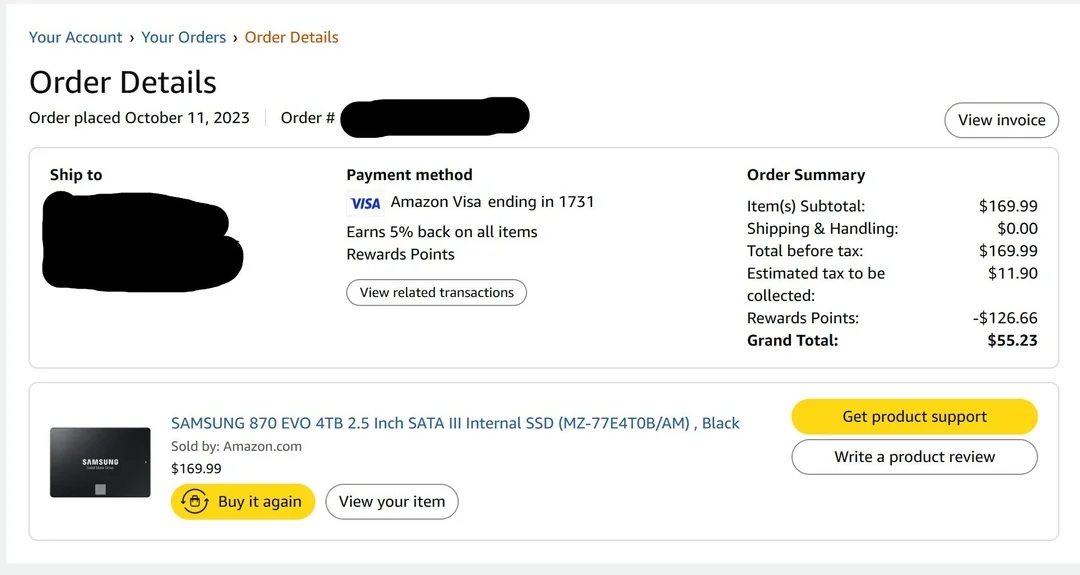
Samsung 4TB SSD Prices Surge Sixfold
💡AI workloads are making storage capacity more expensive—check whether your next dataset build is exposed.
⚡ 30-Second TL;DR
What Changed
The affected drive is a Samsung 4TB SATA III consumer SSD.
Why It Matters
Higher SSD prices could raise the cost of local datasets, model checkpoints, vector indexes, and inference caches for AI teams. Startups with rapidly expanding storage needs may face more procurement risk and should plan capacity purchases earlier.
What To Do Next
Use the AWS Pricing Calculator to compare a 12-month local-SSD and cloud-storage plan for your next AI dataset or checkpoint workload.
Key Points
- •The affected drive is a Samsung 4TB SATA III consumer SSD.
- •Its price has increased approximately sixfold in under three years.
- •AI-related demand and DRAM shortages are contributing to broader storage-market volatility.
🧠 Deep Insight
AI-generated analysis for this event.
🔑 Enhanced Key Takeaways
- •The price surge is primarily driven by the transition of NAND flash production capacity toward High Bandwidth Memory (HBM) to satisfy the massive requirements of AI accelerators.
- •Enterprise-grade SSD demand has cannibalized consumer supply chains, as hyperscalers prioritize bulk storage procurement for AI training data lakes.
- •Samsung has shifted a significant portion of its legacy 3D NAND production lines to support newer, higher-density nodes, creating a supply vacuum for older SATA III interface drives.
- •The 'sixfold' price increase is exacerbated by a shift in Samsung's retail strategy, which has moved away from aggressive discounting on legacy SATA models in favor of promoting NVMe PCIe 4.0/5.0 alternatives.
- •Industry analysts note that the cost-per-gigabyte for high-capacity SATA SSDs has decoupled from historical downward trends due to the scarcity of specific controller chips required for these older architectures.
📊 Competitor Analysis▸ Show
| Feature | Samsung 4TB SATA III | Crucial MX500 4TB | WD Blue SA510 4TB |
|---|---|---|---|
| Interface | SATA III (6Gb/s) | SATA III (6Gb/s) | SATA III (6Gb/s) |
| NAND Type | V-NAND (TLC) | 3D TLC | 3D TLC |
| Market Status | Supply Constrained | Moderate Availability | Moderate Availability |
| Price Trend | Extreme Volatility | Stable/Rising | Stable/Rising |
🛠️ Technical Deep Dive
- Architecture: Utilizes 3D V-NAND stacking technology which has become increasingly expensive to manufacture in lower-density SATA configurations.
- Controller: Relies on proprietary Samsung MKX or similar legacy SATA controllers that are no longer being prioritized in fabrication schedules.
- Interface Limitations: SATA III interface capped at 6Gb/s, creating a bottleneck that makes these drives less desirable for modern AI workloads, yet they remain in demand for legacy server maintenance.
- Power Efficiency: Designed for low-power consumer environments, lacking the power-loss protection (PLP) features found in enterprise-grade drives that are currently receiving manufacturing priority.
🔮 Future ImplicationsAI analysis grounded in cited sources
⏳ Timeline
Weekly AI Recap
Read this week's curated digest of top AI events →
👉Related Updates
AI-curated news aggregator. All content rights belong to original publishers.
Original source: cnBeta (Full RSS) ↗