Rokid's Struggle: Sales Volume vs. Ecosystem Ambitions
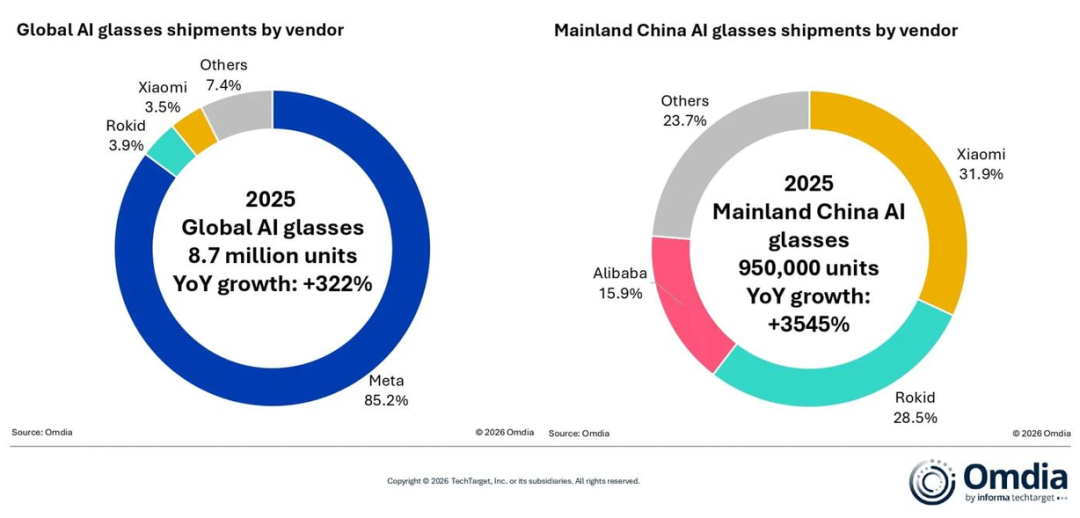
💡Learn why hardware scale is critical for AI ecosystem success and avoid the pitfalls of platform-dependent development.
⚡ 30-Second TL;DR
What Changed
Hardware sales volume is insufficient to drive a robust ecosystem
Why It Matters
This highlights the 'chicken-and-egg' problem in the AR/VR industry, where hardware scale is a prerequisite for ecosystem development. It serves as a cautionary tale for AI-integrated hardware startups.
What To Do Next
Evaluate the user base size of your target platform before committing to deep integration with proprietary AR/VR SDKs.
Key Points
- •Hardware sales volume is insufficient to drive a robust ecosystem
- •Challenges in developer engagement for niche AR platforms
- •The gap between hardware market penetration and platform value
🧠 Deep Insight
AI-generated analysis for this event — not the original article.
🔑 Enhanced Key Takeaways
- •Rokid has pivoted its strategy toward the 'AR + AI' integration, leveraging its proprietary YodaOS-Master operating system to bridge the gap between hardware and spatial computing applications.
- •The company has secured significant strategic partnerships with major Chinese state-owned enterprises and industrial players to deploy AR solutions in enterprise training and remote maintenance, diversifying away from pure consumer reliance.
- •Rokid's recent funding rounds have been heavily influenced by the need to subsidize hardware costs to maintain competitive pricing, which has strained cash flow despite high valuation expectations.
- •The developer ecosystem is currently supported by the 'Rokid AR Studio' platform, which attempts to simplify the porting of mobile applications to spatial environments, though adoption remains limited by the lack of standardized AR interaction protocols.
- •Supply chain constraints, particularly regarding high-resolution Micro-OLED displays, have historically limited Rokid's ability to scale production rapidly even when demand spikes.
📊 Competitor Analysis▸ Show
| Feature | Rokid (AR Glasses) | XREAL (Air Series) | Apple (Vision Pro) |
|---|---|---|---|
| Primary Focus | Enterprise/Industrial & Consumer | Consumer Entertainment | High-end Spatial Computing |
| Pricing | Mid-range ($500-$1,000) | Entry-level ($300-$500) | Premium ($3,500+) |
| OS | YodaOS-Master | Nebula (Android-based) | visionOS |
| Display Tech | Micro-OLED | Micro-OLED | Micro-OLED (Dual 4K) |
🛠️ Technical Deep Dive
- Architecture: Utilizes a split-computing design where the AR glasses connect to a dedicated compute unit (Rokid Station) to offload processing and battery weight.
- Display: Employs Birdbath or Waveguide optics depending on the model, targeting 1080p resolution per eye with high refresh rates (up to 120Hz).
- OS: YodaOS-Master is a custom-built, Linux-based spatial operating system designed to handle multi-modal inputs including voice, gesture, and head tracking.
- Connectivity: Supports low-latency wireless streaming for media consumption and wired USB-C DP Alt Mode for high-bandwidth enterprise applications.
🔮 Future ImplicationsAI analysis grounded in cited sources
⏳ Timeline
Weekly AI Recap
Read this week's curated digest of top AI events →
👉Related Updates


AI-curated news aggregator. All content rights belong to original publishers.
Original source: 钛媒体 ↗
This is a summary, not the original. Read the source, or get the weekly briefing.
Weekly AI briefing
One email a week. Unsubscribe anytime.