Rokid's Strategic Pivot in the AI Glasses Market
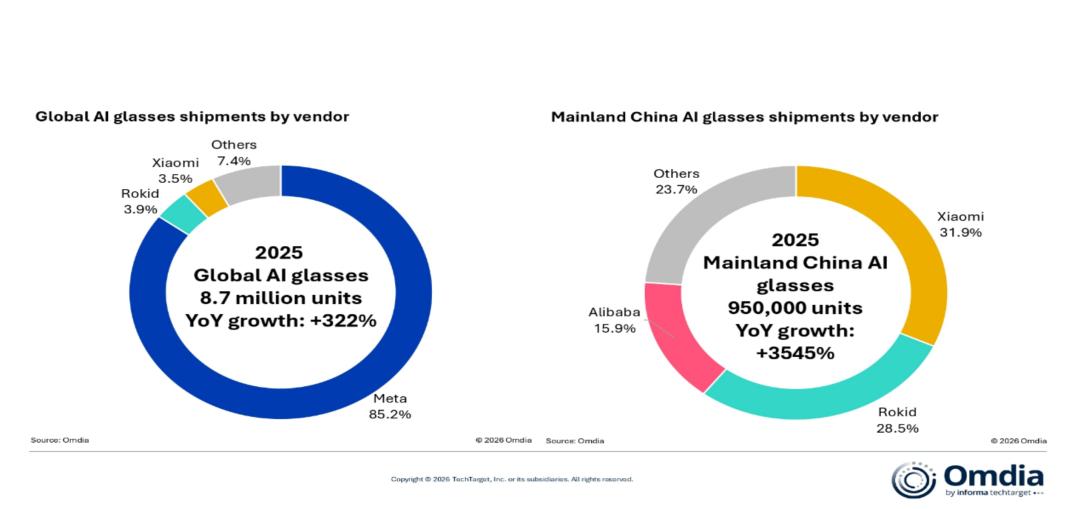
💡Insight into the future of wearable AI and the challenges of the AR hardware ecosystem.
⚡ 30-Second TL;DR
What Changed
The difficulty of finding a clear use case for AI glasses
Why It Matters
The success of AI glasses depends on seamless multimodal interaction. Developers should watch for new SDKs that enable low-latency AI processing on edge devices.
What To Do Next
Explore the Rokid developer portal to test current multimodal interaction capabilities for AR/XR.
Key Points
- •The difficulty of finding a clear use case for AI glasses
- •Hardware-software integration challenges in wearable form factors
- •Avoiding the 'BlackBerry' trap of becoming obsolete
🧠 Deep Insight
AI-generated analysis for this event — not the original article.
🔑 Enhanced Key Takeaways
- •Rokid has shifted its focus toward the 'AR-native' AI ecosystem, emphasizing the integration of its proprietary YodaOS-Master operating system to bridge the gap between spatial computing and generative AI.
- •The company has actively pursued partnerships with major automotive manufacturers to integrate AR glasses as a secondary display and AI-driven navigation interface for smart cockpits.
- •Rokid's recent hardware iterations, such as the Rokid Glass 2 and AR Lite series, prioritize lightweight form factors (under 80g) to address user fatigue, a primary barrier to long-term adoption identified in the industry.
- •To solve the 'killer app' dilemma, Rokid has launched an open developer platform specifically incentivizing the creation of multimodal AI agents that leverage the glasses' onboard cameras for real-time environmental understanding.
- •Financial reports indicate Rokid is diversifying revenue streams by targeting enterprise-grade remote assistance and industrial training sectors, which currently provide more stable ROI than the volatile consumer AR market.
📊 Competitor Analysis▸ Show
| Feature | Rokid (AR Lite/Glass) | XREAL (Air 2 Ultra) | Meta (Ray-Ban Meta) |
|---|---|---|---|
| Primary Focus | Spatial Computing/OS | Media Consumption/Display | AI Assistant/Social |
| OS/Platform | YodaOS-Master | Nebula (Android/iOS) | Meta Horizon OS |
| AI Integration | Multimodal/Agentic | Limited/Phone-tethered | Deeply integrated Llama 3 |
| Pricing (Approx) | $500 - $800 | $400 - $700 | $299 - $379 |
🛠️ Technical Deep Dive
- Architecture: Utilizes a split-computing design where the glasses handle display and sensor input, while a dedicated compute unit (Station) manages heavy AI inference and OS tasks.
- Display Tech: Employs BirdBath or Waveguide optics depending on the model, targeting 1080p resolution per eye with high brightness levels (up to 1200 nits) for outdoor visibility.
- Sensor Suite: Integrates 6DoF (Six Degrees of Freedom) tracking via dual cameras, enabling spatial anchoring and hand-gesture recognition without external controllers.
- AI Implementation: Leverages on-device lightweight LLMs for basic voice commands, with cloud-based offloading for complex multimodal reasoning tasks.
🔮 Future ImplicationsAI analysis grounded in cited sources
⏳ Timeline
Weekly AI Recap
Read this week's curated digest of top AI events →
👉Related Updates



AI-curated news aggregator. All content rights belong to original publishers.
Original source: 钛媒体 ↗
This is a summary, not the original. Read the source, or get the weekly briefing.
The weekly digest
One email a week. Unsubscribe anytime.