Robovan Opens the Door to Robocity
💡Robovan could turn autonomous logistics from a demo into a scalable robotics market.
⚡ 30-Second TL;DR
What Changed
Tesla Robovan targets autonomous short-distance logistics.
Why It Matters
Autonomous logistics could create new deployment opportunities for robotics developers, fleet operators, and infrastructure providers. Success will depend on operating economics, regulatory approval, and the ability to integrate robots into existing delivery networks.
What To Do Next
Prototype a small delivery-fleet simulation using ROS 2 and Nav2 to assess routing, safety, and unit economics before pursuing autonomous logistics deployments.
Key Points
- •Tesla Robovan targets autonomous short-distance logistics.
- •China is positioned as a major market for robotics deployment.
- •The trend may drive a broader ecosystem around commercial robots.
🧠 Deep Insight
Background and context from public sources — not the original article. 8 sources cited.
🔑 Enhanced Key Takeaways
- •The Chinese market for unmanned delivery vehicles is highly consolidated, with Neolix, Zelos, and White Rhino controlling 95% of the market share as of Q1 2026.
- •Industry leaders are transitioning from traditional hardware manufacturing to 'Physical AI' (embodied AI), utilizing world models and mapless autonomous driving technologies to accelerate deployment.
- •The business model for Robovans has evolved through three distinct phases: engineering validation (2016–2019), product application (2020–2023), and full-scale commercial operation (post-2024).
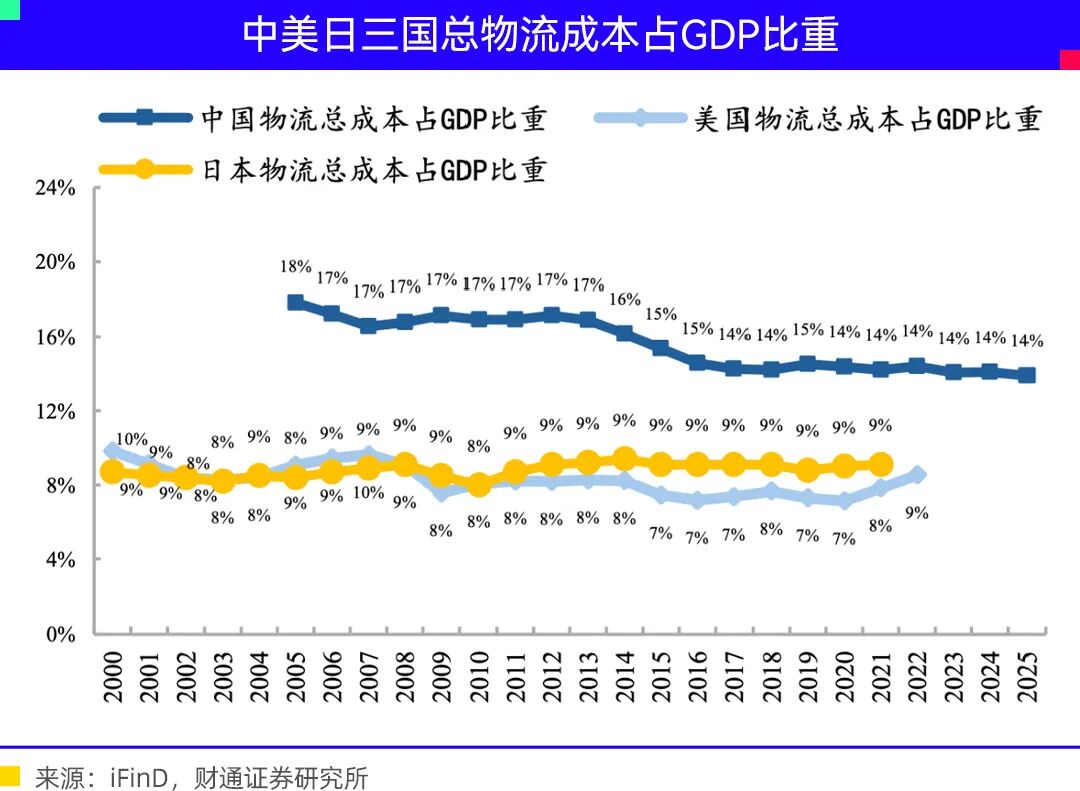
- •Autonomous delivery is now a core component of China's national strategy to reduce logistics costs as a percentage of GDP, often outperforming manual micro-van transport in cost efficiency.
- •Major Chinese logistics firms, including JD.com and SF Express, have integrated these vehicles into diverse operational workflows, such as night-time distribution and community group-buying logistics.
📊 Competitor Analysis▸ Show
| Feature | Tesla Robovan | Neolix | Zelos | White Rhino |
|---|---|---|---|---|
| Primary Market | Global | China | China | China |
| Core Focus | Short-distance logistics | Retail/Delivery | Logistics/Distribution | Last-mile delivery |
| Tech Approach | Vision-based/FSD | Sensor Fusion | Mapless/AI | Sensor Fusion |
| Market Position | Global Pioneer | Market Leader | Market Leader | Market Leader |
🛠️ Technical Deep Dive
- Utilization of mapless (no-HD-map) autonomous driving architectures to reduce infrastructure dependency.
- Integration of world models to enhance spatial reasoning and navigation in complex urban environments.
- Deployment of multi-modal sensor suites combining vision, LiDAR, and ultrasonic sensors for redundant safety.
- Implementation of Physical AI frameworks that allow for real-time adaptation to dynamic, unstructured urban traffic scenarios.
🔮 Future ImplicationsAI analysis grounded in cited sources
⏳ Timeline
📎 Sources (8)
Factual claims are grounded in the sources below. Forward-looking analysis is AI-generated interpretation.
Weekly AI Recap
Read this week's curated digest of top AI events →
👉Related Updates



AI-curated news aggregator. All content rights belong to original publishers.
Original source: 钛媒体 ↗
This is a summary, not the original. Read the source, or get the weekly briefing.
Weekly AI briefing
One email a week. Unsubscribe anytime.