AI for Science Enters the Lab

💡See how AI is moving from scientific prediction to hands-on robotic experimentation.
⚡ 30-Second TL;DR
What Changed
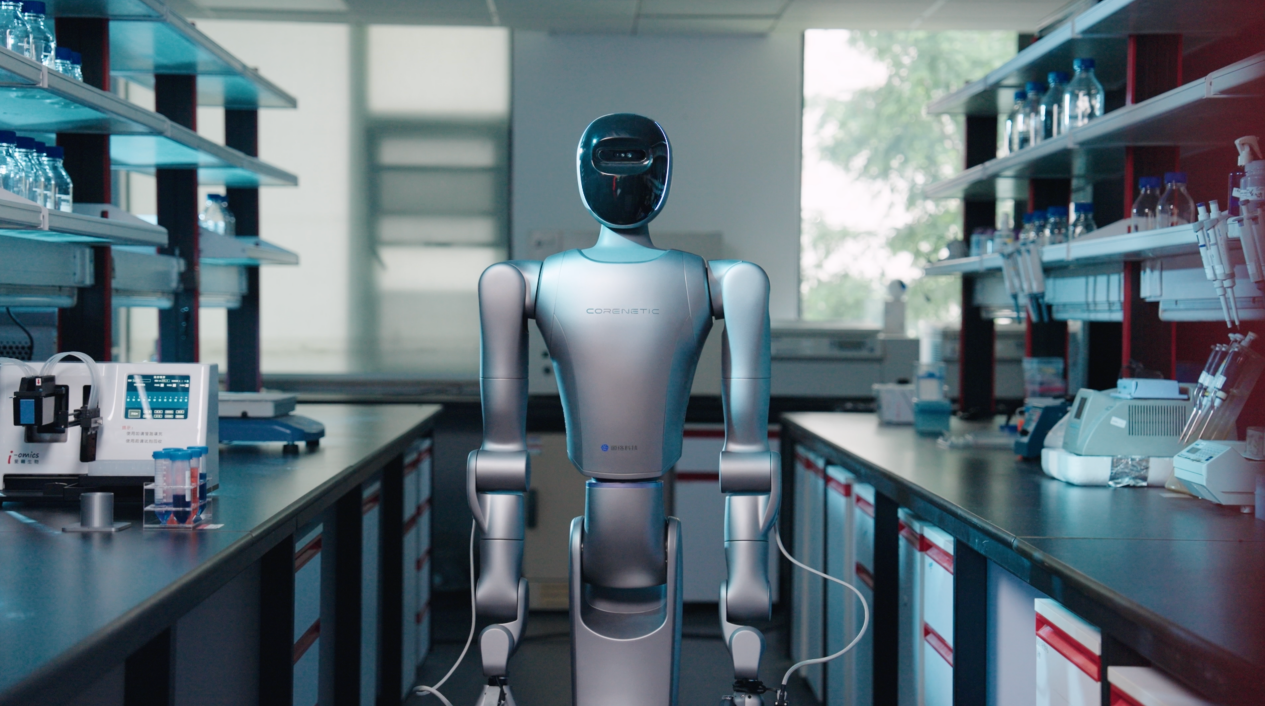
Robots are being introduced into national-level laboratory environments.
Why It Matters
Robotic experimentation could shorten the loop between hypothesis generation, laboratory execution, and result analysis. If reliable, this model may improve research throughput and enable more autonomous scientific discovery.
What To Do Next
Evaluate the 源络科技 AI for Science platform against one repeatable lab protocol, measuring setup time, execution accuracy, and human intervention.
Key Points
- •Robots are being introduced into national-level laboratory environments.
- •The initiative aims to connect AI reasoning with physical experiment execution.
- •源络科技 positions its work as advancing laboratory automation toward Lab 3.0.
🧠 Deep Insight
AI-generated analysis for this event.
🔑 Enhanced Key Takeaways
- •源络科技 (Yuanluo Technology) focuses on the 'AI for Science' infrastructure layer, specifically developing autonomous laboratory operating systems that integrate heterogeneous hardware instruments.
- •The transition to 'Lab 3.0' is characterized by the shift from human-in-the-loop automation to closed-loop autonomous discovery, where AI agents autonomously propose, execute, and analyze experiments.
- •National-level laboratories are increasingly adopting these systems to address the 'reproducibility crisis' by standardizing experimental protocols through digital twins and robotic orchestration.
- •The technical architecture often utilizes Large Language Models (LLMs) as the 'brain' to interpret experimental goals and translate them into machine-executable code for robotic arms and analytical instruments.
- •Beyond simple automation, these systems incorporate active learning algorithms to optimize experimental parameters in real-time, significantly reducing the number of iterations required for material discovery or drug synthesis.
🛠️ Technical Deep Dive
- Integration of standardized communication protocols (e.g., SiLA 2) to enable interoperability between diverse laboratory hardware from different vendors.
- Implementation of multi-modal AI agents capable of processing unstructured data from analytical instruments (spectroscopy, chromatography) alongside structured experimental metadata.
- Deployment of digital twin environments that simulate robotic trajectories and chemical reactions before physical execution to prevent equipment damage and reagent waste.
- Utilization of cloud-native orchestration layers to manage distributed laboratory resources and enable remote experiment monitoring and control.
🔮 Future ImplicationsAI analysis grounded in cited sources
Weekly AI Recap
Read this week's curated digest of top AI events →
👉Related Updates

AI-curated news aggregator. All content rights belong to original publishers.
Original source: 量子位 ↗