Robotruck Reenters the Economics Race
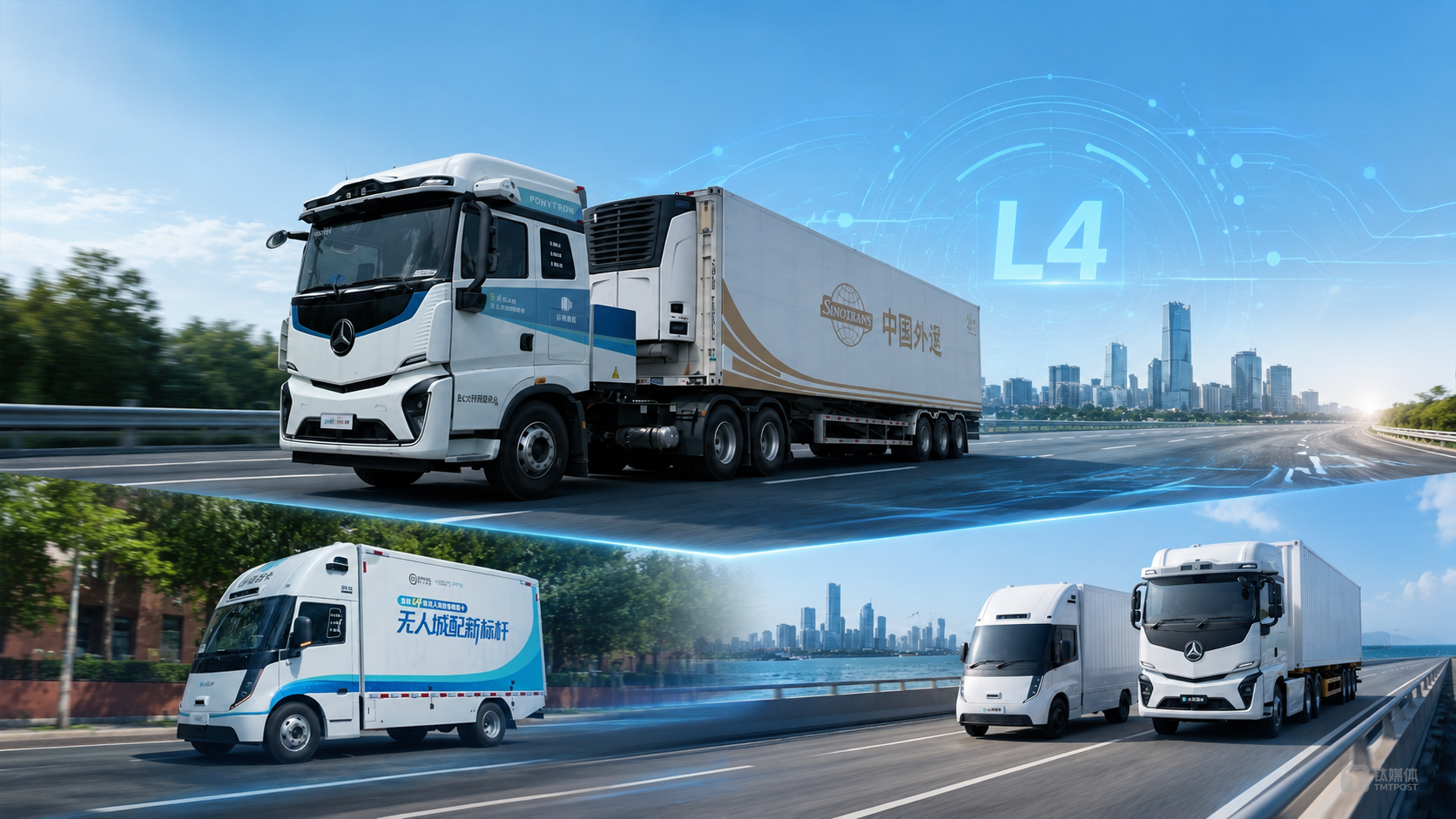
💡Robotruck is moving beyond demos—its next test is whether autonomous freight can actually make money.
⚡ 30-Second TL;DR
What Changed
Pony.ai is renewing its commitment to Robotruck.
Why It Matters
A shift toward unit economics could accelerate practical adoption of autonomous trucking, while exposing projects that cannot compete with human-operated freight. It also raises the importance of fleet utilization, operating cost control, and route selection.
What To Do Next
Build a pilot model comparing autonomous-freight cost per mile, utilization, and safety-operator requirements against human-driven trucking.
Key Points
- •Pony.ai is renewing its commitment to Robotruck.
- •Autonomous freight is moving from experimentation toward scaled commercial deployment.
- •Industry participants are recalculating economics around efficiency, cost, and business models.
🧠 Deep Insight
AI-generated analysis for this event.
🔑 Enhanced Key Takeaways
- •Pony.ai has strategically shifted its Robotruck business model toward a 'Freight-as-a-Service' (FaaS) approach, emphasizing partnerships with logistics giants rather than solely operating its own fleet.
- •The company has integrated its proprietary 'PonyAlpha' autonomous driving stack with heavy-duty truck platforms, specifically optimizing for long-haul highway scenarios which account for the majority of freight costs.
- •Pony.ai recently secured expanded permits for driverless testing in key Chinese logistics hubs, signaling a transition from supervised to fully autonomous operations in specific corridors.
- •Economic viability is being driven by the reduction of 'human-in-the-loop' costs, with Pony.ai targeting a 30-40% reduction in total cost of ownership (TCO) compared to traditional manned trucking by 2027.
- •The company is leveraging data from its Robotaxi fleet to accelerate the training of its perception algorithms, specifically for edge-case detection in high-speed, high-mass trucking environments.
📊 Competitor Analysis▸ Show
| Feature | Pony.ai (Robotruck) | TuSimple | Plus | Inceptio |
|---|---|---|---|---|
| Primary Focus | FaaS / Hybrid | Long-haul L4 | L2+/L4 Software | L3/L4 Mass Production |
| Market Strategy | Partnership-led | Independent/Global | OEM Integration | OEM/Fleet Sales |
| Key Benchmark | High-speed efficiency | Early mover/R&D | Safety/Reliability | Commercial scale |
| Pricing Model | Usage-based/FaaS | Licensing/Service | Licensing/Hardware | Unit Sales/SaaS |
🛠️ Technical Deep Dive
- Sensor Fusion: Utilizes a multi-modal sensor suite including solid-state LiDAR, long-range radar, and high-resolution cameras to achieve 360-degree coverage at highway speeds.
- Compute Platform: Powered by high-performance automotive-grade chips (NVIDIA DRIVE Orin) capable of processing massive sensor data streams with low latency.
- Perception Architecture: Employs deep learning models trained on massive datasets to identify small objects and road debris at distances exceeding 300 meters.
- Planning & Control: Features a predictive planning algorithm specifically tuned for the braking distances and turning radii of Class 8 heavy-duty trucks.
- Redundancy: Implements dual-redundant steering and braking systems to ensure safety in the event of primary system failure during driverless operation.
🔮 Future ImplicationsAI analysis grounded in cited sources
⏳ Timeline
Weekly AI Recap
Read this week's curated digest of top AI events →
👉Related Updates



AI-curated news aggregator. All content rights belong to original publishers.
Original source: 钛媒体 ↗