Ride-Hailing Enters the AI and Consolidation Era
💡Robotaxi is becoming the cash-hungry growth story for China’s cash-strapped ride-hailing platforms.
⚡ 30-Second TL;DR
What Changed
Didi remains the largest full-service platform, while aggregation platforms such as Amap and Baidu Maps are reshaping order distribution.
Why It Matters
The shift toward autonomous driving gives AI companies a potential enterprise market, but platform economics remain fragile and regulatory responsibility is increasing. Suppliers should expect long sales cycles, city-by-city deployment constraints, and pressure to demonstrate measurable fleet-level economics.
What To Do Next
Prototype a city-level Robotaxi demand and unit-economics dashboard using trip volume, utilization, subsidy, compliance, and inference-cost data before expanding a pilot.
Key Points
- •Didi remains the largest full-service platform, while aggregation platforms such as Amap and Baidu Maps are reshaping order distribution.
- •Aggregation ride-hailing’s market share rose from 10.9% in 2020 to 32.5% in 2025 and is forecast to exceed 50% by 2030.
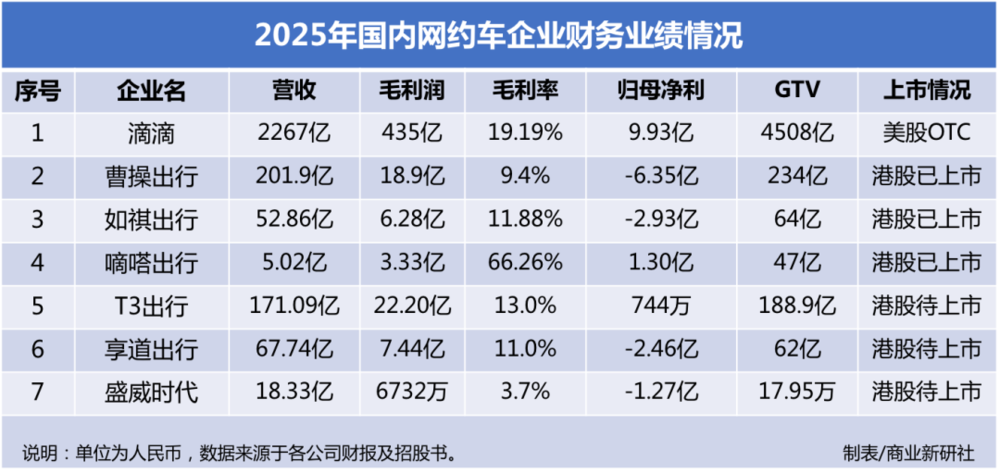
- •Many second-tier platforms have weak margins or ongoing losses, making IPO financing important for cash flow and compliance spending.
- •Autonomous driving and Robotaxi are being positioned as the primary sources of future growth and fundraising narratives.
🧠 Deep Insight
AI-generated analysis for this event.
🔑 Enhanced Key Takeaways
- •The Chinese Ministry of Transport has intensified regulatory oversight on 'aggregation platforms,' mandating that they must verify the licenses of both drivers and vehicles on their platforms to curb illegal ride-hailing operations.
- •Robotaxi commercialization in China is transitioning from 'demonstration zones' to 'large-scale commercial pilot' phases, with cities like Beijing, Shanghai, and Wuhan allowing fully driverless operations in specific districts.
- •The rise of aggregation platforms has led to a 'price war' dynamic where platforms compete primarily on commission rates and driver subsidies, often at the expense of long-term profitability for smaller regional players.
- •Data security and cross-border data transfer regulations have become significant hurdles for ride-hailing firms seeking Hong Kong IPOs, requiring rigorous cybersecurity audits by the Cyberspace Administration of China (CAC).
- •Major ride-hailing players are increasingly integrating Large Language Models (LLMs) into their customer service and route optimization systems to reduce operational costs and improve matching efficiency.
📊 Competitor Analysis▸ Show
| Feature | Didi Chuxing | Aggregation Platforms (Amap/Baidu) | Robotaxi Specialists (Pony.ai/WeRide) |
|---|---|---|---|
| Business Model | Full-service (Direct/Aggregated) | Traffic/Lead Generation | Autonomous Fleet Operations |
| Market Position | Dominant (Market Leader) | Rapidly Growing (Distributor) | Niche (Technology Provider) |
| Pricing Strategy | Dynamic/Market-based | Low-cost/Subsidized | Premium/Pilot-based |
| Core Competency | Supply Chain/Scale | User Traffic/Mapping Data | L4 Autonomous Driving Tech |
🛠️ Technical Deep Dive
- Robotaxi architectures utilize multi-sensor fusion (LiDAR, Radar, Cameras) combined with V2X (Vehicle-to-Everything) communication to enhance safety in complex urban environments.
- Matching algorithms in aggregation platforms have shifted from simple proximity-based dispatch to deep reinforcement learning models that predict demand spikes and optimize driver idle time.
- Autonomous driving stacks are increasingly adopting end-to-end neural network architectures, moving away from modular 'perception-planning-control' pipelines to improve generalization in edge cases.
🔮 Future ImplicationsAI analysis grounded in cited sources
⏳ Timeline
Weekly AI Recap
Read this week's curated digest of top AI events →
👉Related Updates


AI-curated news aggregator. All content rights belong to original publishers.
Original source: 虎嗅 ↗