Tactile Sensing Becomes AI's Third Modality
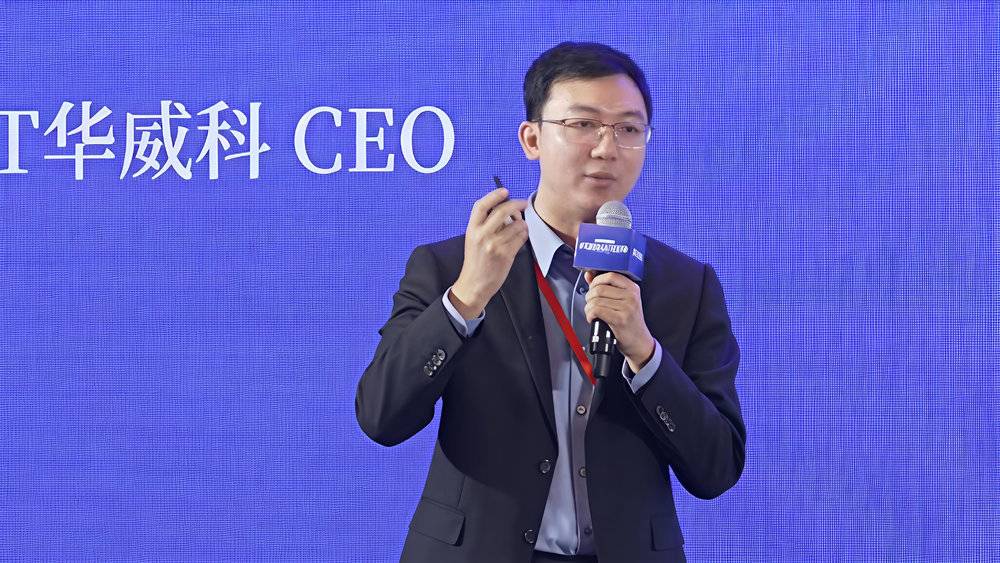
💡Tactile data may be the next embodied-AI moat, and electronic skin makers could control both sensors and training datase
⚡ 30-Second TL;DR
What Changed
Huawei Ke supplied more than 10,000 dexterous-hand electronic skins in 2025 and reported over 70% market share.
Why It Matters
Tactile sensors could become a critical hardware and data bottleneck for embodied AI, because sensor-specific calibration determines how physical signals become usable training data. Vertical integration may give sensor companies more control over iteration, data collection, and model-training interfaces.
What To Do Next
Prototype a sensor-calibration pipeline that maps each tactile sensor's raw voltage and current readings to standardized pressure, temperature, and texture labels before collecting robot-training data.
Key Points
- •Huawei Ke supplied more than 10,000 dexterous-hand electronic skins in 2025 and reported over 70% market share.
- •Its electronic skins are supplied to leading robotics companies including InTime, AgiBot, and Lingxin Qiaoshou.
- •The company expects shipments to rise from 10,000 sets last year to 50,000 sets this year as tactile sensing becomes standard equipment.
- •Huawei Ke identifies flexible electronics and multimodal sensing as durable directions while pressure, capacitive, piezoelectric, and other principles remain unsettled.
- •Its IDM approach reportedly delivers over 99% yield for most products versus 60%–80% for outsourced manufacturing.
🧠 Deep Insight
AI-generated analysis for this event.
🔑 Enhanced Key Takeaways
- •Huawei Ke (often referred to as Huawei Ke Robotics or related entities in the tactile sensing space) utilizes a proprietary 'flexible tactile sensor array' that mimics human mechanoreceptors to achieve high-density spatial resolution.
- •The company's IDM (Integrated Device Manufacturer) model is specifically designed to bypass the yield limitations of traditional CMOS-based tactile sensor fabrication, which often struggles with the mechanical stress of flexible substrates.
- •Industry data suggests that the shift toward tactile sensing is being driven by the 'Sim-to-Real' gap in humanoid robot training, where tactile feedback is now considered essential for reinforcement learning models to master fine-motor tasks.
- •Huawei Ke has integrated its tactile data streams with multimodal Large Language Models (LLMs), allowing robots to interpret tactile 'textures' as semantic tokens during object manipulation.
- •The company is actively participating in the standardization of tactile data formats in China, aiming to create a unified interface for robot hands to communicate pressure and shear force data to central AI controllers.
📊 Competitor Analysis▸ Show
| Feature | Huawei Ke | Competitor A (e.g., SynTouch) | Competitor B (e.g., GelSight) |
|---|---|---|---|
| Sensing Principle | Flexible Electronic Skin | Bio-mimetic/Fluid-based | Optical/Vision-based |
| Primary Market | Mass-market Humanoids | Research/Prosthetics | Industrial Inspection |
| Yield Rate | >99% (IDM) | Variable (Outsourced) | Moderate (Optical assembly) |
| Key Advantage | Scalability/Cost | High Sensitivity | High Resolution/Texture |
🛠️ Technical Deep Dive
- Sensor Architecture: Employs a multi-layer flexible polymer stack that integrates conductive nanomaterials to detect both normal pressure and lateral shear forces.
- Signal Processing: Utilizes on-skin ASIC (Application-Specific Integrated Circuit) chips to perform local signal conditioning, reducing latency and wiring complexity.
- Data Integration: Tactile data is converted into a high-frequency time-series format compatible with standard ROS (Robot Operating System) middleware.
- Durability: The electronic skin is rated for over 1 million cycles of contact without significant degradation in sensitivity, achieved through proprietary encapsulation techniques.
🔮 Future ImplicationsAI analysis grounded in cited sources
⏳ Timeline
Weekly AI Recap
Read this week's curated digest of top AI events →
👉Related Updates

AI-curated news aggregator. All content rights belong to original publishers.
Original source: 虎嗅 ↗