Retailers use weight loss challenges for user growth
Insight into how retail giants use behavioral data and gamification for user acquisition.
30-Second TL;DR
What Changed
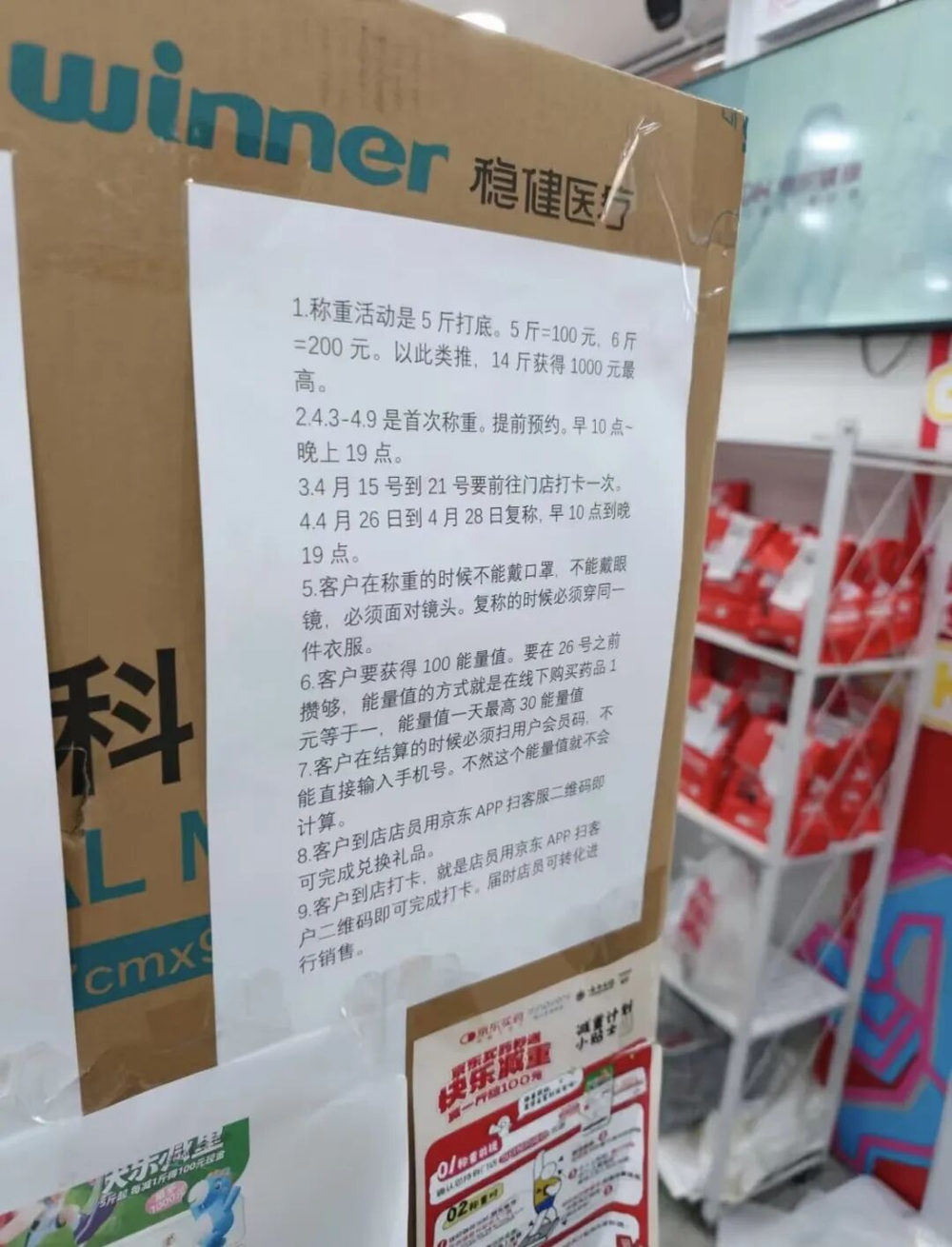
Retailers use 'gamified' weight loss to increase store traffic and app engagement.
Why It Matters
These campaigns demonstrate how traditional retail platforms are adopting growth-hacking techniques to acquire users in a digital-first environment.
What To Do Next
Analyze the user acquisition cost (CAC) versus lifetime value (LTV) of these gamified health campaigns to determine their long-term ROI.
Key Points
- •Retailers use 'gamified' weight loss to increase store traffic and app engagement.
- •Campaigns often require social media posting (e.g., Xiaohongshu) for brand exposure.
- •Participants often use extreme methods to meet non-standardized weight loss targets.
- •The strategy leverages the government's 'Weight Management Year' initiative for marketing.
Deep Insight
Background and context from public sources — not the original article. 24 sources cited.
Enhanced Key Takeaways
- •The 'Weight Management Year' is a comprehensive three-year national public health campaign (2024-2026) under the 'Healthy China 2030' framework, marking a strategic shift towards proactive, population-wide prevention of chronic diseases like obesity.
- •China's official Body Mass Index (BMI) thresholds for overweight (24) and obesity (28) are lower than World Health Organization (WHO) standards, reflecting higher health risks at lower BMIs specifically for Asian populations, which influences the targets set in these challenges.
- •Retailers like Yonghui Superstores are offering tangible, food-based rewards such as beef or crayfish for specific weight loss achievements, effectively transforming their physical stores into interactive 'lifestyle experience' platforms to attract customers.
- •Xiaohongshu has emerged as a central platform for health and wellness content in China, generating millions of user-generated posts and billions of engagements on weight management topics between January and mid-May 2025, driven by trends like specific diet plans, gamified challenges, and gentler wellness methods.
- •Ethical concerns surrounding gamified health apps include the potential for short-term engagement over long-term behavior change, a one-size-fits-all approach, overemphasis on competition that may discourage some users, privacy and data security issues, and the risk of promoting unhealthy behaviors if not carefully managed.
Competitor Analysis
- JD Health / Yonghui Challenges
- Retailer-led weight loss challenges, traffic generation, social media buzz
- Keep (App)
- Fitness videos, exercise tracking, e-commerce for equipment
- Boohee Health (App)
- Diet & exercise guidance, food database, meal plans, e-commerce for healthy foods
- Yodo Run (App)
- Activity tracking, gamified rewards, social running platform
- JD Health / Yonghui Challenges
- Cash/food rewards, increased store traffic & app engagement, brand exposure
- Keep (App)
- Sporting goods sales, advertising, gyms (Keepland), app membership
- Boohee Health (App)
- Self-operated e-commerce, paid memberships
- Yodo Run (App)
- Cash incentives (virtual red envelopes), in-app store discounts
- JD Health / Yonghui Challenges
- Gamified challenges, social media posting requirements, physical store integration
- Keep (App)
- Fitness videos, e-commerce, social networking (sharing routines, food, appearance), GPS tracking
- Boohee Health (App)
- Daily diet/exercise record, body weight/fat tracking, food nutritional info, online dietitians (members), community platform
- Yodo Run (App)
- Activity tracking, cash/prize rewards, medals, certificates, social platform (meet runners, challenges, offline events, book trainers)
- JD Health / Yonghui Challenges
- Rewards (cash, food), social media virality, leveraging government initiatives
- Keep (App)
- Social sharing, community features, diverse workout content
- Boohee Health (App)
- Community interaction, dietitian support, personalized plans (paid)
- Yodo Run (App)
- Cash incentives, competitive challenges, social interaction, offline events
- JD Health / Yonghui Challenges
- General consumers, shoppers, health-conscious individuals
- Keep (App)
- Fitness enthusiasts, general public seeking exercise guidance
- Boohee Health (App)
- Primarily female consumers (post-90s and 00s in coastal provinces)
- Yodo Run (App)
- Runners, general public seeking activity motivation
- JD Health / Yonghui Challenges
- Varies by campaign
- Keep (App)
- 200 million users (Sept 2019)
- Boohee Health (App)
- 1% market share in health/sports (2019)
- Yodo Run (App)
- 100 million users (2017)
| Feature/Aspect | JD Health / Yonghui Challenges | Keep (App) | Boohee Health (App) | Yodo Run (App) |
|---|---|---|---|---|
| Primary Focus | Retailer-led weight loss challenges, traffic generation, social media buzz | Fitness videos, exercise tracking, e-commerce for equipment | Diet & exercise guidance, food database, meal plans, e-commerce for healthy foods | Activity tracking, gamified rewards, social running platform |
| Business Model | Cash/food rewards, increased store traffic & app engagement, brand exposure | Sporting goods sales, advertising, gyms (Keepland), app membership | Self-operated e-commerce, paid memberships | Cash incentives (virtual red envelopes), in-app store discounts |
| Key Features | Gamified challenges, social media posting requirements, physical store integration | Fitness videos, e-commerce, social networking (sharing routines, food, appearance), GPS tracking | Daily diet/exercise record, body weight/fat tracking, food nutritional info, online dietitians (members), community platform | Activity tracking, cash/prize rewards, medals, certificates, social platform (meet runners, challenges, offline events, book trainers) |
| Engagement Strategy | Rewards (cash, food), social media virality, leveraging government initiatives | Social sharing, community features, diverse workout content | Community interaction, dietitian support, personalized plans (paid) | Cash incentives, competitive challenges, social interaction, offline events |
| Target Audience | General consumers, shoppers, health-conscious individuals | Fitness enthusiasts, general public seeking exercise guidance | Primarily female consumers (post-90s and 00s in coastal provinces) | Runners, general public seeking activity motivation |
| User Base (approx.) | Varies by campaign | 200 million users (Sept 2019) | 1% market share in health/sports (2019) | 100 million users (2017) |
Technical Deep Dive
- Mobile health (mHealth) interventions in China leverage smartphones as a primary service delivery platform for weight management.
- Intelligent mHealth interventions, particularly those based on wearable devices and social media, have demonstrated greater effectiveness in reducing body weight, BMI, and body fat percentage.
- Common app features in Chinese weight management platforms include monitoring and tracking of health metrics, goal setting functionalities, and the ability to send alerts or reminders to users.
- Artificial intelligence (AI) and big data analytics are increasingly utilized in m-Health management for comprehensive indicator tracking, risk assessment, and health evaluation, encompassing diet and nutrition management, body health monitoring, and lifestyle intervention strategies.
- WeChat, with its extensive user base (approximately 1.36 billion monthly active users in Q1 2024), serves as a significant platform for delivering obesity interventions, primarily through health education.
- Xiaohongshu's algorithmic preferences prioritize authentic user-generated content, influencer recommendations, and robust search functionality to connect users with health and wellness information and services.
Future ImplicationsAI analysis grounded in cited sources
Timeline
- 2014Keep app founded, marking an early entry into digital fitness in China.
- 2019China's 'Healthy China' initiative launched, providing a broad framework for national health improvement.
- 2024-03National Health Commission (NHC) launched the three-year 'Year of Weight Management' initiative.
- 2024-0716 Chinese national agencies released the implementation plan for the 'Weight Management Years Campaign'.
- 2025-04China officially added an anti-obesity drive to its 'Healthy China' initiative, aiming for substantial progress by 2030.
- 2026-04Yonghui Superstores launched its 'Lose Weight for Beef' campaign nationwide, offering tangible rewards for weight loss.
Sources (24)
Factual claims are grounded in the sources below. Forward-looking analysis is AI-generated interpretation.
Weekly AI Recap
Read this week's curated digest of top AI events →
AI-curated news aggregator. All content rights belong to original publishers.
Original source: 虎嗅 ↗
This is a summary, not the original. Read the source, or get the weekly briefing.
The weekly digest
One email a week. Unsubscribe anytime.