renue Updates Drawing Agent with 2D-to-3D AI Conversion
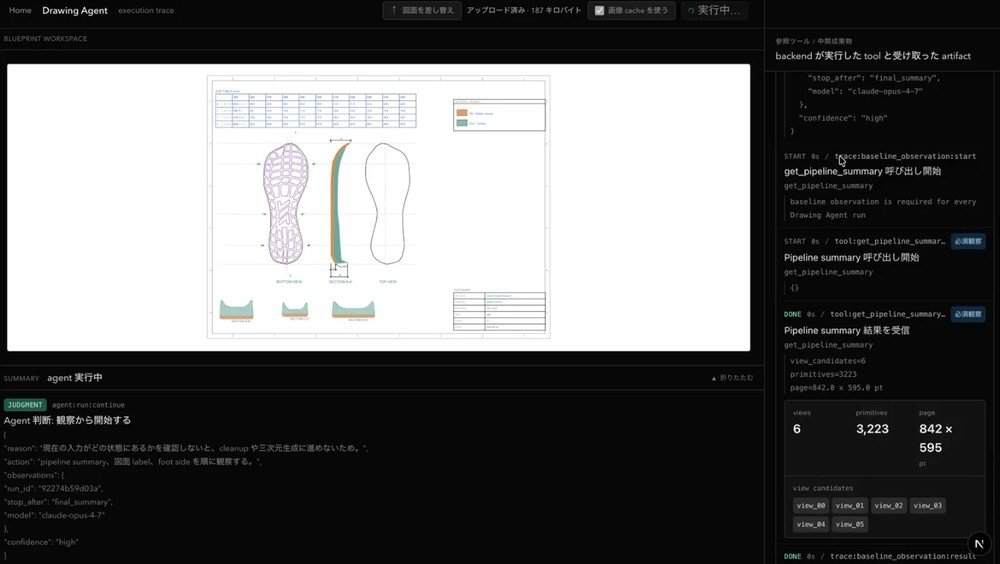
Automated 2D-to-3D conversion using agentic workflows is a game-changer for engineering productivity.
30-Second TL;DR
What Changed
AI agents now select specialized tools to interpret 2D blueprints.
Why It Matters
This tool significantly reduces manual drafting time in engineering and manufacturing workflows. It lowers the barrier for digitizing legacy design data and accelerates the prototyping process.
What To Do Next
If you are in manufacturing, test the Drawing Agent API to automate your legacy blueprint digitization pipeline.
Key Points
- •AI agents now select specialized tools to interpret 2D blueprints.
- •New capability to convert 2D drawings into 3D models automatically.
- •Added support for generating 2D drawings from minimal design inputs.
Deep Insight
Background and context from public sources — not the original article. 11 sources cited.
Enhanced Key Takeaways
- •renue's Drawing Agent supports a variety of 2D input formats, including engineering drawing images, PDFs, and CAD files like DXF/DWG, allowing for flexible integration into existing design workflows.
- •The AI agent employs an iterative self-evaluation loop, where it generates 3D models using CadQuery code, renders them from multiple angles, compares them against the original 2D drawing, and refines the code until a high-quality match is achieved.
- •The output 3D CAD models are provided in industry-standard formats such as STEP, STL, and GLB, ensuring compatibility and direct usability with professional CAD software like SolidWorks.
Competitor Analysis
- Key Features
- AI-powered 2D to 3D CAD conversion, 2D generation from minimal data, iterative self-evaluation loop, supports images, PDFs, DXF/DWG, outputs STEP/STL/GLB.
- Pricing Model
- SaaS (details not specified)
- Noteworthy Benchmarks/Details
- Focus on precision through self-correction.
- Key Features
- Image-to-3D, multi-view support, text-to-texture, team collaboration, integrates with major 3D software.
- Pricing Model
- Freemium, premium plans from ~$16/month.
- Noteworthy Benchmarks/Details
- Generates 3D models in 30-60 seconds. Rated 4.8/5.
- Key Features
- Engineering copilot, understands context, generates 3D mesh concepts from sketches/specs/text.
- Pricing Model
- Not specified (enterprise focus)
- Noteworthy Benchmarks/Details
- Generates models in under 50 seconds. Used by HP, Scania, Intel. Rated 4.7/5.
- Key Features
- CAD drawing to photorealistic 3D renders, AutoCAD compatible.
- Pricing Model
- Not specified
- Noteworthy Benchmarks/Details
- Renders in under 30 seconds. Rated 4.6/5.
- Key Features
- High-quality meshes from sketches, 3D printable exports, optimized topology for game engines, character rigging.
- Pricing Model
- Not specified
- Noteworthy Benchmarks/Details
- Generates 3D models in ~8 seconds. Rated 4.5/5.
- Key Features
- Access to multiple AI models (including Rodin/Meshy/Tripo), complete creative suite, multi-image support.
- Pricing Model
- From ~$14/month.
- Noteworthy Benchmarks/Details
- Generates models in 30-120 seconds. Best overall value.
- Key Features
- Photorealistic quality, 4K PBR textures, multi-view support.
- Pricing Model
- From ~$99/month.
- Noteworthy Benchmarks/Details
- Focus on enterprise and maximum photorealistic quality.
- Key Features
- Converts 2D images (PDFs, DWGs, DXFs) to Revit and IFC objects, identifies building elements.
- Pricing Model
- Not specified (available as web service or Revit plugin)
- Noteworthy Benchmarks/Details
- AI algorithms work on pixel data, allows for piecemeal detection and user correction.
| Company/Product | Key Features | Pricing Model | Noteworthy Benchmarks/Details |
|---|---|---|---|
| renue Drawing Agent | AI-powered 2D to 3D CAD conversion, 2D generation from minimal data, iterative self-evaluation loop, supports images, PDFs, DXF/DWG, outputs STEP/STL/GLB. | SaaS (details not specified) | Focus on precision through self-correction. |
| Meshy AI | Image-to-3D, multi-view support, text-to-texture, team collaboration, integrates with major 3D software. | Freemium, premium plans from ~$16/month. | Generates 3D models in 30-60 seconds. Rated 4.8/5. |
| Leo AI | Engineering copilot, understands context, generates 3D mesh concepts from sketches/specs/text. | Not specified (enterprise focus) | Generates models in under 50 seconds. Used by HP, Scania, Intel. Rated 4.7/5. |
| Fenestra | CAD drawing to photorealistic 3D renders, AutoCAD compatible. | Not specified | Renders in under 30 seconds. Rated 4.6/5. |
| Tripo AI | High-quality meshes from sketches, 3D printable exports, optimized topology for game engines, character rigging. | Not specified | Generates 3D models in ~8 seconds. Rated 4.5/5. |
| 3D AI Studio | Access to multiple AI models (including Rodin/Meshy/Tripo), complete creative suite, multi-image support. | From ~$14/month. | Generates models in 30-120 seconds. Best overall value. |
| Rodin AI (Deemos) | Photorealistic quality, 4K PBR textures, multi-view support. | From ~$99/month. | Focus on enterprise and maximum photorealistic quality. |
| WiseBIM (Plans2BIM) | Converts 2D images (PDFs, DWGs, DXFs) to Revit and IFC objects, identifies building elements. | Not specified (available as web service or Revit plugin) | AI algorithms work on pixel data, allows for piecemeal detection and user correction. |
Technical Deep Dive
- AI Model Architecture: The underlying technology for 2D to 3D conversion in the market often leverages advanced AI algorithms, including neural radiance fields and diffusion models, which reconstruct depth from linework and annotations.
- Iterative Refinement Loop: renue's Drawing Agent specifically utilizes a 'self-evaluation loop'. The AI generates 3D models by writing CadQuery code, then renders the result from multiple angles. It compares these rendered views against the original 2D drawing and iteratively re-writes the code until a high-quality match is achieved, ensuring precision.
- Data Training: Machine learning models are typically trained on millions of CAD datasets to enable parametric outputs that are editable in standard CAD software like SolidWorks or Fusion 360.
- Feature Interpretation: Advanced algorithms analyze elements like edge detection and extrusion logic to seamlessly convert 2D floor plans or engineering sketches into 3D models.
Future ImplicationsAI analysis grounded in cited sources
Sources (11)
Factual claims are grounded in the sources below. Forward-looking analysis is AI-generated interpretation.
Weekly AI Recap
Read this week's curated digest of top AI events →
Related Updates
AI-curated news aggregator. All content rights belong to original publishers.
Original source: ITmedia AI+ (日本) ↗
This is a summary, not the original. Read the source, or get the weekly briefing.
The weekly digest
One email a week. Unsubscribe anytime.