Recording Household Chores to Train Humanoid Robots

Understand the emerging data bottleneck for humanoid robotics and the ethical risks of human-centric data collection.
30-Second TL;DR
What Changed
Household tasks are being commoditized as training data for embodied AI.
Why It Matters
As embodied AI scales, the demand for high-quality, diverse human-demonstration data will drive new data-collection marketplaces. Practitioners must navigate the ethical complexities of sourcing data from private environments.
What To Do Next
Evaluate your data pipeline for embodied AI; consider implementing privacy-preserving techniques like blurring faces or sensitive objects in your training datasets.
Key Points
- •Household tasks are being commoditized as training data for embodied AI.
- •Human-in-the-loop data collection is critical for training robots to navigate domestic environments.
- •Privacy and ethical concerns arise when recording personal living spaces for AI training.
Deep Insight
Background and context from public sources — not the original article. 33 sources cited.
Enhanced Key Takeaways
- •The development of large-scale, diverse datasets, such as the Open X-Embodiment Dataset which pools over 1 million real robot trajectories from 22 robot embodiments across 34 research labs, is crucial for enabling 'generalist' robot policies that can adapt to new tasks and environments.
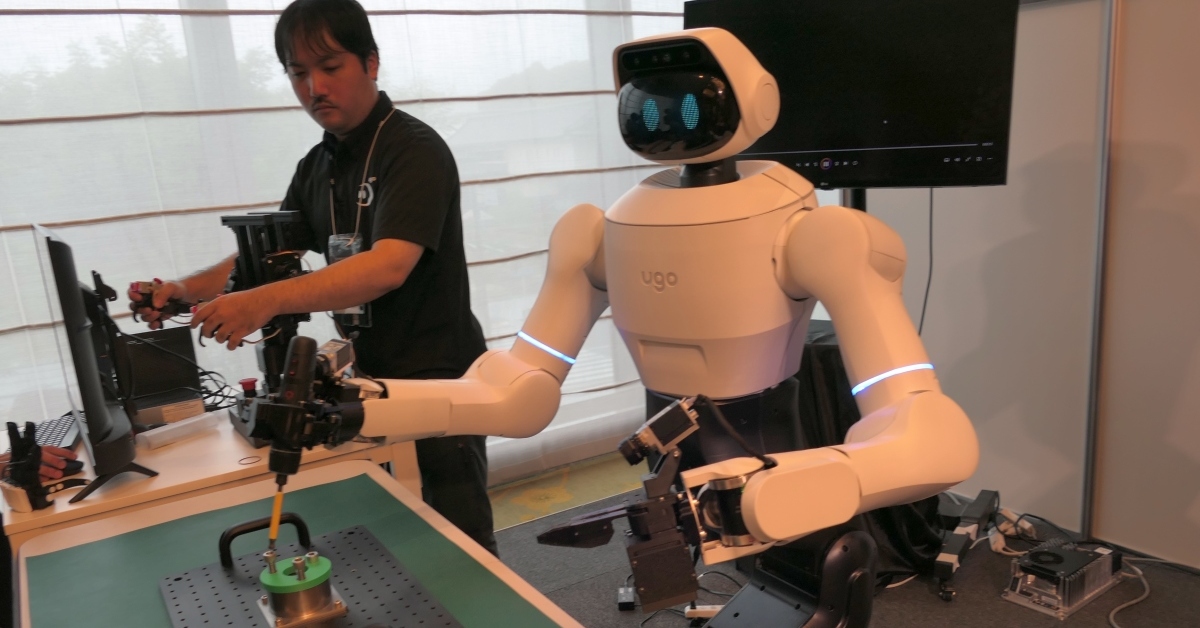
- •Companies are actively employing various methods for data collection, including paying gig workers to record themselves performing chores with head-mounted cameras and utilizing teleoperation, to generate the necessary 'physical interaction' data for embodied AI.
- •The ethical debate extends beyond general privacy to specific concerns like 'surveillance capitalism,' the need for explicit, unambiguous consent for in-home recording, and the potential for law enforcement access to collected data, prompting calls for targeted regulations such as India's Digital Personal Data Protection (DPDP) Act.
- •Simulation environments like OmniGibson (built on NVIDIA Omniverse) and VirtualHome are increasingly vital for scaling robot training, allowing for rapid iteration and learning of complex tasks across diverse virtual homes before deployment in real-world, unpredictable domestic settings.
- •Advanced AI models like Google DeepMind's RT-X and Figure AI's Helix are being developed as vision-language-action (VLA) models, aiming for end-to-end control and zero-shot human-to-robot transfer by learning from extensive datasets of human video.
Competitor Analysis
- Primary Focus
- General-purpose humanoid robots for various environments, including home
- Data Collection Strategy
- Large-scale egocentric human video, partnership with Brookfield for diverse real-world data collection in residential units
- Key Robot/Model
- Figure 01/03, Helix VLA model
- Noteworthy
- Project Go-Big, Helix Lab for data collection and training
- Primary Focus
- Household humanoid robots for chores and elder care
- Data Collection Strategy
- Real-world testing in employee housing, plans for free household trials in Wuhan with elderly/children/pets
- Key Robot/Model
- SeeLight S1 (wheeled, two-armed)
- Noteworthy
- Aims to reduce hardware cost to below $14,700 by June 2027
- Primary Focus
- Embodied intelligence at home, household chores, elder care
- Data Collection Strategy
- Deploying OneRo H1 robots in homes, elder care facilities, and retail spaces to record high-frequency tasks
- Key Robot/Model
- OneRo H1
- Noteworthy
- Announced a 45 million yuan project for real-world household data collection
- Primary Focus
- Generalist learning robots for unstructured human environments
- Data Collection Strategy
- Teleoperation, collaborative learning, simulation, large datasets (e.g., 130,000 demonstrations)
- Key Robot/Model
- RT-1, RT-2, AutoRT, RT-Trajectory models
- Noteworthy
- Consolidated Everyday Robots into DeepMind in 2023; focuses on generalization across tasks, objects, and environments
- Primary Focus
- Benchmark for 1,000 everyday activities for robots
- Data Collection Strategy
- Human-centered task definition via surveys, simulation in OmniGibson (NVIDIA Omniverse)
- Key Robot/Model
- N/A (benchmark/dataset)
- Noteworthy
- Focuses on practical skills and scaling training across diverse simulated environments
- Primary Focus
- On-demand domestic services, physical AI training
- Data Collection Strategy
- Recorded interiors of customers' homes during service visits (controversial)
- Key Robot/Model
- N/A (data collection service)
- Noteworthy
- Faced significant public backlash over privacy concerns and lack of explicit consent for in-home recording
| Company/Project | Primary Focus | Data Collection Strategy | Key Robot/Model | Noteworthy |
|---|---|---|---|---|
| Figure AI | General-purpose humanoid robots for various environments, including home | Large-scale egocentric human video, partnership with Brookfield for diverse real-world data collection in residential units | Figure 01/03, Helix VLA model | Project Go-Big, Helix Lab for data collection and training |
| GigaAI (China) | Household humanoid robots for chores and elder care | Real-world testing in employee housing, plans for free household trials in Wuhan with elderly/children/pets | SeeLight S1 (wheeled, two-armed) | Aims to reduce hardware cost to below $14,700 by June 2027 |
| OneRobotics (China) | Embodied intelligence at home, household chores, elder care | Deploying OneRo H1 robots in homes, elder care facilities, and retail spaces to record high-frequency tasks | OneRo H1 | Announced a 45 million yuan project for real-world household data collection |
| Google DeepMind (Everyday Robots) | Generalist learning robots for unstructured human environments | Teleoperation, collaborative learning, simulation, large datasets (e.g., 130,000 demonstrations) | RT-1, RT-2, AutoRT, RT-Trajectory models | Consolidated Everyday Robots into DeepMind in 2023; focuses on generalization across tasks, objects, and environments |
| Stanford University (BEHAVIOR-1K) | Benchmark for 1,000 everyday activities for robots | Human-centered task definition via surveys, simulation in OmniGibson (NVIDIA Omniverse) | N/A (benchmark/dataset) | Focuses on practical skills and scaling training across diverse simulated environments |
| Pronto (India) | On-demand domestic services, physical AI training | Recorded interiors of customers' homes during service visits (controversial) | N/A (data collection service) | Faced significant public backlash over privacy concerns and lack of explicit consent for in-home recording |
Technical Deep Dive
- Data Types: Egocentric human video (recorded via head-mounted smartphones, tracking head, hands, and fingers), teleoperation data (robot movements, human operator inputs, adjustments), RGB-D data, Universal Manipulation Interface (UMI) gripper-based data (grasping patterns, force, contact, full action sequences), and motion capture data.
- Simulation Environments: Key platforms include OmniGibson (built on NVIDIA Omniverse), VirtualHome, and AI2-THOR, which allow robots to practice and learn complex tasks in virtual settings before real-world deployment.
- Model Architectures:
- RT-X models (Google DeepMind): Robotics Transformer models (RT-1, RT-2, RT-Trajectory) are trained on diverse datasets like Open X-Embodiment. RT-Trajectory enhances generalization by adding visual contours to motion descriptions, while AutoRT uses LLM-based decision-makers guided by a 'robot constitution' for safety.
- Helix (Figure AI): A Vision-Language-Action (VLA) model designed for generalist humanoid control. It learns from egocentric human video to achieve direct human-to-robot transfer, outputting high-rate dexterous manipulation and navigation commands from a single unified network.
- HoloMind (LongAct benchmark): A VLM-driven agent featuring a Directed Acyclic Graph (DAG)-based long-horizon hierarchical planner, Multimodal Spatial Memory for persistent world modeling, Episodic Memory for experience reuse, and a global Critic for reflective supervision.
- WHIRL (Carnegie Mellon): An efficient algorithm for one-shot visual imitation, capable of learning directly from human-interaction videos and generalizing information to new tasks by leveraging computer vision models trained on internet data to understand 3D human movement.
- Hardware/Sensors: Robots are equipped with cameras (including embedded palm cameras for grasping feedback), LiDAR, and tactile sensors to perceive and interact with their environment.
- Training Techniques: Approaches include imitation learning, reinforcement learning, collaborative learning, and learning from human demonstrations, often involving pretraining large neural networks on massive, diverse datasets to achieve broad capabilities.
Future ImplicationsAI analysis grounded in cited sources
Timeline
- 1960sShakey the Robot (SRI) demonstrates early embodied AI capabilities, perceiving and acting autonomously.
- 2015A robot at Cornell learns to pick up cups and shares its learning data to a cloud, hinting at collaborative robot learning.
- 2021-11Stanford researchers release the BEHAVIOR benchmark, defining 100 everyday household tasks for robot assistants.
- 2022-12Google DeepMind introduces RT-1, a Robotics Transformer model, trained on 130,000 human demonstrations for over 700 tasks.
- 2023-12The Open X-Embodiment Dataset is introduced, pooling over 1 million real robot trajectories from 22 robot embodiments across 34 labs.
- 2025-09Figure AI launches 'Project Go-Big' in partnership with Brookfield, aiming to collect large-scale human video data in residential environments for humanoid robot training.
Sources (33)
Factual claims are grounded in the sources below. Forward-looking analysis is AI-generated interpretation.
Weekly AI Recap
Read this week's curated digest of top AI events →
Related Updates
AI-curated news aggregator. All content rights belong to original publishers.
Original source: Wired ↗
This is a summary, not the original. Read the source, or get the weekly briefing.
The weekly digest
One email a week. Unsubscribe anytime.