reCAPTCHA Binds to Play Services, Blocks De-Googled Androids
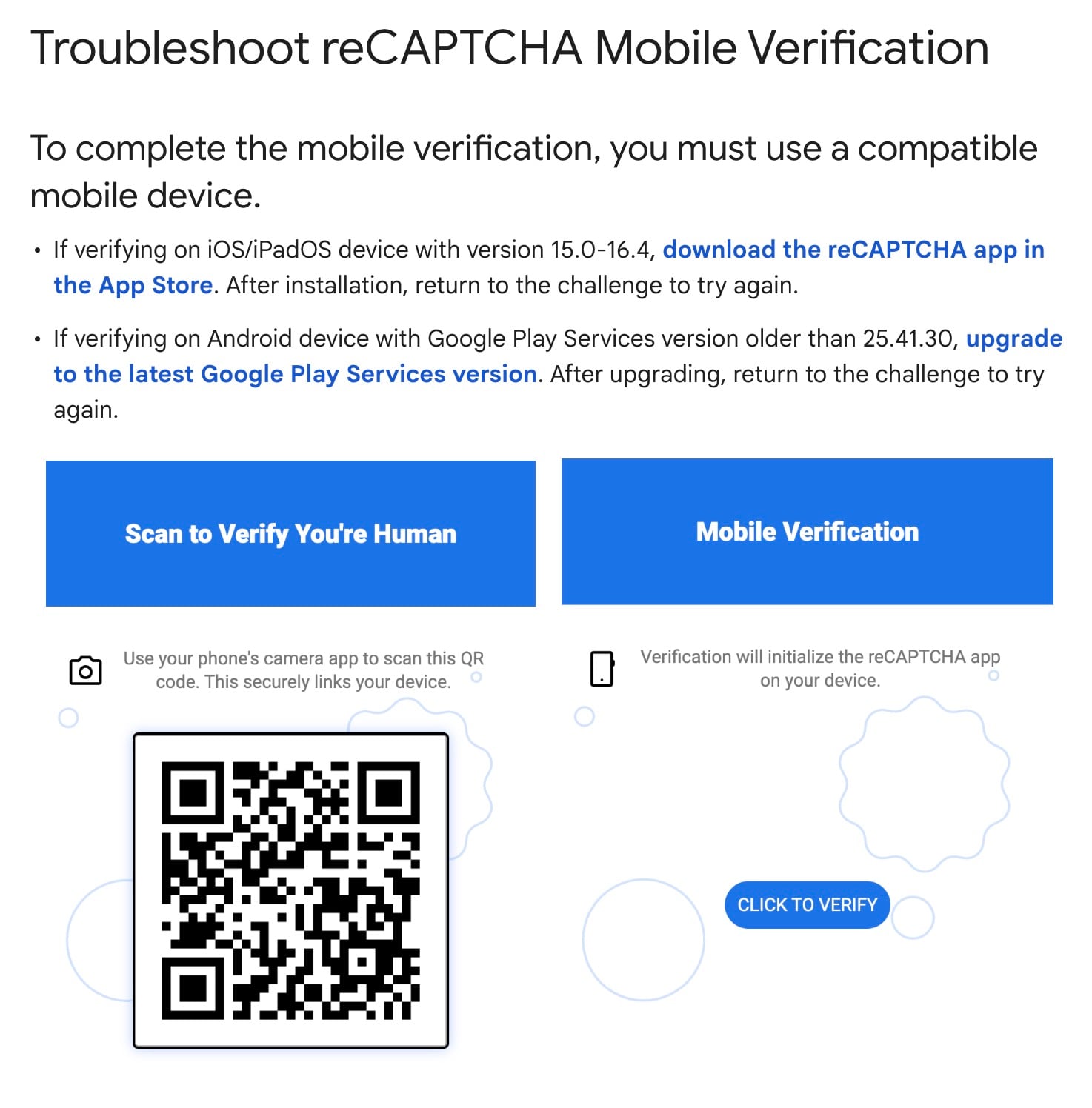
Google CAPTCHA now mandates Play Services—breaks de-Googled Android verification
30-Second TL;DR
What Changed
New reCAPTCHA requires Google Play services on Android
Why It Matters
Privacy-focused users and custom ROM communities face exclusion from sites using reCAPTCHA. Developers may need to seek CAPTCHA alternatives or ensure Google services compatibility.
What To Do Next
Test reCAPTCHA Enterprise on a GrapheneOS device to verify web app compatibility.
Key Points
- •New reCAPTCHA requires Google Play services on Android
- •De-Googled phones fail verification challenges automatically
- •Forces reliance on Google's proprietary ecosystem for CAPTCHA
Deep Insight
AI-generated analysis for this event — not the original article.
Enhanced Key Takeaways
- •The shift involves the transition from reCAPTCHA v2/v3 to the 'reCAPTCHA Enterprise' SDK, which leverages the SafetyNet Attestation API and its successor, the Play Integrity API, to verify device and app authenticity.
- •This implementation effectively enforces a 'hardware-backed' attestation requirement, meaning devices without a Google-certified Trusted Execution Environment (TEE) or those with unlocked bootloaders are flagged as high-risk, regardless of the presence of Google Play Services.
- •The change has triggered significant backlash within the privacy-focused Android community (e.g., GrapheneOS, CalyxOS users), as it forces a choice between using Google's proprietary binary blobs or losing access to essential web services protected by reCAPTCHA.
Competitor Analysis
- Cloudflare Turnstile
- High (No cookies/tracking)
- hCaptcha
- Medium (Privacy-focused mode)
- Google reCAPTCHA Enterprise
- Low (Data collection)
- Cloudflare Turnstile
- Browser-based (JS)
- hCaptcha
- Browser-based (JS)
- Google reCAPTCHA Enterprise
- Hardware-backed (Play Integrity)
- Cloudflare Turnstile
- None
- hCaptcha
- None
- Google reCAPTCHA Enterprise
- Google Play Services
| Feature | Cloudflare Turnstile | hCaptcha | Google reCAPTCHA Enterprise |
|---|---|---|---|
| Privacy Focus | High (No cookies/tracking) | Medium (Privacy-focused mode) | Low (Data collection) |
| Device Attestation | Browser-based (JS) | Browser-based (JS) | Hardware-backed (Play Integrity) |
| Ecosystem Dependency | None | None | Google Play Services |
Technical Deep Dive
- Play Integrity API Integration: The new reCAPTCHA flow triggers a call to the Play Integrity API to verify the 'integrity' of the app binary and the device's boot state.
- Attestation Tokens: The system generates a signed token from Google's servers that validates the device is a genuine, non-tampered Android device running official Google-signed firmware.
- Signal Collection: The SDK collects device-level signals including kernel integrity, bootloader status, and the presence of Google-signed system apps to determine if the environment is 'trusted'.
- Fallback Mechanism: In the absence of the Play Integrity API, the system defaults to a 'fail-closed' state, treating the request as a bot interaction.
Future ImplicationsAI analysis grounded in cited sources
Timeline
- 2014-12Google introduces reCAPTCHA v2, moving away from text-based challenges to 'I'm not a robot' checkboxes.
- 2018-10Google launches reCAPTCHA v3, focusing on risk analysis scores rather than user interaction.
- 2020-06Google announces reCAPTCHA Enterprise, offering deeper integration with Google Cloud and advanced threat detection.
- 2022-06Google begins the formal deprecation of the SafetyNet Attestation API in favor of the Play Integrity API.
- 2025-01Google mandates Play Integrity API for all apps utilizing advanced security features within the Play ecosystem.
Weekly AI Recap
Read this week's curated digest of top AI events →
Related Updates


AI-curated news aggregator. All content rights belong to original publishers.
Original source: cnBeta (Full RSS) ↗
This is a summary, not the original. Read the source, or get the weekly briefing.
The weekly digest
One email a week. Unsubscribe anytime.