Source量子位•Stalecollected in 49m
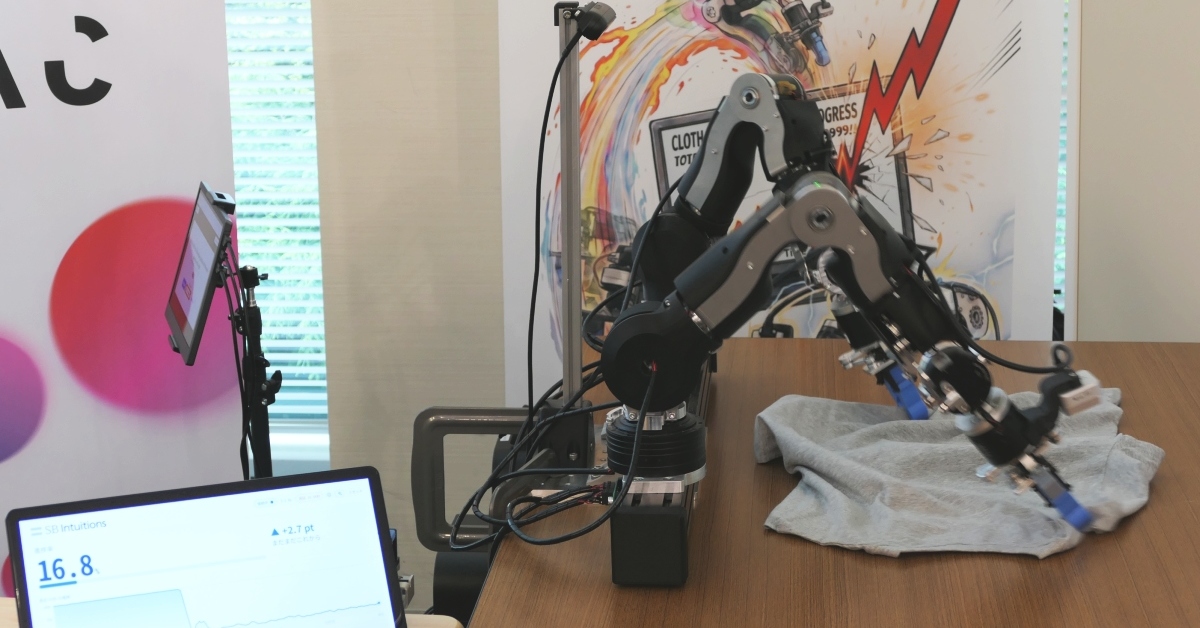
Real Robots Battle in Hackathon PK
💡Robot battles highlight hands-on embodied AI prototyping in hackathons
⚡ 30-Second TL;DR
What Changed
Offline real-robot PK battles demonstrated
Why It Matters
Encourages practical embodied AI development through competitive events, potentially accelerating robot prototyping in communities.
What To Do Next
Register for upcoming robotics hackathons to build and test physical AI agents.
Who should care:Developers & AI Engineers
Key Points
- •Offline real-robot PK battles demonstrated
- •Innovative hackathon format boosts engagement
- •Promotes research-to-production pipeline
🧠 Deep Insight
AI-generated analysis for this event — not the original article.
🔑 Enhanced Key Takeaways
- •The hackathon utilizes a standardized hardware platform, likely based on open-source robotics frameworks like ROS 2, to ensure parity and focus on algorithmic performance during PK battles.
- •The event emphasizes 'Sim-to-Real' transfer capabilities, requiring participants to demonstrate that models trained in virtual environments can successfully execute complex maneuvers in physical, real-world combat scenarios.
- •The competition format is designed to bridge the gap between academic reinforcement learning research and industrial-grade deployment by enforcing strict latency and power consumption constraints on the onboard robot controllers.
🔮 Future ImplicationsAI analysis grounded in cited sources
Standardized robot combat will accelerate the development of low-latency edge AI inference.
The necessity of real-time decision-making in high-speed physical PK battles forces developers to optimize neural network architectures for resource-constrained edge hardware.
Sim-to-Real training pipelines will become the industry standard for deploying autonomous mobile robots.
The success of hackathons demonstrating effective real-world robot performance from virtual training validates the scalability of this development methodology.
📰
Weekly AI Recap
Read this week's curated digest of top AI events →
👉Related Updates

AI-curated news aggregator. All content rights belong to original publishers.
Original source: 量子位 ↗
This is a summary, not the original. Read the source, or get the weekly briefing.
The weekly digest
One email a week. Unsubscribe anytime.