Quantum IPO wave signals market shift, but risks remain
Understand the financial and technical maturity of quantum computing as it moves from lab to public markets.
30-Second TL;DR
What Changed
Quantum computing firms are increasingly pursuing IPOs as investor interest peaks.
Why It Matters
The influx of capital could accelerate R&D, but practitioners should be wary of a potential 'quantum winter' if commercial milestones are missed. It signals a shift toward treating quantum hardware as a viable asset class rather than just academic research.
What To Do Next
Monitor the hardware roadmaps of major quantum players like IBM or IonQ to identify when error-corrected qubits become accessible via cloud APIs.
Key Points
- •Quantum computing firms are increasingly pursuing IPOs as investor interest peaks.
- •2026 is projected as a potential breakout year for quantum commercialization.
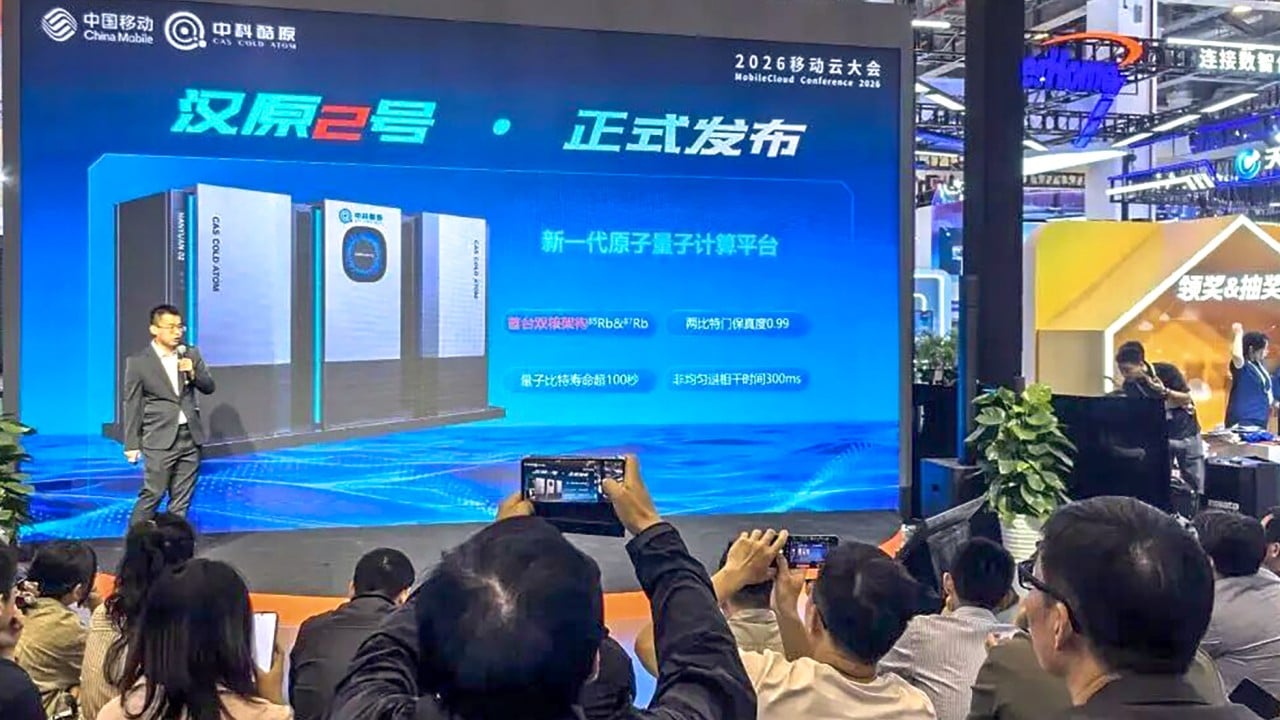
- •China's development of a dual-core quantum computer highlights the sector's rapid technical progress.
- •Market exuberance may be outpacing the actual trajectory of commercial viability.
Deep Insight
Background and context from public sources — not the original article. 18 sources cited.
Enhanced Key Takeaways
- •The quantum computing IPO landscape is diversifying beyond Special Purpose Acquisition Companies (SPACs), with companies like Quantinuum and China's Guoyi Quantum pursuing more traditional IPO paths, signaling a maturing market and increased investor confidence.
- •China's recently unveiled Hanyuan-2 is a 200-qubit dual-core quantum computer utilizing neutral atom technology, which offers advantages such as lower energy consumption (under 7 kW) and easier maintenance compared to superconducting systems, and features two independent qubit arrays for parallel processing or error correction.
- •The global quantum computing market is projected for substantial growth, estimated to reach $3.52 billion in 2025 and expand to $57.56 billion by 2033, demonstrating a rapid compound annual growth rate (CAGR) of 41.8% from 2026 to 2033, fueled by significant public and private investment.
- •The industry's focus is shifting from merely increasing qubit counts to enhancing overall system reliability, coherence, and error correction capabilities, moving beyond the 'noisy intermediate-scale quantum' (NISQ) era towards creating more stable logical qubits.
- •Early commercial applications are emerging in specific high-value sectors such as materials science, drug discovery, logistics optimization, and financial modeling, with some experts anticipating the first truly useful applications within the next 3 to 5 years.
Technical Deep Dive
- Hanyuan-2 (China's Dual-Core Neutral Atom Quantum Computer):
- Qubit Technology: Employs neutral atoms, specifically 100 rubidium-85 atoms and 100 rubidium-87 atoms, totaling 200 qubits.
- Architecture: Features a dual-core design with two independent neutral atom arrays housed within a single cabinet-style enclosure.
- Operating Modes: Supports parallel independent computation and a collaborative mode where one array can perform calculations while the other handles real-time error correction.
- Cooling System: Operates with a small laser cooling system, eliminating the need for extreme cryogenic cooling (dilution refrigerators) typically required by other quantum architectures.
- Power Consumption: Reported to consume less than 7 kilowatts of power.
- Predecessor Performance: The Hanyuan-1, a 100-qubit neutral-atom system, achieved reported single-qubit gate fidelity of 0.999 and two-qubit gate fidelity of 0.98.
- General Quantum Computing Trends:
- Error Correction: The industry is actively developing methods for grouping and controlling physical qubits to minimize errors, with Google Quantum AI's Willow processor demonstrating a milestone in error-protected quantum information.
- Hybrid Systems: There is a growing trend towards building hybrid quantum-classical systems that combine quantum processors with traditional supercomputers to tackle complex problems.
- Diverse Qubit Modalities: Research and development span various qubit technologies, including superconducting qubits (IBM, Google, Origin Quantum), trapped-ion systems (IonQ, Quantinuum), photonic quantum computers (Xanadu, Si Quantum), and topological qubits (Microsoft).
Future ImplicationsAI analysis grounded in cited sources
Timeline
- 2021Quantinuum formed from Honeywell's quantum hardware business and a UK software firm.
- 2024-01-06Origin Quantum's 72-qubit superconducting quantum computer 'Origin Wukong' went online.
- 2025-10China's 100-qubit neutral-atom quantum computer 'Hanyuan-1' began commercial deployment.
- 2026-03Horizon Quantum Computing went public via a SPAC merger.
- 2026-05-07China's CAS Cold Atom Technology announced 'Hanyuan-2,' the world's first dual-core neutral atom quantum computer.
- 2026-05-11Quantinuum filed for an Initial Public Offering (IPO) on Nasdaq.
Sources (18)
Factual claims are grounded in the sources below. Forward-looking analysis is AI-generated interpretation.
Weekly AI Recap
Read this week's curated digest of top AI events →
Related Updates



AI-curated news aggregator. All content rights belong to original publishers.
Original source: SCMP Technology ↗
This is a summary, not the original. Read the source, or get the weekly briefing.
The weekly digest
One email a week. Unsubscribe anytime.