Pudu Robotics Raises $140M, Opens US HQ
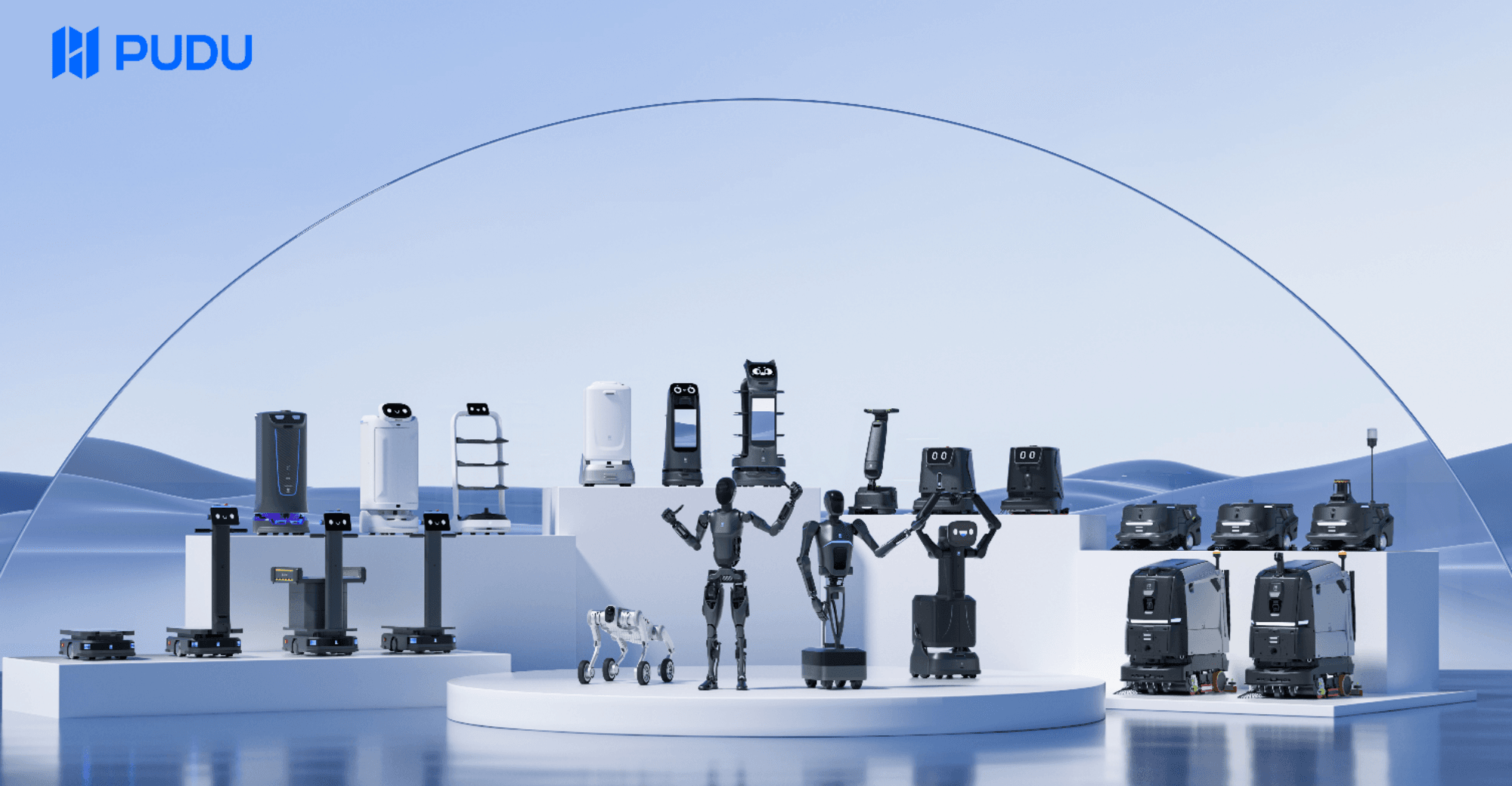
💡$140M raise boosts Pudu Robotics to $1.4B valuation for embodied AI robotics expansion.
⚡ 30-Second TL;DR
What Changed
Raised nearly RMB 1B ($140M) in funding
Why It Matters
This funding round signals strong investor confidence in embodied AI robotics, potentially accelerating hardware and software innovations. AI practitioners may see new collaboration opportunities in the growing robotics market. US expansion could ease access for North American developers.
What To Do Next
Evaluate Pudu Robotics' delivery and service robots for embodied AI integration in commercial projects.
Key Points
- •Raised nearly RMB 1B ($140M) in funding
- •Valuation surpasses $1.4 billion
- •New U.S. headquarters in Dallas
- •Focus on global expansion and embodied AI
🧠 Deep Insight
AI-generated analysis for this event — not the original article.
🔑 Enhanced Key Takeaways
- •The funding round was led by Meituan, a strategic investor that has consistently supported Pudu's growth since its early stages, signaling continued confidence in the commercial service robot sector.
- •Pudu's Dallas headquarters is specifically designed to serve as a hub for localized R&D and technical support, aiming to reduce latency in deploying their embodied AI models for North American hospitality and retail clients.
- •The company is shifting its product strategy from simple autonomous mobile robots (AMRs) to 'Embodied AI' platforms, integrating large language models (LLMs) to enable robots to understand natural language commands and perform complex, non-repetitive tasks.
📊 Competitor Analysis▸ Show
| Feature | Pudu Robotics | Bear Robotics | Keenon Robotics |
|---|---|---|---|
| Primary Market | Global (Hospitality/Retail) | North America (Hospitality) | Global (Hospitality/Healthcare) |
| Core Tech | Embodied AI / SLAM | Proprietary LiDAR / Fleet Mgmt | Multi-sensor Fusion / Cloud AI |
| Pricing Model | Hardware + Subscription | Hardware + Service Fee | Hardware + SaaS |
| Key Benchmark | High deployment density | High reliability/uptime | High versatility/customization |
🛠️ Technical Deep Dive
- •Pudu's embodied AI architecture utilizes a multi-modal perception system combining 3D LiDAR, depth cameras, and ultrasonic sensors for real-time obstacle avoidance and navigation.
- •The software stack incorporates a proprietary 'Pudu OS' that now integrates transformer-based models to process unstructured environmental data.
- •The robots utilize edge computing for low-latency decision-making, while offloading complex semantic reasoning to cloud-based LLM clusters.
- •The navigation system employs a hybrid approach, combining traditional SLAM (Simultaneous Localization and Mapping) with deep reinforcement learning for dynamic path planning in crowded environments.
🔮 Future ImplicationsAI analysis grounded in cited sources
⏳ Timeline
Weekly AI Recap
Read this week's curated digest of top AI events →
👉Related Updates
AI-curated news aggregator. All content rights belong to original publishers.
Original source: Pandaily ↗
This is a summary, not the original. Read the source, or get the weekly briefing.
The weekly digest
One email a week. Unsubscribe anytime.