Pudu Robotics unveils 'One Brain, Many Forms' strategy

💡Learn how top robotics firms are standardizing AI brains to scale across diverse hardware form factors.
⚡ 30-Second TL;DR
What Changed
Introduced 'One Brain, Many Forms' (一腦多形) as the core corporate strategy.
Why It Matters
This strategy signals a shift in the robotics industry toward modular AI software that can be ported across diverse hardware, potentially lowering development costs for specialized robots.
What To Do Next
Analyze how Pudu's 'One Brain, Many Forms' architecture decouples perception and decision-making from hardware to optimize your own robotics software stack.
Key Points
- •Introduced 'One Brain, Many Forms' (一腦多形) as the core corporate strategy.
- •Leverages PuduFM (Foundation Model) and PuduAgent for cross-platform intelligence.
- •Focuses on decoupling software intelligence from specific robotic hardware bodies.
- •Aims to maintain market leadership by evolving from hardware-centric to AI-centric robotics.
🧠 Deep Insight
AI-generated analysis for this event — not the original article.
🔑 Enhanced Key Takeaways
- •Pudu Robotics has transitioned its R&D focus toward embodied AI, specifically targeting the integration of large language models (LLMs) to enhance human-robot interaction in complex service environments.
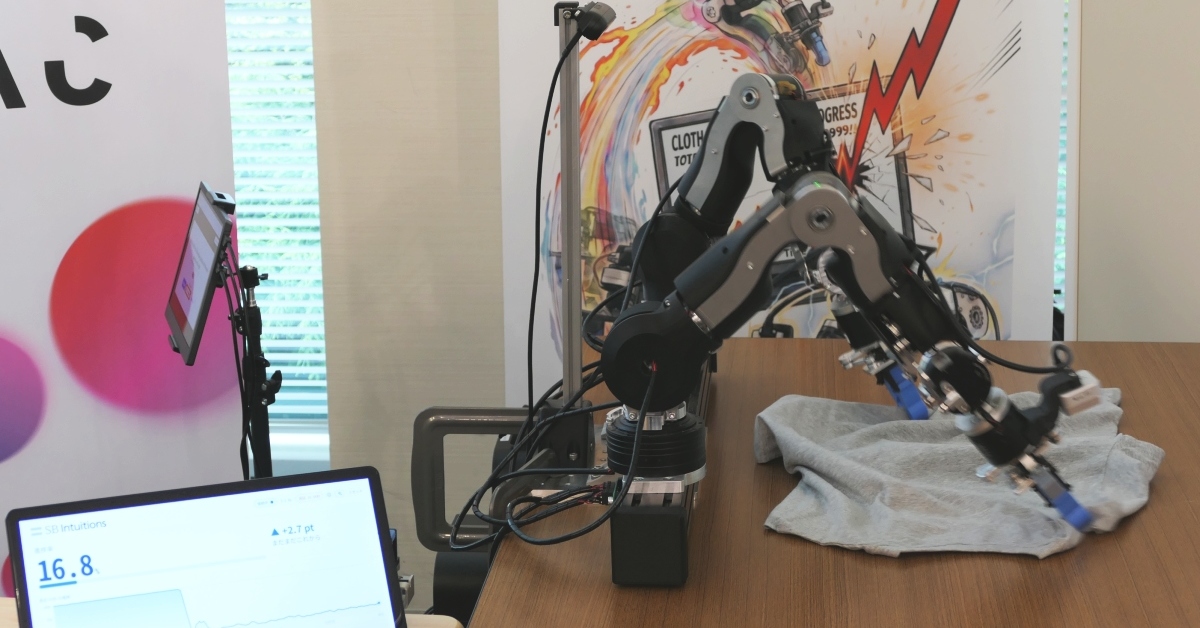
- •The 'One Brain' architecture utilizes a modular middleware layer that allows the same PuduFM instance to control disparate hardware, such as delivery robots, cleaning machines, and industrial manipulators.
- •PuduAgent serves as the orchestration layer, enabling robots to perform autonomous task planning and multi-step reasoning without requiring hard-coded scripts for every scenario.
- •The strategy addresses the 'fragmentation problem' in the robotics industry, where proprietary software stacks previously prevented cross-platform intelligence sharing.
- •Pudu Robotics has reported that this architectural shift has reduced the time-to-market for new hardware form factors by approximately 30% due to software reuse.
📊 Competitor Analysis▸ Show
| Feature | Pudu Robotics (One Brain) | Keenon Robotics | Gaussian Robotics |
|---|---|---|---|
| Core Strategy | Unified AI Brain (PuduFM) | Hardware-Specific Optimization | Specialized Cleaning AI |
| Platform Flexibility | High (Cross-hardware) | Medium (Service-focused) | Low (Cleaning-focused) |
| Intelligence Level | Embodied AI/LLM-driven | Task-based automation | SLAM/Navigation-focused |
🛠️ Technical Deep Dive
- PuduFM Architecture: A proprietary foundation model trained on multi-modal service robotics data, including visual, auditory, and sensor-based inputs.
- Middleware Integration: Uses a decoupled ROS-based (Robot Operating System) architecture that abstracts hardware drivers from the high-level decision-making engine.
- PuduAgent Capabilities: Implements chain-of-thought processing to allow robots to interpret natural language commands and translate them into kinematic motion sequences.
- Edge-Cloud Synergy: Employs a hybrid computing model where latency-sensitive navigation is handled on-device, while complex reasoning tasks are offloaded to the cloud.
🔮 Future ImplicationsAI analysis grounded in cited sources
⏳ Timeline
Weekly AI Recap
Read this week's curated digest of top AI events →
👉Related Updates
AI-curated news aggregator. All content rights belong to original publishers.
Original source: 量子位 ↗
This is a summary, not the original. Read the source, or get the weekly briefing.
The weekly digest
One email a week. Unsubscribe anytime.