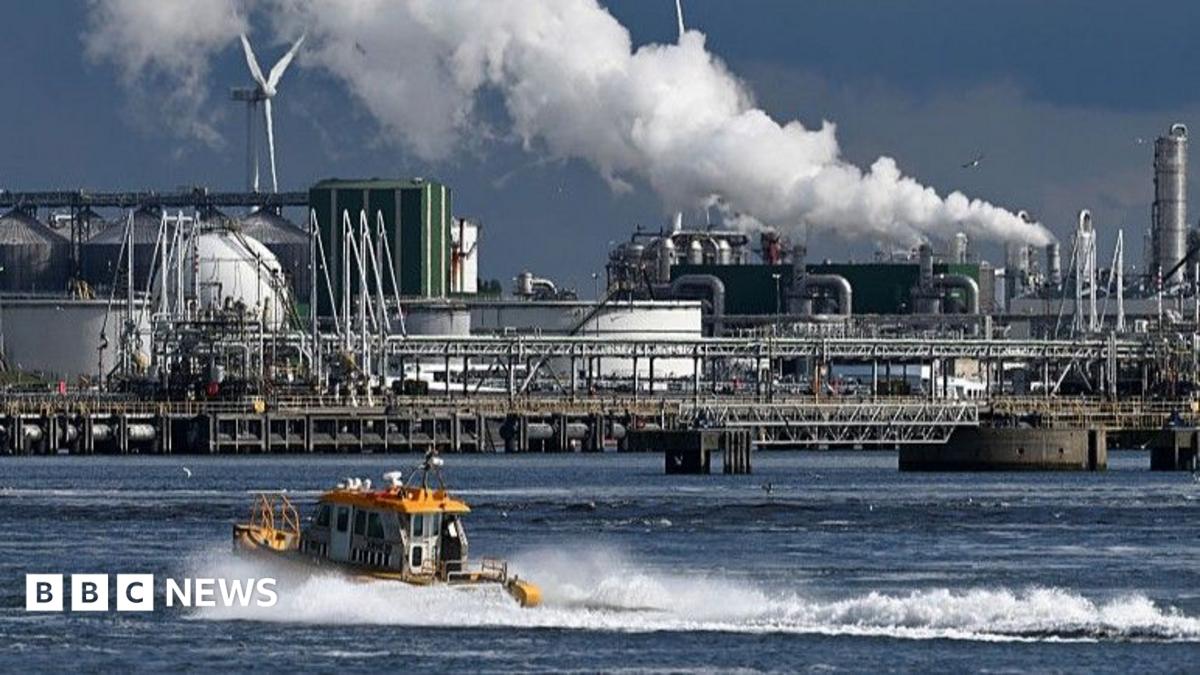
Pressure mounts for Port of Rotterdam to decarbonize
💡Understand how legal climate mandates are driving demand for AI-optimized industrial infrastructure and energy systems.
⚡ 30-Second TL;DR
What Changed
Legal action demands the Port of Rotterdam reduce fossil fuel reliance
Why It Matters
This lawsuit could set a precedent for how industrial infrastructure providers are held accountable for their carbon footprint, potentially forcing rapid adoption of AI-driven energy management systems.
What To Do Next
Explore AI-based energy optimization tools for industrial logistics to help infrastructure clients meet sustainability mandates.
Key Points
- •Legal action demands the Port of Rotterdam reduce fossil fuel reliance
- •Increasing pressure on industrial hubs to meet climate goals
- •Potential shift in operational strategy for Europe's largest port
🧠 Deep Insight
AI-generated analysis for this event — not the original article.
🔑 Enhanced Key Takeaways
- •The legal challenge is spearheaded by environmental organizations including Milieudefensie, citing the port's significant contribution to the Netherlands' total carbon emissions.
- •The Port of Rotterdam Authority has already committed to a 'Port Vision 2030' strategy, aiming to become climate-neutral by 2050, but activists argue this timeline is insufficient to meet Paris Agreement targets.
- •A central point of contention is the port's heavy reliance on the petrochemical cluster, which accounts for a substantial portion of its revenue and regional employment.
- •The port is currently investing in the Porthos project, a large-scale carbon capture and storage (CCS) initiative designed to store CO2 in depleted gas fields under the North Sea.
- •New EU regulations, specifically the Corporate Sustainability Reporting Directive (CSRD), are increasing the legal liability of port authorities regarding the indirect emissions (Scope 3) of companies operating within their jurisdiction.
📊 Competitor Analysis▸ Show
| Feature | Port of Rotterdam | Port of Antwerp-Bruges | Port of Hamburg |
|---|---|---|---|
| Primary Focus | Petrochemicals/Energy | Chemicals/Containers | Containers/Logistics |
| Decarbonization Strategy | Porthos CCS/Hydrogen | Antwerp@C (CCS/Hydrogen) | Green Port Strategy |
| 2050 Net Zero Goal | Yes | Yes | Yes |
🛠️ Technical Deep Dive
- Porthos Project: Utilizes depleted offshore gas fields for CO2 sequestration, targeting an annual capacity of 2.5 million tonnes of CO2.
- Hydrogen Backbone: Development of a 30km hydrogen pipeline network connecting the port to the national grid to facilitate industrial fuel switching.
- Shore Power Infrastructure: Implementation of high-voltage shore connection (HVSC) systems to allow docked vessels to switch off auxiliary engines, reducing local NOx and SOx emissions.
- Energy Hub Integration: Integration of large-scale electrolyzers (100MW+) to convert offshore wind energy into green hydrogen for industrial feedstock.
🔮 Future ImplicationsAI analysis grounded in cited sources
⏳ Timeline
Weekly AI Recap
Read this week's curated digest of top AI events →
👉Related Updates


AI-curated news aggregator. All content rights belong to original publishers.
Original source: BBC Technology ↗
This is a summary, not the original. Read the source, or get the weekly briefing.
The weekly digest
One email a week. Unsubscribe anytime.