Polymaker: 3D Printing Won't Have 'Internet-Style' Winners
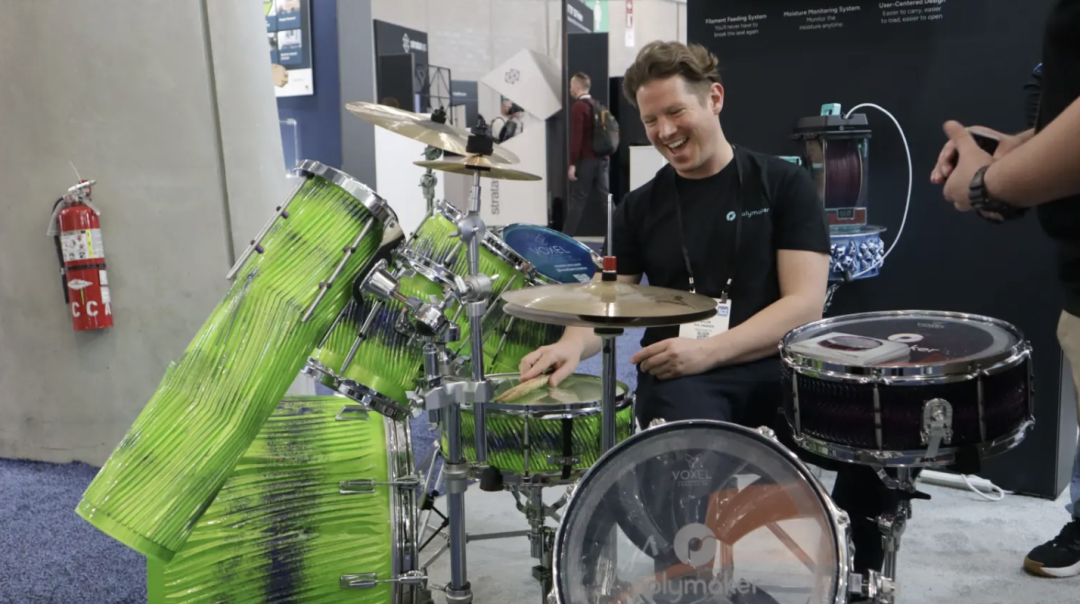
A veteran's take on why 3D printing isn't a 'winner-takes-all' market and where the real value lies.
30-Second TL;DR
What Changed
3D printing is shifting from equipment-centric to material-centric research.
Why It Matters
This perspective challenges the hype-driven investment cycle, suggesting that sustainable growth in 3D printing requires deep technical expertise in material science.
What To Do Next
If you are building AI-driven hardware, look beyond standard PLA and explore specialized high-performance materials to improve part durability and functionality.
Key Points
- •3D printing is shifting from equipment-centric to material-centric research.
- •Industry growth is driven by 'printability' and expanded material processing windows.
- •Market scale has grown from hundreds of tons to hundreds of thousands of tons.
- •The industry is moving away from the 'one-size-fits-all' PLA dominance.
Deep Insight
Background and context from public sources — not the original article. 18 sources cited.
Enhanced Key Takeaways
- •Polymaker was founded in 2012 by a group of four materials scientists, including Luo Xiaofan and Hang Qu, with an initial mission to develop and manufacture high-quality 3D printing materials, specifically improving PLA's softening point to reduce extruder jamming.
- •The company has significantly expanded its product portfolio beyond basic filaments, introducing specialized materials such as PolyMide™ CoPA, which incorporates Warp Free™ Technology to mitigate warping issues in nylon, and a glass-filled ASA pellet used in the construction of the world's largest 3D printed bridge.
- •Polymaker recently launched two new product families: Fiberon™, focusing on high-performance composite filaments with enhanced printability, and Panchroma™, dedicated to filaments offering a diverse range of aesthetic properties like various colors and surface finishes.
- •The term 'printability' in 3D printing refers to a material's inherent capability to form and maintain a designed structure with acceptable shape fidelity, mechanical stability, and structural integrity, a characteristic significantly influenced by factors such as rheological properties, layer adhesion, and warping.
- •The global 3D printing materials market was valued at approximately USD 4.80 billion in 2026 and is projected to grow to USD 23.64 billion by 2034, at a compound annual growth rate (CAGR) of 22.06%, with polymers continuing to dominate consumption volumes while metals and advanced composites drive the fastest revenue growth.
Technical Deep Dive
- Polymaker's PolyMide™ CoPA utilizes proprietary Warp Free™ Technology to enable easier printing of nylon, a material typically prone to warping.
- The company developed a glass-filled ASA pellet (AS200GF) that was used to print a large pedestrian bridge, demonstrating its application in large-scale construction.
- The Fiberon™ product line includes advanced fiber-reinforced materials like PET-CF17, PETG-rCF08, and PPSCF10, designed to bring industrial-grade composite performance to desktop FFF 3D printers.
- Polymaker's Technical Data Sheets (TDS) provide detailed mechanical and thermal properties for their filaments, including density, XY Tensile Strength (e.g., PolyLite™ PLA at 52.3 MPa, Fiberon™ PET-CF17 annealed at 65.9 MPa), Heat Deflection Temperature (HDT), Vicat Softening Temperature, and Charpy Impact Strength.
- 'Printability' is a complex property influenced by a material's rheological characteristics (viscosity, shear-thinning behavior, yield stress), which govern extrusion ease and structural stability, as well as factors like layer adhesion and resistance to warping.
Future ImplicationsAI analysis grounded in cited sources
Timeline
- 2012Polymaker was founded by Luo Xiaofan and Hang Qu, focusing on developing high-quality 3D printing materials.
- 2014-04Polymaker launched its first successful Kickstarter campaign, introducing four new 3D printing materials.
- 2018Polymaker introduced PolyMide™ CoPA with Warp Free™ Technology and a glass-filled ASA pellet used for a large 3D printed bridge.
- 2019Polymaker was awarded 'Material Company of the Year' at the 3D Printing Industry Awards.
- 2022-10-17Polymaker completed a Series B funding round, raising over CNY 100 million.
- 2024-07-26Polymaker launched two new product families: Fiberon™ for high-performance composites and Panchroma™ for aesthetic filaments.
Sources (18)
Factual claims are grounded in the sources below. Forward-looking analysis is AI-generated interpretation.
Weekly AI Recap
Read this week's curated digest of top AI events →
AI-curated news aggregator. All content rights belong to original publishers.
Original source: 虎嗅 ↗
This is a summary, not the original. Read the source, or get the weekly briefing.
The weekly digest
One email a week. Unsubscribe anytime.