🔥36氪•Freshcollected in 21m
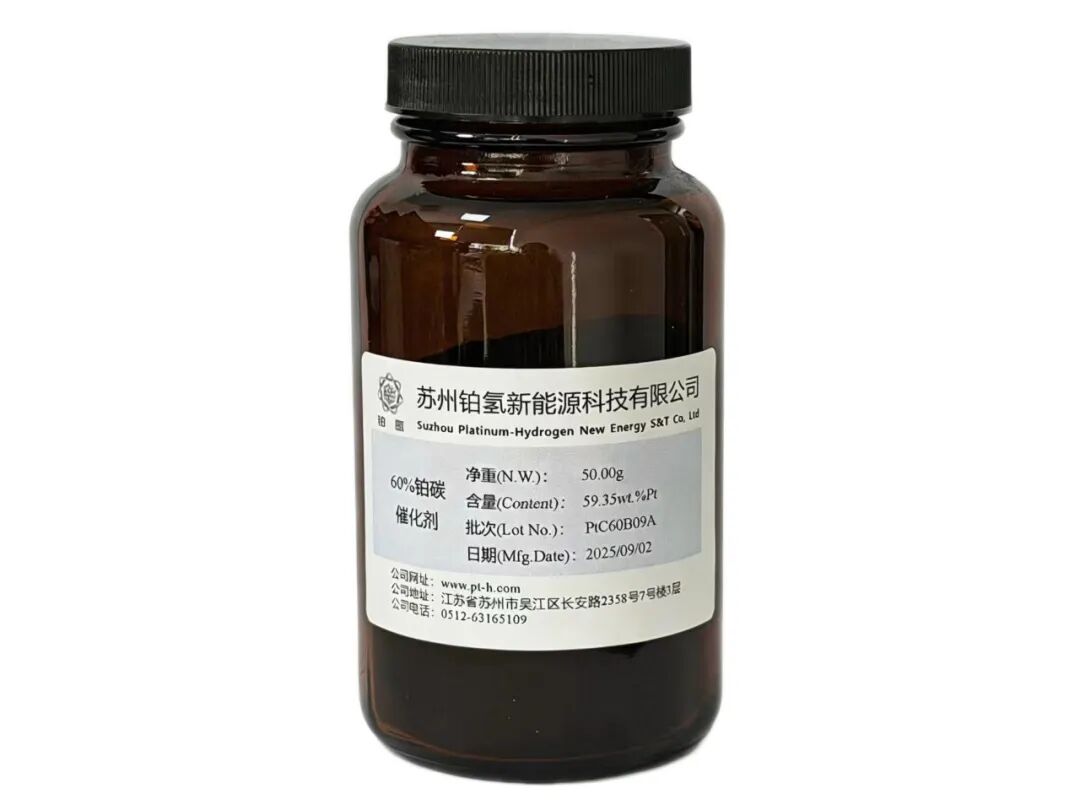
Platinum Hydrogen Tech Boosts Catalyst Stability by 50%
#hydrogen-energy#material-science#sustainabilityplatinum-hydrogen-technologyplatinum hydrogen technology
💡Discover how material science innovation in hydrogen catalysts is lowering costs for sustainable energy infrastructure.
⚡ 30-Second TL;DR
What Changed
Raised millions in Pre-A funding led by Dongyun Venture Capital.
Why It Matters
Advancements in catalyst efficiency are critical for lowering the cost of green hydrogen, which is essential for sustainable AI data center power solutions.
What To Do Next
Monitor material science breakthroughs in hydrogen catalysts if your AI infrastructure strategy involves green energy integration.
Who should care:Founders & Product Leaders
Key Points
- •Raised millions in Pre-A funding led by Dongyun Venture Capital.
- •Developed Pt/C catalysts with 40-50% higher stability than traditional versions.
- •Reduced precious metal usage to 0.4mg/cm² in PEM water electrolysis.
- •Plans to scale production and expand to 320+ clients by 2027.
🧠 Deep Insight
AI-generated analysis for this event.
🔑 Enhanced Key Takeaways
- •Platinum Hydrogen Technology (Platinum Hydrogen) is headquartered in the Suzhou Industrial Park, a major hub for China's hydrogen energy industry development.
- •The company's core technical team originates from top-tier domestic research institutions, focusing on the interface engineering of noble metal nanostructures to prevent catalyst agglomeration.
- •Their catalyst manufacturing process utilizes a proprietary continuous flow synthesis method, which allows for better control over particle size distribution compared to traditional batch processing.
- •The company has established a pilot production line capable of producing multi-kilogram batches, bridging the gap between laboratory-scale synthesis and industrial mass production.
- •Beyond PEM water electrolysis, the company is actively researching applications for their catalyst technology in high-temperature proton exchange membrane fuel cells (HT-PEMFC) to address carbon monoxide poisoning issues.
📊 Competitor Analysis▸ Show
| Feature | Platinum Hydrogen | Johnson Matthey | Heraeus |
|---|---|---|---|
| Catalyst Stability | +50% vs Traditional | Industry Standard | Industry Standard |
| Precious Metal Loading | 0.4mg/cm² | 0.5-0.8mg/cm² | 0.5-0.7mg/cm² |
| Primary Market | PEM Electrolysis | Global Industrial | Global Industrial |
🛠️ Technical Deep Dive
- Catalyst Architecture: Utilizes a core-shell nanostructure where a platinum-alloy shell is supported on a modified carbon or metal-oxide substrate to enhance electrochemical surface area (ECSA).
- Durability Mechanism: Employs surface ligand engineering to stabilize platinum atoms, significantly reducing the dissolution and Ostwald ripening rates during potential cycling.
- Loading Efficiency: Achieves high mass activity through optimized pore structure design, allowing for effective triple-phase boundary utilization at lower noble metal loadings.
- Synthesis Method: Employs a continuous micro-fluidic reactor system that ensures high reproducibility and narrow particle size distribution (typically <3nm).
🔮 Future ImplicationsAI analysis grounded in cited sources
Cost parity with alkaline electrolysis by 2028
Reducing platinum loading to 0.4mg/cm² significantly lowers the stack cost, which is the primary barrier to PEM electrolysis adoption.
Supply chain localization for PEM components
The company's ability to scale production domestically reduces reliance on imported high-performance catalysts for Chinese hydrogen projects.
⏳ Timeline
2024-03
Company incorporation in Suzhou Industrial Park
2025-06
Completion of laboratory-scale catalyst performance validation
2026-02
Successful pilot production line commissioning
2026-07
Announcement of Pre-A funding round led by Dongyun Venture Capital
📰
Weekly AI Recap
Read this week's curated digest of top AI events →
👉Related Updates

AI-curated news aggregator. All content rights belong to original publishers.
Original source: 36氪 ↗