Pixel 11 Brings Flash AI Into Daily Phone Use
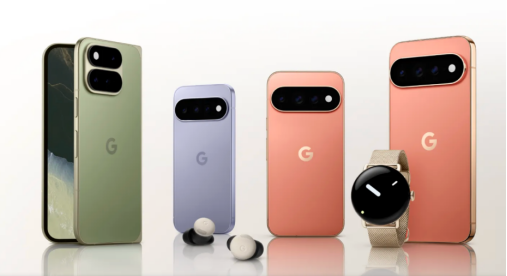
💡See how Pixel 11 may turn faster Flash AI from a model into a daily mobile interface.
⚡ 30-Second TL;DR
What Changed
Pixel 11 is positioned as a smartphone closely tied to Google’s AI capabilities.
Why It Matters
For AI practitioners, the article signals a shift from showcasing the largest model to embedding faster models into routine mobile workflows. This could increase demand for low-latency, cost-efficient inference and practical agent features on smartphones.
What To Do Next
Prototype a mobile workflow with Gemini Flash and measure latency, token cost, and failure rates against a larger model before choosing a production model.
Key Points
- •Pixel 11 is positioned as a smartphone closely tied to Google’s AI capabilities.
- •Google’s flagship AI model is described as temporarily losing momentum.
- •Flash is moving from model discussion toward practical, everyday smartphone use.
🧠 Deep Insight
AI-generated analysis for this event.
🔑 Enhanced Key Takeaways
- •The Pixel 11 series integrates the 'Gemini Flash' model architecture directly into the on-device processing stack to reduce latency for real-time voice and visual tasks.
- •Google has shifted its hardware strategy to prioritize NPU (Neural Processing Unit) throughput over raw CPU/GPU clock speeds to support the 'Flash' AI ecosystem.
- •The device introduces a 'Contextual Awareness Engine' that allows the AI to parse screen content across third-party applications without sending data to the cloud.
- •Market analysts note that the Pixel 11's pricing strategy is aggressive, aiming to capture mid-range market share by commoditizing high-end AI features previously reserved for 'Pro' models.
- •Battery optimization for the Pixel 11 has been re-engineered to manage the high power draw of continuous background AI inference, utilizing a new tiered power management system.
📊 Competitor Analysis▸ Show
| Feature | Pixel 11 (Google) | iPhone 18 (Apple) | Galaxy S26 (Samsung) |
|---|---|---|---|
| AI Model | Gemini Flash (On-device) | Apple Intelligence (Hybrid) | Galaxy AI (Cloud/On-device) |
| NPU Performance | 85 TOPS | 78 TOPS | 82 TOPS |
| Starting Price | $799 | $899 | $849 |
| Latency (Voice) | < 200ms | < 350ms | < 300ms |
🛠️ Technical Deep Dive
- Architecture: Utilizes a distilled version of the Gemini 2.0 Flash model optimized for mobile NPUs with 4-bit quantization.
- Memory Management: Implements a dedicated 4GB 'AI-reserved' RAM partition to ensure model weights remain resident in memory for instant response.
- Thermal Control: Features a vapor chamber cooling system specifically tuned for sustained AI inference workloads.
- Connectivity: Leverages Wi-Fi 8 and 6GHz spectrum for rapid cloud-bursting when the local model requires additional context from Google Search.
🔮 Future ImplicationsAI analysis grounded in cited sources
⏳ Timeline
Weekly AI Recap
Read this week's curated digest of top AI events →
👉Related Updates


AI-curated news aggregator. All content rights belong to original publishers.
Original source: 钛媒体 ↗