Perseverance Rover Sends Mars Selfie and Science Updates
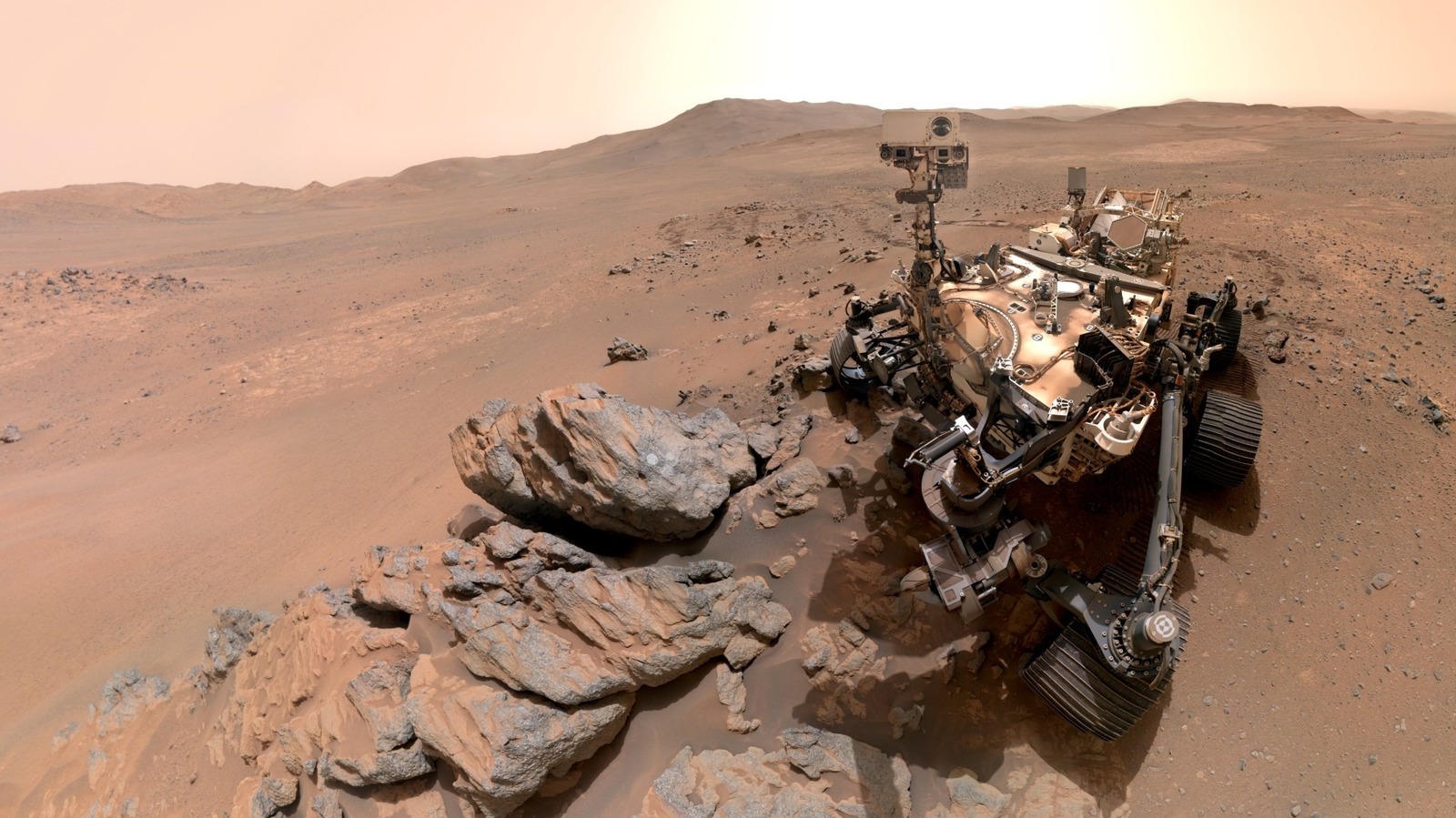
See how autonomous robotics handle extreme environments and learn about the data infrastructure powering Mars missions.
30-Second TL;DR
What Changed
Perseverance rover successfully transmitted a high-resolution selfie from Mars.
Why It Matters
The mission demonstrates advancements in autonomous robotics and long-distance data transmission, critical for future AI-driven space exploration.
What To Do Next
Review NASA's open-source data portals to explore how autonomous navigation datasets from Mars missions can be applied to terrestrial robotics.
Key Points
- •Perseverance rover successfully transmitted a high-resolution selfie from Mars.
- •Growing environmental concerns regarding the impact of frequent satellite launches.
- •Ongoing scientific data collection regarding Martian geology and atmosphere.
Deep Insight
Background and context from public sources — not the original article. 34 sources cited.
Enhanced Key Takeaways
- •Perseverance's core mission includes directly searching for signs of ancient microbial life in Jezero Crater and collecting rock and regolith samples for eventual return to Earth.
- •The MOXIE experiment successfully demonstrated the production of oxygen from Mars' carbon dioxide atmosphere, a critical step for future human exploration and in-situ resource utilization.
- •The Ingenuity helicopter, initially a technology demonstration, far exceeded its planned five flights, completing 72 sorties and proving the viability of powered, controlled flight on Mars before its retirement in January 2024.
- •Recent scientific findings from Perseverance in Jezero Crater include the discovery of igneous rocks and evidence of an ancient lake environment, challenging initial assumptions about the crater's geological history.
- •The Mars Sample Return (MSR) mission, intended to bring Perseverance's collected samples to Earth, has faced significant funding cuts and is effectively canceled in its current form, potentially delaying the analysis of these samples.
Technical Deep Dive
- Mastcam-Z: An advanced mast-mounted camera system with panoramic and stereoscopic imaging capabilities and a zoom function, used for high-definition video, panoramic color, and 3D images of the Martian surface and atmospheric features.
- SuperCam: An instrument that combines a camera, laser, and spectrometers to analyze the chemical composition, mineralogy, and hardness of rocks and soils from a distance of over 20 feet (7 meters), capable of identifying areas as small as a pencil point.
- MEDA (Mars Environmental Dynamics Analyzer): A suite of seven sensors designed to characterize Martian atmospheric and surface meteorological conditions, measuring wind speed and direction, air temperature, atmospheric pressure, relative humidity, and dust properties.
- SHERLOC (Scanning Habitable Environments with Raman & Luminescence for Organics and Chemicals): Mounted on the robotic arm, this ultraviolet Raman spectrometer uses fine-scale imaging (including the WATSON camera) and a UV laser to determine fine-scale mineralogy and detect organic compounds, searching for signs of past microbial life.
- PIXL (Planetary Instrument for X-ray Lithochemistry): A micro-focus X-ray fluorescence spectrometer located on the robotic arm, which rapidly analyzes the elemental chemistry of target surfaces at high spatial resolution (120 micrometer diameter X-ray beam).
- MOXIE (Mars Oxygen In-Situ Resource Utilization Experiment): A technology demonstration instrument that successfully produced oxygen from the carbon dioxide-rich Martian atmosphere through solid oxide electrolysis, aiming for 98% purity or better.
- RIMFAX (Radar Imager for Mars' Subsurface Experiment): The first ground-penetrating radar on Mars, provided by the Norwegian Defence Research Establishment, designed to image different ground densities, structural layers, buried rocks, meteorites, and detect underground water ice and salty brine up to 10 meters deep.
Future ImplicationsAI analysis grounded in cited sources
Timeline
- 2020-07-30Perseverance rover and Ingenuity helicopter launched from Cape Canaveral.
- 2021-02-18Perseverance rover successfully landed in Jezero Crater, Mars.
- 2021-04-19Ingenuity Mars Helicopter completed its historic first powered, controlled flight on another planet.
- 2021-04-20MOXIE successfully produced oxygen from the Martian atmosphere for the first time.
- 2024-01-18Ingenuity Mars Helicopter completed its 72nd and final flight before being retired due to rotor blade damage.
- 2026-01-08The U.S. Congress passed a budget that effectively cut funding for the Mars Sample Return mission, impacting its existing architecture.
Sources (34)
Factual claims are grounded in the sources below. Forward-looking analysis is AI-generated interpretation.
Weekly AI Recap
Read this week's curated digest of top AI events →
Related Updates

AI-curated news aggregator. All content rights belong to original publishers.
Original source: Engadget ↗
This is a summary, not the original. Read the source, or get the weekly briefing.
The weekly digest
One email a week. Unsubscribe anytime.