Patient uses AI to self-diagnose rare disease
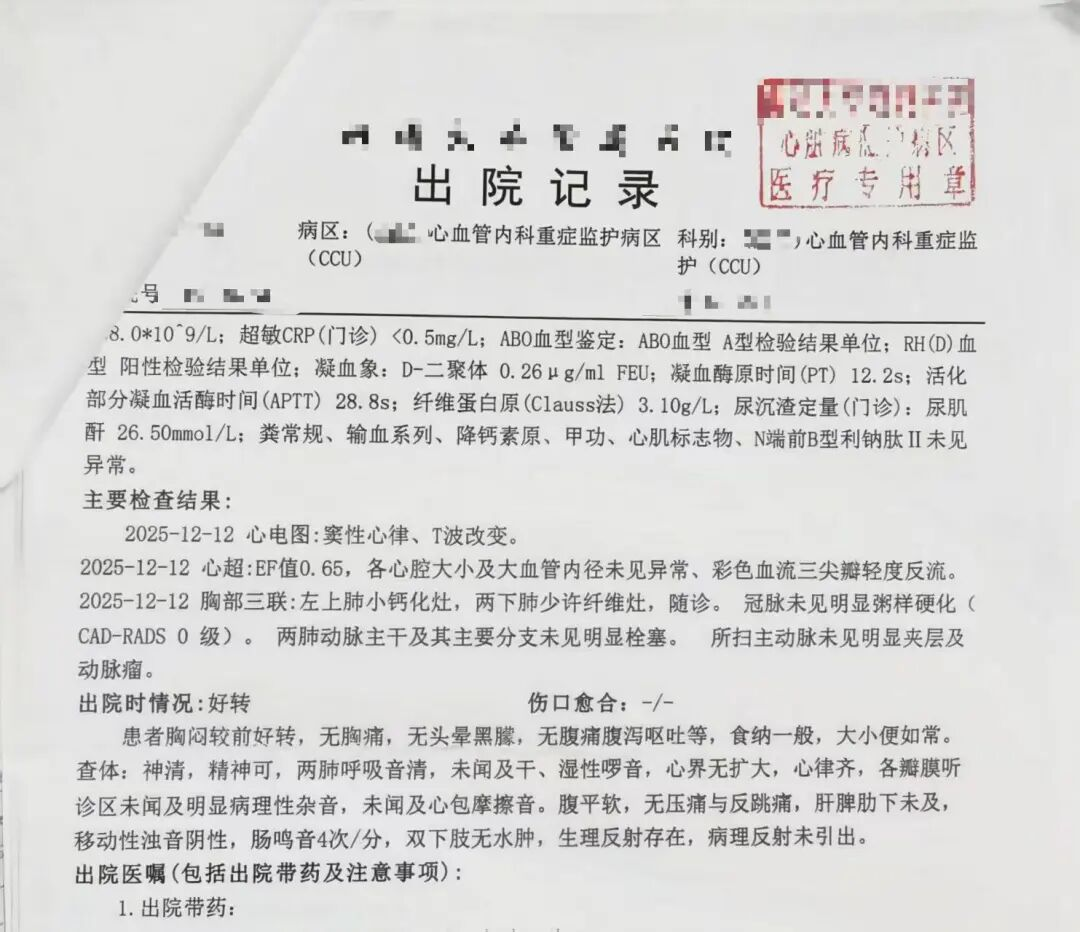
A compelling case study on how AI can assist in diagnosing rare diseases when traditional clinical paths fail.
30-Second TL;DR
What Changed
Patient used AI to correlate symptoms of asthma, fever, and chest pain.
Why It Matters
AI tools are becoming vital for patients to navigate complex medical information, potentially bridging the gap in diagnostic speed for rare conditions.
What To Do Next
Experiment with using LLMs to synthesize complex symptom lists for personal health research, but always verify with medical professionals.
Key Points
- •Patient used AI to correlate symptoms of asthma, fever, and chest pain.
- •AI suggested EGPA, a rare condition often misdiagnosed or missed.
- •Highlights the potential of AI as a second-opinion tool for rare diseases.
- •Emphasizes the importance of patient-led research in medical diagnosis.
Deep Insight
Background and context from public sources — not the original article. 21 sources cited.
Enhanced Key Takeaways
- •The diagnostic journey for rare diseases often extends beyond 5-7 years, with some conditions taking over a decade, leading to disease progression and limited access to targeted therapies. AI aims to significantly reduce this diagnostic delay.
- •AI-powered tools leverage advanced techniques such as machine learning, natural language processing (NLP), and deep learning to analyze vast and diverse medical data, including patient histories, clinical notes, research publications, and genomic information. These algorithms identify complex symptom patterns and genetic variants that are indicative of rare diseases and might be missed by human clinicians.
- •While AI offers promising capabilities for diagnosis, studies indicate that general large language models (LLMs) used for self-diagnosis can perform worse than expected, exhibit overconfidence in incorrect recommendations, and increase the risk of spreading medical misinformation, highlighting the need for careful implementation and validation.
Competitor Analysis
- Key Features
- AI-powered search engine for physicians; uses Natural Language Processing (NLP) to interpret clinical descriptions and match symptoms with rare disease databases.
- Benchmarks/Performance
- Aids physicians in exploring diagnostic possibilities.
- Pricing
- null
- Key Features
- Patient-facing AI tool that matches self-reported symptoms with rare diseases.
- Benchmarks/Performance
- Helps identify potential rare genetic diseases.
- Pricing
- null
- Key Features
- Multi-agent AI framework integrating 40 specialized digital tools; analyzes genomic data, structured/unstructured medical records, and curated medical databases.
- Benchmarks/Performance
- Achieved a 64.4% first-attempt diagnostic accuracy compared to 54.6% for experienced physicians in a head-to-head evaluation.
- Pricing
- null
- Key Features
- Symptom checker that uses AI to provide differential diagnoses.
- Benchmarks/Performance
- Outperformed other symptom checkers (e.g., Ada, K Health, Buoy) by averages of 24.5% to 2968.1% in listing main diagnoses at the top of differentials; compared favorably to primary care physicians.
- Pricing
- null
- Key Features
- AI-powered smartphone app that uses computer vision to analyze facial features for identifying rare genetic disorders.
- Benchmarks/Performance
- Helps identify genetic syndromes.
- Pricing
- null
| Competitor | Key Features | Benchmarks/Performance | Pricing |
|---|---|---|---|
| FindZebra | AI-powered search engine for physicians; uses Natural Language Processing (NLP) to interpret clinical descriptions and match symptoms with rare disease databases. | Aids physicians in exploring diagnostic possibilities. | null |
| ThinkGenetic (SymptomMatcher) | Patient-facing AI tool that matches self-reported symptoms with rare diseases. | Helps identify potential rare genetic diseases. | null |
| DeepRare | Multi-agent AI framework integrating 40 specialized digital tools; analyzes genomic data, structured/unstructured medical records, and curated medical databases. | Achieved a 64.4% first-attempt diagnostic accuracy compared to 54.6% for experienced physicians in a head-to-head evaluation. | null |
| Avey | Symptom checker that uses AI to provide differential diagnoses. | Outperformed other symptom checkers (e.g., Ada, K Health, Buoy) by averages of 24.5% to 2968.1% in listing main diagnoses at the top of differentials; compared favorably to primary care physicians. | null |
| Face2Gene (FDNA) | AI-powered smartphone app that uses computer vision to analyze facial features for identifying rare genetic disorders. | Helps identify genetic syndromes. | null |
Technical Deep Dive
- Core AI Techniques: Utilizes Machine Learning (ML), Natural Language Processing (NLP), and Deep Learning (DL) algorithms.
- Natural Language Processing (NLP): Essential for extracting meaningful insights from unstructured text data, such as clinical notes, patient histories, and scientific literature, to identify specific symptoms, gene sequencing information, or medical history.
- Deep Learning: Particularly effective for pattern recognition in large datasets, including imaging-based phenotyping, where it can detect subtle correlations and characteristic signatures of rare conditions.
- Multi-modal AI Frameworks: Integrate diverse data sources, including clinical, genetic, imaging (X-rays, MRIs, CT scans), and phenotypic data, to enhance diagnostic accuracy and provide comprehensive insights.
- Few-shot Learning Algorithms: Employed to address the challenge of data scarcity inherent in rare diseases, where limited patient data is available for training AI models.
- Agentic AI Systems: Advanced architectures, such as DeepRare, are built as multi-agent frameworks where a central AI host orchestrates collaboration between numerous specialized digital tools to synthesize diverse data sources into a coherent diagnostic hypothesis.
- Interventional Style Transfer (IST) Framework: Used in systems like CellNet to address batch effects in cellular image analysis, improving the generalizability and reliability of AI models across different experimental setups.
- Hardware: Training of complex AI models, especially those involving image analysis, often leverages high-performance computing resources, including NVIDIA GPUs (e.g., H100 Tensor Core GPU) with NVIDIA CUDA and cuDNN.
- Data Sources: AI models are trained and operate on extensive datasets comprising patient medical records, electronic health records (EHRs), genomic sequencing data, medical imaging, scientific literature, and curated rare disease databases.
Future ImplicationsAI analysis grounded in cited sources
Timeline
- 1971INTERNIST-1, an early AI medical consultant, was created to assist in clinical diagnoses based on patient symptoms.
- 2003The completion of the Human Genome Project provided a foundational dataset for genetic analysis, crucial for AI applications in rare genetic disease diagnosis.
- 2017ThinkGenetic introduced SymptomMatcher, an early AI tool designed to match patients' self-reported symptoms with rare diseases.
- 2018Google's deep learning model for diabetic retinopathy screening became the first FDA-approved autonomous AI diagnostic system, a significant milestone for AI in medical diagnosis.
- 2023-10-11Researchers at King Abdullah University of Science and Technology developed STARVar, an AI tool leveraging diverse data sources including free-form text for rare disease diagnosis.
- 2025-08-22A study published in JAMA Network Open demonstrated that large language models (LLMs) like ChatGPT and Llama successfully identified diagnoses for patients in the Undiagnosed Diseases Network, outperforming historical clinical review rates.
Sources (21)
Factual claims are grounded in the sources below. Forward-looking analysis is AI-generated interpretation.
Weekly AI Recap
Read this week's curated digest of top AI events →
AI-curated news aggregator. All content rights belong to original publishers.
Original source: 虎嗅 ↗
This is a summary, not the original. Read the source, or get the weekly briefing.
The weekly digest
One email a week. Unsubscribe anytime.