Paint-on tattoo sensors monitor heart and brain activity
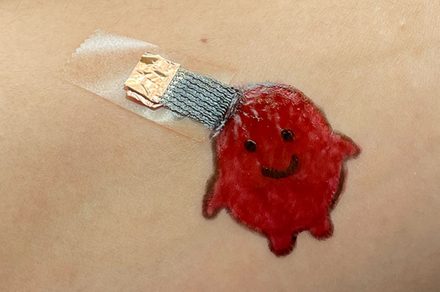
💡New wearable tech for bio-signal data collection that could feed high-fidelity physiological data into AI health models.
⚡ 30-Second TL;DR
What Changed
Utilizes paint-on material for seamless skin integration
Why It Matters
This technology could revolutionize remote patient monitoring by making data collection less intrusive. It opens new possibilities for long-term health data acquisition in clinical and research settings.
What To Do Next
Explore the potential of integrating bio-signal data from flexible electronics into your health-tech AI models for more accurate physiological monitoring.
Key Points
- •Utilizes paint-on material for seamless skin integration
- •Capable of monitoring heart, brain, and muscle electrical signals
- •Designed as a washable and less bulky alternative to traditional wearables
🧠 Deep Insight
AI-generated analysis for this event.
🔑 Enhanced Key Takeaways
- •The sensors are fabricated using a sintering-free process, allowing the conductive materials to form at room temperature to prevent skin damage.
- •The device utilizes a water-based, biocompatible adhesive that allows the tattoo to remain stable during movement while being easily removed with warm water.
- •Researchers integrated a specialized nanomaterial ink composed of silver flakes and a polymer binder to maintain electrical conductivity even when the skin stretches or bends.
- •The technology eliminates the need for bulky rigid electronics by using a serpentine mesh design that conforms to the skin's topography.
- •Clinical testing demonstrated that the paint-on sensors achieve signal quality comparable to traditional clinical-grade Ag/AgCl gel electrodes.
📊 Competitor Analysis▸ Show
| Feature | Paint-on Tattoo Sensors | Traditional Holter Monitors | Smartwatches (e.g., Apple/Garmin) |
|---|---|---|---|
| Form Factor | Ultra-thin, skin-integrated | Bulky, chest-worn | Wrist-worn device |
| Skin Contact | Direct, non-invasive | Adhesive patches/wires | Surface contact |
| Comfort | High (breathable) | Low (irritating) | Moderate |
| Signal Fidelity | High (Clinical grade) | High (Clinical grade) | Moderate (Consumer grade) |
🛠️ Technical Deep Dive
- Material Composition: Employs a composite of silver flakes and a thermoplastic polyurethane (TPU) binder to ensure flexibility and conductivity.
- Fabrication Method: Utilizes a stencil-based application technique where the ink is painted directly onto the skin, bypassing high-temperature sintering requirements.
- Signal Processing: The serpentine geometry of the conductive traces minimizes mechanical strain, preventing signal artifacts during patient movement.
- Biocompatibility: The ink formulation is designed to be non-toxic and non-irritating, allowing for extended wear without dermatological issues.
- Connectivity: Designed to interface with external wireless data acquisition modules via thin, flexible interconnects.
🔮 Future ImplicationsAI analysis grounded in cited sources
⏳ Timeline
Weekly AI Recap
Read this week's curated digest of top AI events →
👉Related Updates

AI-curated news aggregator. All content rights belong to original publishers.
Original source: Digital Trends ↗