Overcoming Uncanny Valley in AI Voices
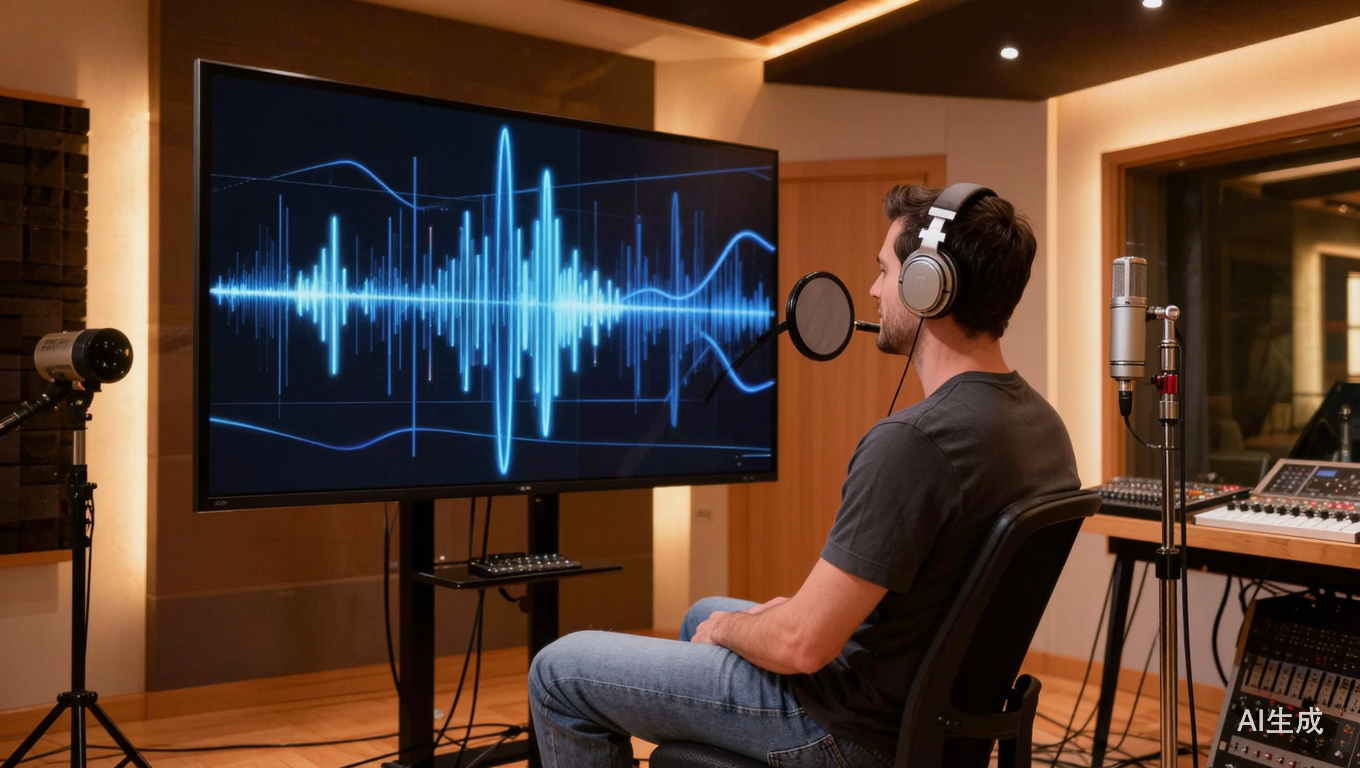
💡Discover why ultra-realistic AI voices repel users + strategic fix (TTS evolution breakdown)
⚡ 30-Second TL;DR
What Changed
TTS 1.0 uses concatenative synthesis with real audio clips, resulting in stiff intonation.
Why It Matters
Pushes AI voice developers to prioritize emotional fit over realism, potentially reducing R&D waste on marginal gains. Enables better brand sonic identities and content creation scalability.
What To Do Next
Test WaveNet-style prosody adjustments in your TTS pipeline to measure uncanny valley drop-off.
Key Points
- •TTS 1.0 uses concatenative synthesis with real audio clips, resulting in stiff intonation.
- •TTS 2.0 parametric synthesis improves fluency but loses personalization, sounding robotic.
- •TTS 3.0 generative models like WaveNet achieve near-human emotional expressiveness, risking uncanny valley.
- •User data shows sharp drop in ratings when voices are 'almost human' but flawed.
🧠 Deep Insight
Background and context from public sources — not the original article. 5 sources cited.
🔑 Enhanced Key Takeaways
- •AI voice generation has demonstrably crossed the uncanny valley for most commercial use cases as of 2026, with tools like ElevenLabs achieving studio-grade narration quality that users consistently praise for natural delivery[1].
- •Conversational AI voices require real-time contextual awareness and semantic understanding beyond traditional text-to-speech; the 'one-to-many problem' means countless valid ways exist to speak a sentence, but only some fit a given conversational setting[2].
- •Human-in-the-loop post-production remains critical: emotional tagging, director review, and cultural adaptation prevent synthetic voices from sounding 'nearly right' but emotionally hollow, with RWS implementing three mandatory human checkpoints (script, cultural, quality review) to maintain authenticity[3].
- •Lip-sync timing precision is essential to avoid uncanny valley in video dubbing; even advanced algorithms can create subtle audio-visual mismatches that shatter audience immersion and undermine brand trust[3].
📊 Competitor Analysis▸ Show
| Tool | Best For | Languages & Voices | Customization | Free Plan | Key Strength |
|---|---|---|---|---|---|
| ElevenLabs | Ultra-realistic voiceovers | 70+ languages, expressive voices | Advanced (pitch, tone, cloning) | Yes | Studio-grade quality, fastest turnaround |
| Speechify Studio | Lightweight narration | 60+ languages, 200+ voices | Moderate (tuning, speed, emotion) | Yes | Accessibility-focused, web integration |
| Voicemaker | Budget-friendly multilingual | 130+ languages, 800+ voices | Basic (accents, speed, style) | Yes | Largest voice library, cost-effective |
🛠️ Technical Deep Dive
- •Semantic token bottleneck: Two-stage synthesis decouples semantic tokens (capturing linguistic and prosodic information) from acoustic reconstruction (fine-grained audio details), but semantic tokens create a critical bottleneck that must fully capture prosody during training[2].
- •CSM (Contextual Speech Model) inference: Text and audio tokens are interleaved and fed sequentially into a Llama-architecture Backbone, which predicts the zeroth codebook level; a Decoder then samples levels 1 through N-1 conditioned on the predicted zeroth level, with audio autoregressively fed back for the next step[2].
- •Audio tokenization: Mimi split-RVQ tokenizer processes audio at 12.5 Hz, producing one semantic codebook and N-1 acoustic codebooks per frame; speaker identity is encoded directly in text representation[2].
- •Emotional tagging and regeneration: High-fidelity source audio combined with emotional tagging (instructing AI to sound 'empathetic,' 'excited,' or 'serious') and human director review of specific phrases improves pacing and inflection[3].
- •Workflow acceleration: AI voice generation reduces turnaround from days-to-weeks (traditional) to minutes-to-hours, enables instant script re-renders, supports multilingual production with consistent voice identity, and allows sentence-level editability[1].
🔮 Future ImplicationsAI analysis grounded in cited sources
⏳ Timeline
📎 Sources (5)
Factual claims are grounded in the sources below. Forward-looking analysis is AI-generated interpretation.
Weekly AI Recap
Read this week's curated digest of top AI events →
👉Related Updates

AI-curated news aggregator. All content rights belong to original publishers.
Original source: 虎嗅 ↗
This is a summary, not the original. Read the source, or get the weekly briefing.
Weekly AI briefing
One email a week. Unsubscribe anytime.