OpenClaw Virals Agentic AI to Masses
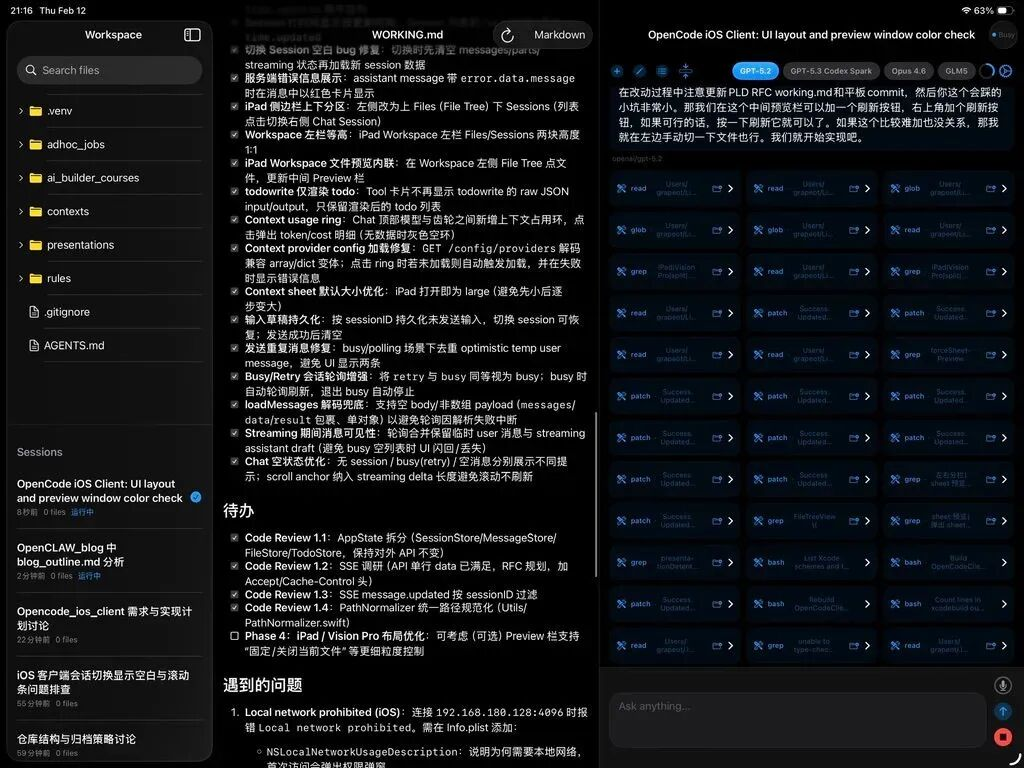
💡Why OpenClaw viraled: agentic AI via chat—adapt for your non-tech teams
⚡ 30-Second TL;DR
What Changed
Connects agentic AI to Slack/WhatsApp for zero-learning-curve access
Why It Matters
Democratizes advanced agentic AI, accelerating adoption but exposing security risks like malicious skills. Encourages workflow customization over direct tool use.
What To Do Next
Integrate OpenClaw into your Slack to prototype agentic file-editing agents.
Key Points
- •Connects agentic AI to Slack/WhatsApp for zero-learning-curve access
- •Enables file read/write, command execution, persistent memory for non-coders
- •Chat UI trade-offs limit non-linear tasks vs desktop tools like Cursor
🧠 Deep Insight
Background and context from public sources — not the original article. 9 sources cited.
🔑 Enhanced Key Takeaways
- •OpenClaw experienced explosive adoption growth from approximately 1,000 to over 21,000 publicly exposed instances in under a week as of January 31, 2026, with over 190,000 GitHub stars by mid-February, making it the 21st most popular repository in GitHub history[2][4].
- •The platform's rapid expansion introduced significant security vulnerabilities: at least 30% of identified instances run on Alibaba Cloud infrastructure, and many users bypassed recommended SSH tunnel and Cloudflare Tunnel protections by directly exposing instances to the public internet, creating a mass exposure event at viral scale[2][5].
- •OpenClaw's self-extending architecture allows it to autonomously write code and create new skills to execute tasks, with 50+ integrations spanning chat providers, productivity tools, smart home devices, and automation platforms, enabling high-stakes actions including financial decision-making and banking access[1][3].
- •The tool's customizability enables users to bypass guardrails typically implemented by major AI providers, with risks including misconfigured authentication, unvetted skill installations, and prompt injection vulnerabilities in multi-channel environments that security experts flag as 'shockingly easy' to exploit[3][5].
- •Competing approaches like Perplexity's Computer agent diverge fundamentally by running remotely in cloud-based locked-down environments rather than locally with broad file and system access, positioning cloud-based execution as a safer alternative to OpenClaw's local-first model[7].
📊 Competitor Analysis▸ Show
| Feature | OpenClaw | Perplexity Computer | Cursor |
|---|---|---|---|
| Execution Model | Local machine with broad system access | Remote cloud-based in locked environment | Desktop IDE for code-specific tasks |
| Access Pattern | Chat interfaces (Slack, WhatsApp, Telegram) | Background task execution via cloud | Direct developer interface |
| Skill Creation | Self-extending, autonomous code generation | Predefined, sandboxed operations | Manual, developer-controlled |
| Security Posture | High-risk local access; user misconfiguration common | Sandboxed cloud execution; reduced exposure | Isolated to development environment |
| Target Audience | Non-technical users; general automation | Enterprise/professional users | Software developers |
| Pricing Model | Open-source, bring-your-own API key | Commercial cloud service | Commercial IDE subscription |
🛠️ Technical Deep Dive
- Default Network Configuration: OpenClaw listens locally on TCP/18789 with browser-based interface bound to localhost; recommended remote access via SSH tunnel or Cloudflare Tunnel[2]
- Integration Architecture: 50+ integrations spanning chat providers (WhatsApp, Telegram, Slack, Discord, iMessage), AI models (Claude, ChatGPT, Gemini, Grok), productivity tools, smart home services, and automation platforms[1][4]
- Persistent Memory System: Maintains long-term context and activity history locally, enabling multi-session goal pursuit and user preference adaptation across conversations[3][6]
- Model Flexibility: Agnostic to underlying LLM; users can leverage commercial models (Claude, ChatGPT, Gemini, Grok) or open-source/locally-hosted alternatives[4]
- Autonomous Skill Generation: Self-improving capability to write code and create new workflows autonomously to execute complex tasks without user intervention[1][6]
- Multi-Agent Parallelization: Supports multiple agents operating in parallel with 24/7 execution without waiting for user prompts[6]
🔮 Future ImplicationsAI analysis grounded in cited sources
⏳ Timeline
📎 Sources (9)
Factual claims are grounded in the sources below. Forward-looking analysis is AI-generated interpretation.
- digitalocean.com — What Is Openclaw
- censys.com — Openclaw in the Wild Mapping the Public Exposure of a Viral AI Assistant
- trendmicro.com — What Openclaw Reveals About Agentic Assistants
- TechCrunch — After All the Hype Some AI Experts Dont Think Openclaw Is All That Exciting
- acronis.com — Openclaw Agentic AI in the Wild Architecture Adoption and Emerging Security Risks
- westmonroe.com — Openclaw AI
- fortune.com — Perplexity CEO Aravind Srinivas Computer Openclaw AI Agent
- reco.ai — Openclaw the AI Agent Security Crisis Unfolding Right Now
- cyera.com — The Openclaw Security Saga How AI Adoption Outpaced Security Boundaries
Weekly AI Recap
Read this week's curated digest of top AI events →
👉Related Updates
AI-curated news aggregator. All content rights belong to original publishers.
Original source: 虎嗅 ↗
This is a summary, not the original. Read the source, or get the weekly briefing.
Weekly AI briefing
One email a week. Unsubscribe anytime.