OpenClaw Powers AI Super Individual Contest
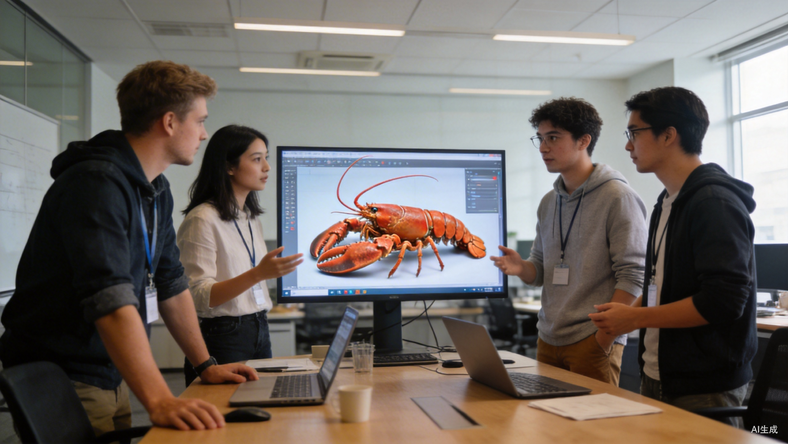
💡Gov AI contest rules test OpenClaw OPCs with real validation—entry to funds.
⚡ 30-Second TL;DR
What Changed
Free-topic submission requires commercial proposals solving real pain points.
Why It Matters
Validates OPC model viability, offers incubation/investment access amid Shanghai's 6370B AI market growth. Provides macro insights into AI industry landing for '15th Five-Year Plan'.
What To Do Next
Prepare SE commercial proposal for GDPS 2026 using OpenClaw on a digital entertainment pain point.
Key Points
- •Free-topic submission requires commercial proposals solving real pain points.
- •Uniform compute flattens hardware advantages, testing cognitive bandwidth.
- •3-month cycle demands real revenue, user feedback, and efficiency data.
- •Enterprise and super individual groups compete head-to-head for insights.
🧠 Deep Insight
AI-generated analysis for this event — not the original article.
🔑 Enhanced Key Takeaways
- •OpenClaw is built on a modular 'Agent-Orchestration' framework that allows individual developers to deploy autonomous workflows without requiring backend infrastructure expertise.
- •The GDPS 2026 contest is backed by the Shanghai AI Industry Fund, which provides direct venture capital access to top-performing individual contestants regardless of their final ranking.
- •The 'uniform compute' constraint is enforced via a proprietary cloud-sandbox environment that limits all participants to identical GPU-hour allocations, specifically targeting the optimization of inference latency over raw model size.
🔮 Future ImplicationsAI analysis grounded in cited sources
⏳ Timeline
Weekly AI Recap
Read this week's curated digest of top AI events →
👉Related Updates

AI-curated news aggregator. All content rights belong to original publishers.
Original source: 虎嗅 ↗
This is a summary, not the original. Read the source, or get the weekly briefing.
Weekly AI briefing
One email a week. Unsubscribe anytime.