OpenClaw 2026.3.28: Qwen Migration & New Image Gen
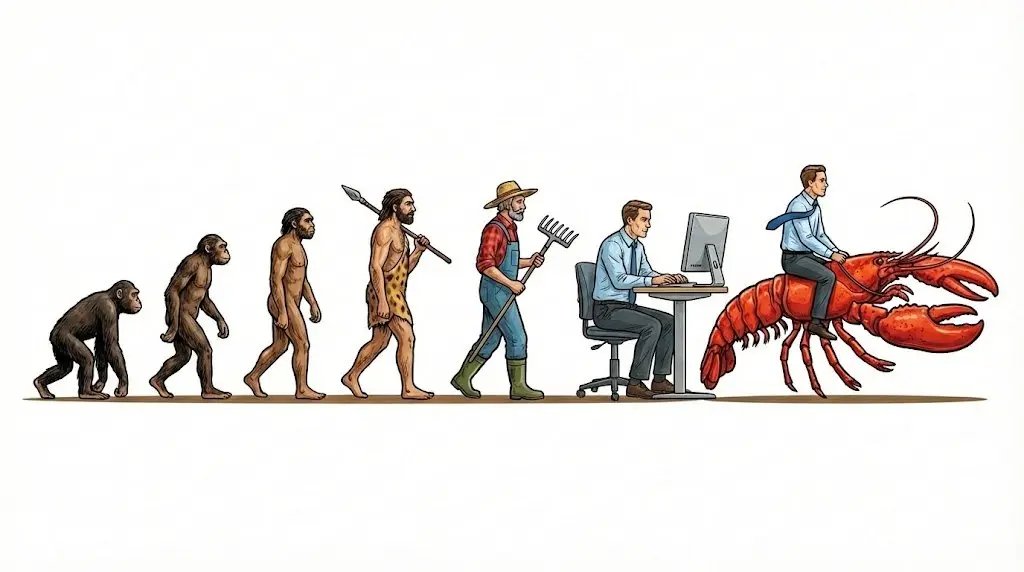
💡OpenClaw update streamlines Grok/Qwen APIs + adds MiniMax image gen for devs.
⚡ 30-Second TL;DR
What Changed
Dropped legacy Qwen OAuth
Why It Matters
This update simplifies API integrations for Qwen and Grok, reducing maintenance overhead. New MiniMax support expands multimodal capabilities, while async hooks improve plugin security and scalability for AI apps.
What To Do Next
Upgrade to OpenClaw 2026.3.28 and test Grok Responses API with x_search in your workflows.
Key Points
- •Dropped legacy Qwen OAuth
- •Migrated Grok to Responses API with x_search
- •Added MiniMax image-01 image generation
- •Introduced async approval hooks for plugin tools
🧠 Deep Insight
AI-generated analysis for this event — not the original article.
🔑 Enhanced Key Takeaways
- •The migration to the Responses API for Grok indicates a shift toward unified endpoint management, likely intended to reduce latency and standardize data schemas across OpenClaw's multi-model orchestration layer.
- •The integration of MiniMax image-01 suggests OpenClaw is diversifying its generative model providers to include specialized Chinese-developed multimodal models, moving beyond a reliance on Western-centric foundation models.
- •The implementation of async approval hooks for plugin tools addresses critical security and safety concerns regarding autonomous agent execution, allowing for human-in-the-loop verification without blocking the main execution thread.
📊 Competitor Analysis▸ Show
| Feature | OpenClaw (2026.3.28) | LangChain | AutoGPT |
|---|---|---|---|
| Model Orchestration | Native Multi-Model (Grok/MiniMax) | Agnostic/Modular | Agnostic |
| Tool Execution | Async Approval Hooks | Synchronous/Custom | Manual/Scripted |
| API Integration | Responses API (Unified) | Diverse/Fragmented | Direct API calls |
🛠️ Technical Deep Dive
- •Responses API Integration: Transitioned from legacy REST endpoints to a streaming-first architecture utilizing x_search parameters for real-time retrieval-augmented generation (RAG) context injection.
- •MiniMax image-01 Implementation: Utilizes a latent diffusion architecture optimized for high-fidelity prompt adherence, accessed via OpenClaw's new multimodal abstraction layer.
- •Async Approval Hooks: Implemented as a non-blocking middleware layer in the plugin execution pipeline; utilizes a callback-based state machine to pause tool execution until a verified signal is received from the user interface.
🔮 Future ImplicationsAI analysis grounded in cited sources
⏳ Timeline
Weekly AI Recap
Read this week's curated digest of top AI events →
👉Related Updates
AI-curated news aggregator. All content rights belong to original publishers.
Original source: OpenClaw.report ↗
This is a summary, not the original. Read the source, or get the weekly briefing.
The weekly digest
One email a week. Unsubscribe anytime.