OpenAI Reportedly Scales RL Training with Mac Fleets

💡Could Apple Silicon become a serious alternative for reinforcement-training infrastructure?
⚡ 30-Second TL;DR
What Changed
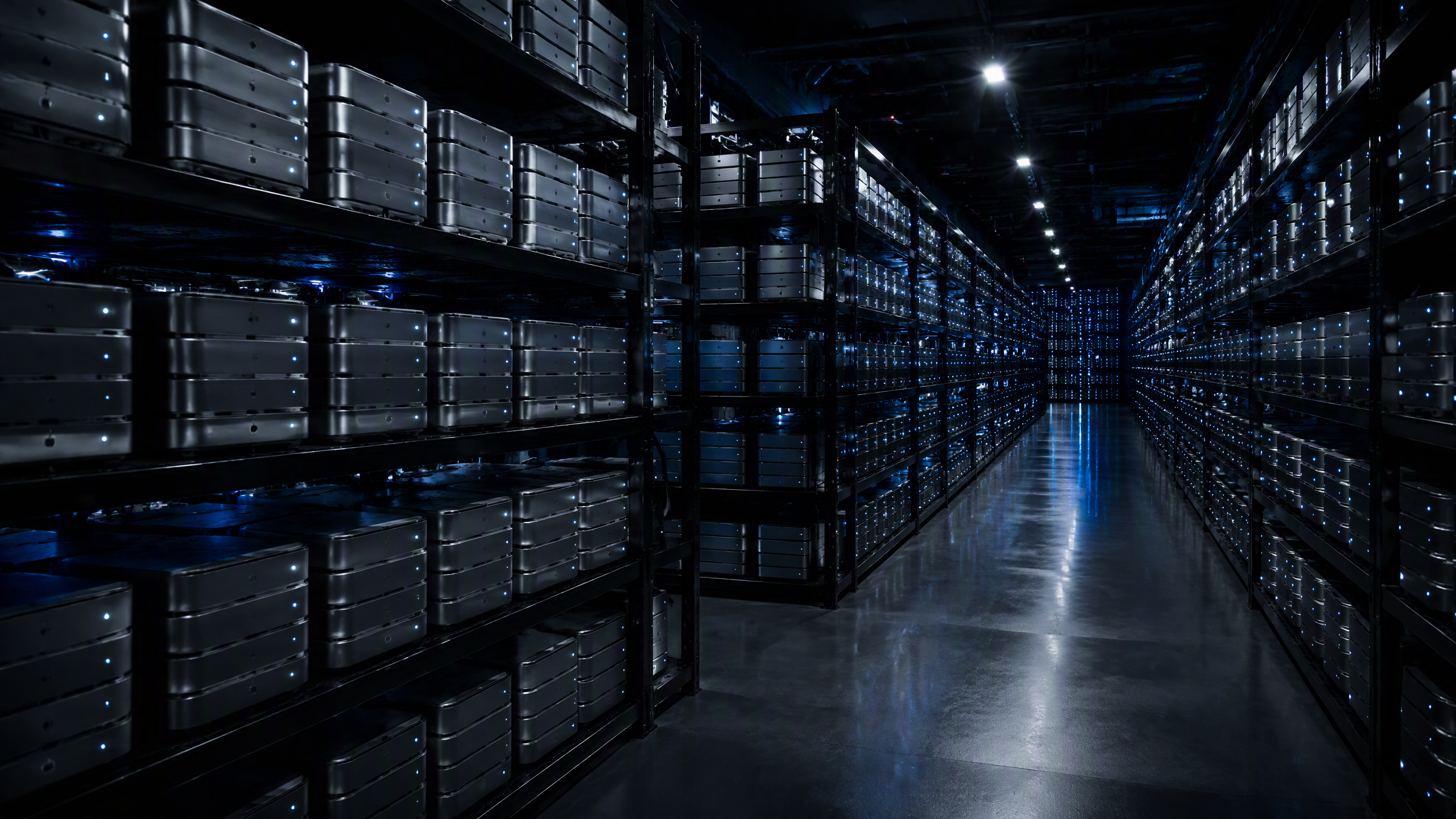
OpenAI is reportedly acquiring tens of thousands of Mac computers.
Why It Matters
If confirmed, the move could broaden the hardware options used for reinforcement learning and increase attention on Apple Silicon as an AI-compute platform. It could also affect procurement, software-optimization, and cost-performance decisions for AI infrastructure teams.
What To Do Next
Benchmark a representative reinforcement-learning workload on Apple Silicon using MLX or PyTorch MPS, then compare throughput and total cost with your current Nvidia GPU setup.
Key Points
- •OpenAI is reportedly acquiring tens of thousands of Mac computers.
- •The reported use case is reinforcement training rather than ordinary consumer computing.
- •The claim suggests Apple hardware could complement or compete with Nvidia GPUs and Google TPUs for specific workloads.
- •The excerpt does not identify the Mac model, chip configuration, or performance rationale.
🧠 Deep Insight
Background and context from public sources — not the original article. 14 sources cited.
🔑 Enhanced Key Takeaways
- •The procurement is exclusively focused on headless units, specifically Mac mini and Mac Studio models, to optimize rack-mount density.
- •The primary objective is training 'computer-use agents' that require the ability to navigate software interfaces and perform multi-step tasks autonomously.
- •Apple's unified memory architecture is the critical technical driver, enabling the CPU and GPU to share a single, high-bandwidth memory pool for agentic RL episodes.
- •Anthropic has adopted a similar strategy, utilizing rented Mac mini capacity via AWS to conduct comparable reinforcement learning experiments.
- •The surge in enterprise demand for these specific configurations has directly contributed to a 29% year-over-year increase in Apple's Mac revenue.
📊 Competitor Analysis▸ Show
| Feature | Apple Silicon (Mac Studio/Mini) | Nvidia H100/B200 Clusters | Google TPU v5p |
|---|---|---|---|
| Memory Architecture | Unified Memory (High Bandwidth) | HBM3 (Discrete VRAM) | HBM3 (Discrete VRAM) |
| Primary Workload | Agentic RL / Computer Use | Foundation Model Pre-training | Foundation Model Pre-training |
| Deployment | Local/Edge/Small Cluster | Large-scale Data Center | Large-scale Data Center |
| Pricing Model | Hardware Purchase (CapEx) | Cloud Rental/Purchase (High) | Cloud Rental (High) |
🛠️ Technical Deep Dive
- Utilization of Apple Silicon Unified Memory Architecture (UMA) to eliminate data transfer latency between CPU and GPU memory spaces.
- Implementation of headless server environments to facilitate high-density parallelization of agentic RL training episodes.
- Optimization for inference-heavy reinforcement learning loops where agents must interact with GUI-based software environments.
- Leveraging high-bandwidth memory (HBM) integration within the M-series SoC to handle large context windows during agentic decision-making.
🔮 Future ImplicationsAI analysis grounded in cited sources
⏳ Timeline
📎 Sources (14)
Factual claims are grounded in the sources below. Forward-looking analysis is AI-generated interpretation.
Weekly AI Recap
Read this week's curated digest of top AI events →
👉Related Updates
AI-curated news aggregator. All content rights belong to original publishers.
Original source: 量子位 ↗
This is a summary, not the original. Read the source, or get the weekly briefing.
Weekly AI briefing
One email a week. Unsubscribe anytime.