OpenAI’s Secret Mac mini AI Farm
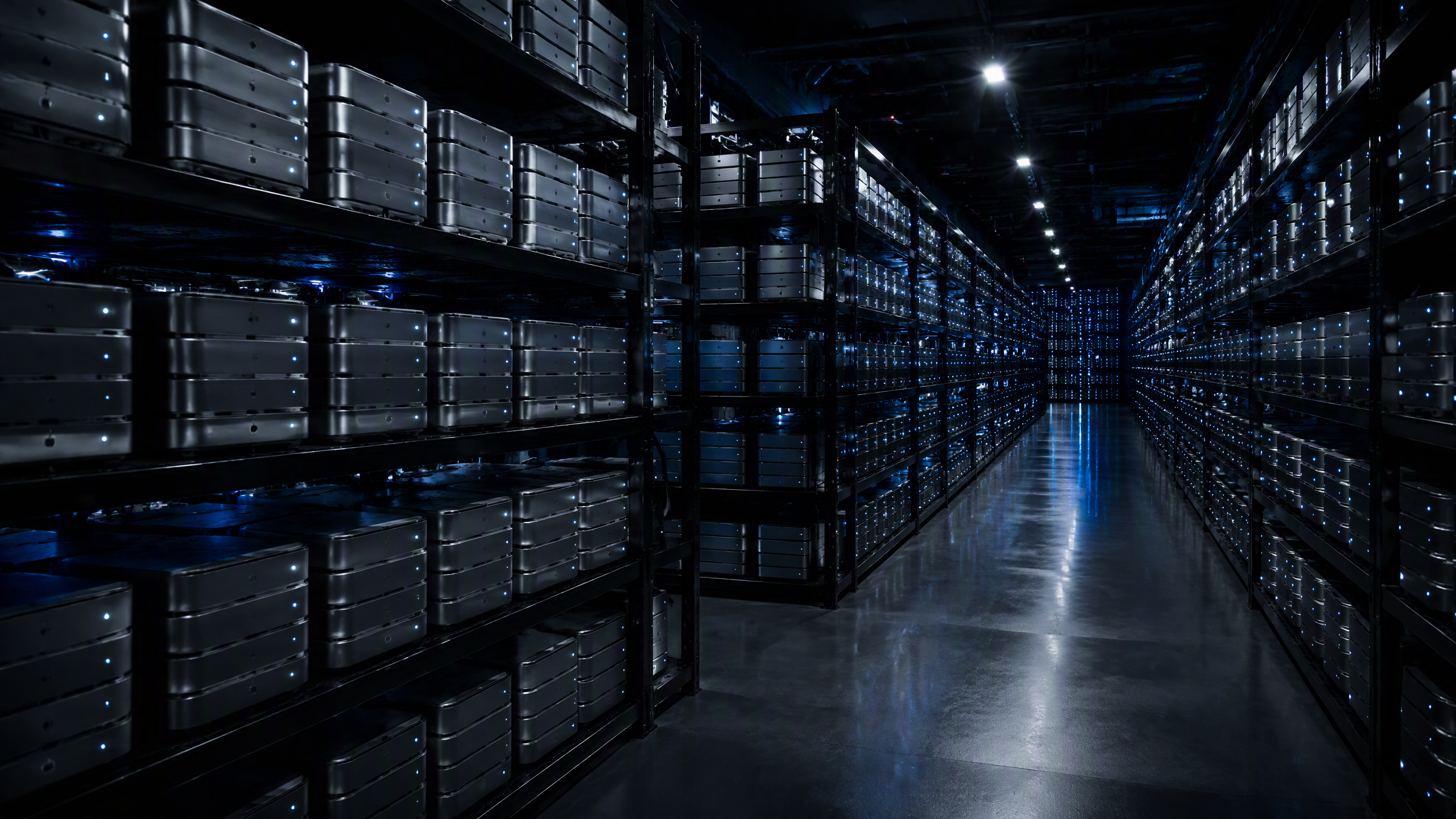
💡A reported Mac mini stockpile raises new questions about AI training hardware shortages and alternatives to GPUs.
⚡ 30-Second TL;DR
What Changed
OpenAI was reportedly stockpiling Mac mini computers at unusually large scale.
Why It Matters
If accurate, the report suggests that AI organizations are exploring alternatives to conventional GPU infrastructure when accelerators are difficult to obtain. It could also increase competition for Apple silicon hardware and complicate capacity planning for smaller teams.
What To Do Next
Benchmark a small Apple silicon cluster with MLX against your current GPU setup before considering Mac mini-based training infrastructure.
Key Points
- •OpenAI was reportedly stockpiling Mac mini computers at unusually large scale.
- •The machines were allegedly intended for AI training rather than ordinary desktop use.
- •Apple hardware is being framed as a constrained resource in the AI infrastructure market.
🧠 Deep Insight
Background and context from public sources — not the original article. 14 sources cited.
🔑 Enhanced Key Takeaways
- •OpenAI is specifically targeting the training of 'computer-use' agents that require autonomous interaction with macOS interfaces, necessitating physical Apple hardware due to virtualization licensing restrictions.
- •The procurement strategy focuses on the M-series unified memory architecture, which provides a performance advantage for memory-intensive, sequential reinforcement learning tasks over traditional discrete GPU clusters.
- •The massive scale of these purchases has created a supply-side bottleneck, forcing Apple to accelerate the release of new Mac mini and Mac Studio models in August 2026 to meet enterprise demand.
- •Unlike OpenAI's direct hardware ownership model, competitors like Anthropic are fulfilling similar reinforcement learning requirements by leasing Mac mini capacity through AWS.
- •Nvidia is actively attempting to counter this trend by introducing compact hardware solutions like the DGX Spark, aiming to capture the market for edge-based and agent-training infrastructure.
📊 Competitor Analysis▸ Show
| Feature | OpenAI (Mac mini Farm) | Anthropic (AWS Mac) | Nvidia (DGX Spark) |
|---|---|---|---|
| Hardware Ownership | Direct (On-prem) | Cloud-based (Leased) | Direct (On-prem) |
| Primary Advantage | Unified Memory/Latency | Scalability/No CapEx | High-throughput GPU |
| Target Workload | macOS Agent Training | macOS Agent Training | Large-scale Inference |
| Licensing | Native macOS | AWS Virtualization | N/A (Linux-based) |
🛠️ Technical Deep Dive
- Utilization of headless Mac mini and Mac Studio units to run thousands of parallel macOS environments for reinforcement learning.
- Leveraging M-series unified memory architecture to eliminate data transfer latency between CPU and GPU memory pools.
- Implementation of agent-based training loops that simulate human-computer interaction (clicking, typing, and UI navigation).
- Deployment of multi-machine clustering configurations to scale training across tens of thousands of individual nodes.
🔮 Future ImplicationsAI analysis grounded in cited sources
⏳ Timeline
📎 Sources (14)
Factual claims are grounded in the sources below. Forward-looking analysis is AI-generated interpretation.
Weekly AI Recap
Read this week's curated digest of top AI events →
👉Related Updates

AI-curated news aggregator. All content rights belong to original publishers.
Original source: 钛媒体 ↗
This is a summary, not the original. Read the source, or get the weekly briefing.
Weekly AI briefing
One email a week. Unsubscribe anytime.