🇨🇳cnBeta (Full RSS)•Stalecollected in 49m
OpenAI Model Solves 80-Year-Old Mathematical Conjecture
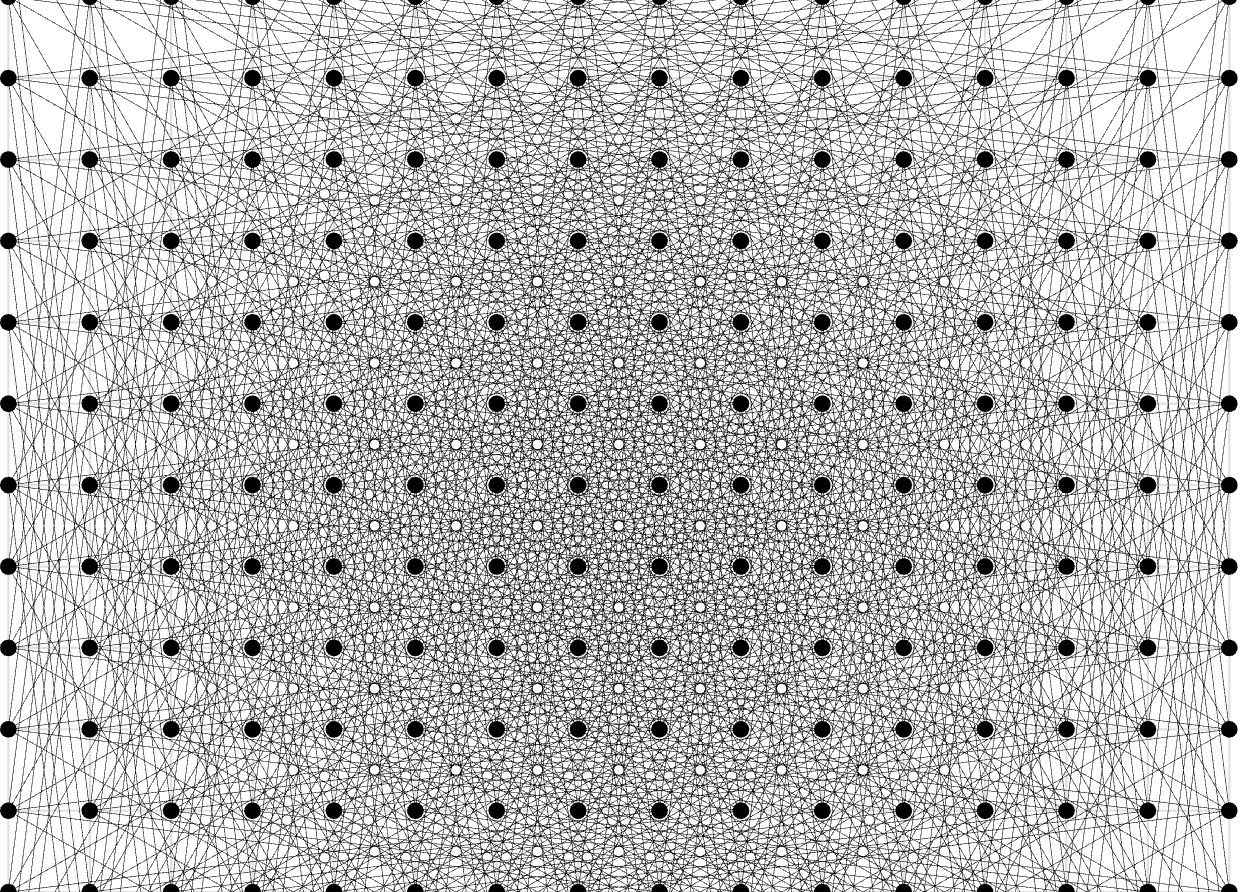
💡First instance of an AI autonomously solving a major open mathematical problem, proving advanced reasoning capabilities.
⚡ 30-Second TL;DR
What Changed
AI model independently solved a long-standing open mathematical problem
Why It Matters
This breakthrough demonstrates that LLMs are moving beyond pattern matching into genuine logical reasoning, which will accelerate scientific discovery.
What To Do Next
Experiment with the latest reasoning-focused models for complex logic tasks rather than just text generation.
Who should care:Researchers & Academics
Key Points
- •AI model independently solved a long-standing open mathematical problem
- •The proof addresses a geometry conjecture from 1946 by Paul Erdős
- •Mathematical experts have validated the AI's original proof
🧠 Deep Insight
AI-generated analysis for this event.
🔑 Enhanced Key Takeaways
- •The specific mathematical challenge solved is identified as the "planar unit distance problem" or "Erdős' unit distance conjecture," which the OpenAI model disproved by demonstrating that the maximum number of unit-distance pairs (v(n)) grows at a rate of at least n raised to the power of 1 plus some fixed positive constant (v(n) ≥ n^(1+c)), directly contradicting the long-held conjecture. [2, 26]
- •This achievement represents the first instance of an AI autonomously generating a novel mathematical proof to resolve a prominent, long-standing open problem central to a field of mathematics, without human intervention in the discovery of the solution. [2, 26]
- •The breakthrough was accomplished by an "internal OpenAI model," characterized as a "new general-purpose reasoning model," which likely incorporates advanced techniques from OpenAI's 'o-series' models (e.g., o1, o3, o4-mini) known for their capabilities in multi-step planning, logical deduction, and systematic problem decomposition. [2, 4, 13, 16, 26]
📊 Competitor Analysis▸ Show
| Feature / Company | OpenAI (o-series / GPT-5.x Pro) | Google DeepMind (Gemini Deep Think / AlphaGeometry) | Anthropic (Claude 3 Opus) | DeepSeek (DeepSeek R1) |
|---|---|---|---|---|
| Model Family | o-series (o1, o3, o4-mini), GPT-5.x Pro | Gemini Deep Think, AlphaGeometry 2, Aletheia | Claude 3 Opus | DeepSeek R1 |
| Key Math Achievements (Recent) | Solved Erdős' 1946 planar unit distance conjecture autonomously (May 2026); Solved Erdős Problem #728 autonomously (Jan 2026); Solved Erdős Problem #1196 with novel method (Apr 2026); Achieved IMO gold-medal status (July 2025). [2, 3, 6, 14, 17, 26] | Achieved IMO gold-medal status (July 2025); Autonomous solutions to several Erdős problems; Human-AI collaboration on independent sets. [3, 6, 11, 20] | Strong mathematical reasoning capabilities, multimodal analysis. [13] | High-performance reasoning, cost-efficient design, strong in math, coding, logic. [16, 18] |
| Autonomy Level in Proof | Demonstrated autonomous proof generation for long-standing open problems. [2, 14, 17, 26] | Autonomous solutions to some open problems; AI-guided collaboration. [11] | General-purpose model, capable of novel proof strategies with human interaction. [3] | Emulates human-like logical thinking through step-by-step process. [18] |
| Formal Verification Integration | Proofs often formalized in Lean for rigorous verification. [14, 17] | Utilizes interactive proof assistants for formal verification. [1, 6] | Used in conjunction with formal verification systems. [3, 9] | Incorporates internal verification processes. [18] |
| Core Reasoning Methodologies | Chain-of-Thought (CoT), systematic decomposition, iterative refinement, reinforcement learning, internal reward systems, test-time search. [4, 16, 18] | Integrates multiple reasoning paradigms (deductive, inductive, abductive, probabilistic, analogical). [1, 11] | Advanced reasoning capabilities, strong multimodal analysis. [13] | Step-by-step reasoning, simulated reasoning, extended CoT, self-verification. [18] |
🛠️ Technical Deep Dive
- OpenAI's reasoning models, such as the o-series (o1, o3, o4-mini), are specifically engineered for complex problem-solving, logical deduction, and multi-step planning in STEM tasks. [4, 13, 21]
- These models are designed to "spend more internal tokens thinking before speaking," indicating an extended internal deliberation process before generating an output. [13]
- They employ systematic problem decomposition, breaking down complex tasks into manageable sub-problems. [4, 16]
- A core technique is Chain-of-Thought (CoT) reasoning, where the model generates an internal dialogue or a hidden "thinking block" to work through potential solutions step-by-step. [4, 16, 18]
- The architecture combines sophisticated initialization, including fine-tuning on reasoning examples, with reinforcement learning that rewards effective problem-solving behaviors. [4, 16, 18]
- Models search through multiple possible solution paths, utilizing an internal reward system to identify optimal approaches. [4]
- Advanced versions incorporate Extended CoT generation, producing numerous candidate reasoning paths. [18]
- An evaluator model reviews these candidate paths for calculation errors and logical mistakes, using only correct paths for further reinforcement learning, thereby enabling self-correction and refinement. [18]
- They feature self-verification mechanisms and test-time search for internal deliberation and output refinement. [18]
- For prompting, these models support "developer messages" rather than traditional "system messages," and are optimized for simple, direct instructions, as they perform internal reasoning autonomously. [21]
🔮 Future ImplicationsAI analysis grounded in cited sources
AI will become an indispensable collaborative tool for mathematicians, accelerating discovery.
By automating tedious verification tasks and exploring novel proof methods, AI will free human mathematicians to focus on creative problem formulation and high-level conceptualization. [3, 12, 19]
AI systems will achieve 'superhuman intelligence' in mathematics, solving problems beyond human capabilities.
The demonstrated ability to autonomously solve long-standing conjectures suggests AI could soon tackle problems that have historically stumped human experts, potentially leading to new mathematical theories. [12, 17]
The fundamental nature of mathematical discovery and proof will shift towards human-AI co-creation.
AI's capacity to generate conjectures, formulate proofs, and verify them with rigorous formal systems will integrate machines as active partners in the research process, changing how mathematics is 'done.' [3, 7, 12]
⏳ Timeline
1946-00
Paul Erdős proposes the geometry conjecture (planar unit distance problem).
1956-00
First AI program (Newell, Simon, and Shaw) discovered a new proof of a mathematical theorem.
2013-00
Lean theorem prover launched by Leonardo de Moura, becoming a key tool for formal verification.
2025-01
OpenAI's o1 model family is introduced, representing a significant advancement in AI reasoning capabilities.
2025-07
AI models, including those from OpenAI and Google, achieve gold-medal status at the International Mathematical Olympiad.
2026-05-20
OpenAI's latest reasoning model independently provides a proof for the 80-year-old Erdős geometry conjecture (planar unit distance problem).
📰
Weekly AI Recap
Read this week's curated digest of top AI events →
👉Related Updates

AI-curated news aggregator. All content rights belong to original publishers.
Original source: cnBeta (Full RSS) ↗