OpenAI leader on Codex-ChatGPT merger and product design
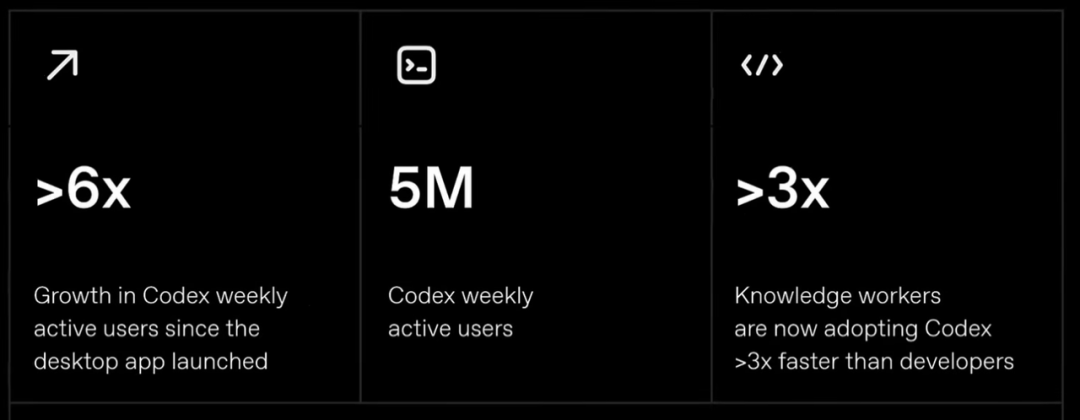
💡Learn how OpenAI's internal product team manages the shift from coding to AI-driven product curation.
⚡ 30-Second TL;DR
What Changed
Implementation costs have dropped, making 'curation' and 'taste' the most valuable skills.
Why It Matters
This signals a fundamental change in how product teams operate, moving away from rigid roadmaps toward agile, model-capability-driven development.
What To Do Next
Re-evaluate your product roadmap to prioritize features that leverage the latest model capabilities rather than legacy UI/UX assumptions.
Key Points
- •Implementation costs have dropped, making 'curation' and 'taste' the most valuable skills.
- •Codex and ChatGPT integration reflects a shift toward universal AI work interfaces.
- •AI design quality is limited by the lack of deep structural abstraction understanding.
- •Product planning must now align with the model's capability roadmap rather than fixed feature lists.
🧠 Deep Insight
AI-generated analysis for this event — not the original article.
🔑 Enhanced Key Takeaways
- •The integration of Codex into ChatGPT marked a strategic pivot from specialized code generation tools to a unified conversational interface, effectively deprecating the standalone Codex API for most developers.
- •The shift toward 'curation' over 'implementation' is driven by the emergence of 'LLM-as-a-Compiler' paradigms, where natural language intent replaces traditional syntax-heavy programming workflows.
- •OpenAI's product design philosophy evolved to prioritize 'latency-sensitive' UX, recognizing that the cognitive load of waiting for code generation can negate the productivity gains of AI assistance.
- •The 'taste' factor mentioned refers to the ability of developers to perform 'AI-assisted code review,' where the human role shifts from writing logic to validating the probabilistic outputs of the model.
- •Internal OpenAI research indicated that early Codex users struggled with 'hallucinated dependencies,' leading to the development of retrieval-augmented generation (RAG) patterns to ground code suggestions in real-time documentation.
📊 Competitor Analysis▸ Show
| Feature | OpenAI (Codex/ChatGPT) | GitHub Copilot | Anthropic (Claude) | Cursor |
|---|---|---|---|---|
| Core Focus | Universal AI Interface | IDE Integration | Reasoning/Long Context | AI-Native Editor |
| Pricing | Tiered (API/Plus) | Subscription | Tiered (API/Pro) | Subscription |
| Benchmarks | High (HumanEval) | High (Optimized) | Very High (Coding) | High (Context-Aware) |
🛠️ Technical Deep Dive
- Codex was originally derived from GPT-3, fine-tuned on public code from GitHub, utilizing a transformer architecture with a significantly larger context window than standard GPT-3 models at the time.
- The integration with ChatGPT involved moving from a pure completion model (predicting the next token) to an instruction-tuned model (RLHF) capable of multi-turn dialogue and iterative code refinement.
- The transition involved implementing 'System Prompts' that enforce coding standards and security guardrails, preventing the model from generating known vulnerable code patterns.
- The architecture relies on a 'Code-Specific Tokenizer' which improves efficiency for programming languages by reducing the number of tokens required to represent common syntax structures.
🔮 Future ImplicationsAI analysis grounded in cited sources
⏳ Timeline
Weekly AI Recap
Read this week's curated digest of top AI events →
👉Related Updates

AI-curated news aggregator. All content rights belong to original publishers.
Original source: 虎嗅 ↗
This is a summary, not the original. Read the source, or get the weekly briefing.
Weekly AI briefing
One email a week. Unsubscribe anytime.