OpenAI CFO Signals Further Funding for Compute Needs
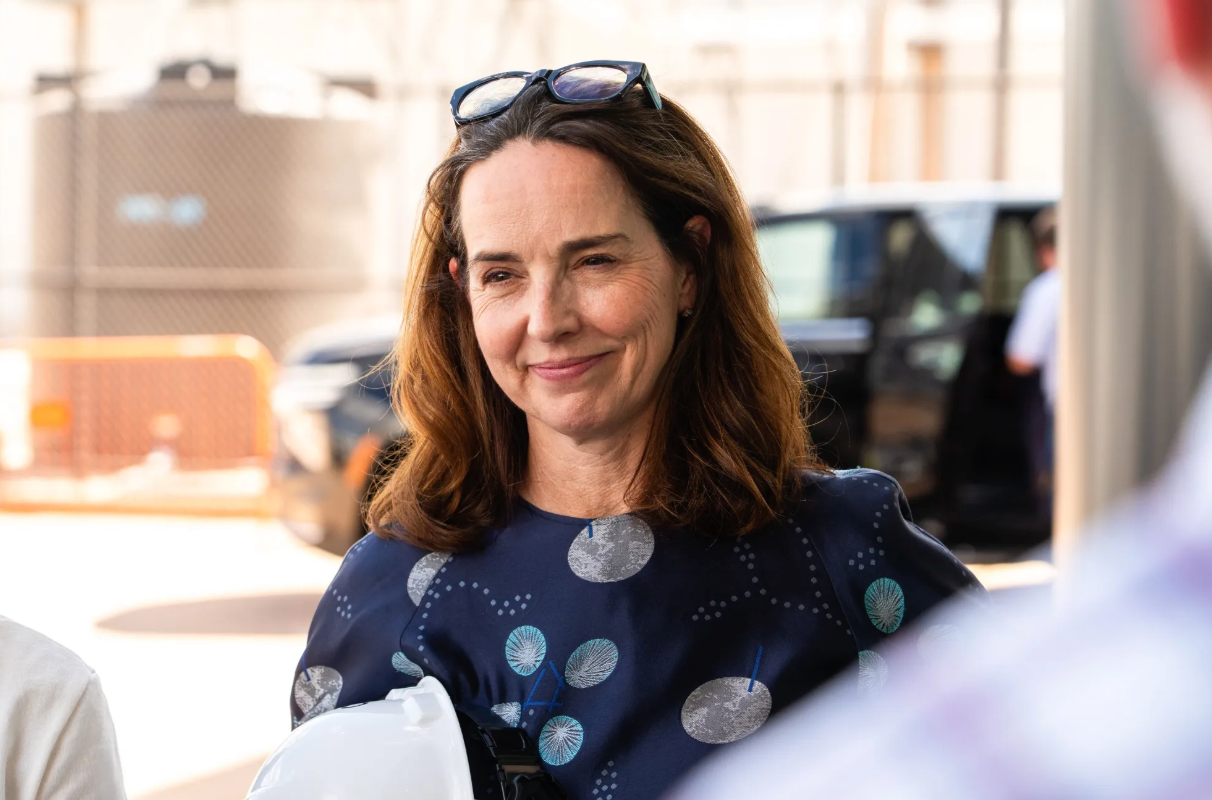
OpenAI's ongoing funding needs highlight the massive compute costs driving the current AI infrastructure race.
30-Second TL;DR
What Changed
OpenAI CFO Sarah Friar confirms potential for future funding rounds
Why It Matters
OpenAI's aggressive capital strategy underscores the massive financial barrier to entry for frontier AI development and the critical importance of compute supply chains.
What To Do Next
Monitor OpenAI's infrastructure partnerships and compute-related announcements, as they dictate the availability and pricing of frontier model APIs.
Key Points
- •OpenAI CFO Sarah Friar confirms potential for future funding rounds
- •Primary driver is the ongoing 'compute crunch' and scaling infrastructure
- •Company addressing concerns regarding relationship with Apple
Deep Insight
Background and context from public sources — not the original article. 16 sources cited.
Enhanced Key Takeaways
- •OpenAI's CFO Sarah Friar indicated that the company is making "very tough trades" and foregoing certain opportunities in 2026 due to insufficient computing power.
- •The ongoing 'compute crunch' has led OpenAI to prioritize core revenue-generating products and reallocate resources, resulting in the scaling back of initiatives like the Sora video app.
- •OpenAI is actively developing its own custom AI chips, referred to as "AI accelerators," in collaboration with Broadcom, with deployment targeted to commence in late 2026.
- •Microsoft's total investment in OpenAI is projected to exceed $100 billion by June 2026, encompassing direct funding, infrastructure development, and compute hosting costs.
- •OpenAI's partnership with Apple is reportedly strained, with OpenAI considering legal action due to the integration of ChatGPT into Apple's ecosystem failing to generate anticipated subscription revenue and a perceived lack of deeper integration.
Technical Deep Dive
- OpenAI is collaborating with Broadcom to design custom "AI accelerators" and associated systems, aiming to embed insights from frontier model development directly into hardware for enhanced capabilities.
- The partnership with Broadcom plans for the deployment of 10 gigawatts of these custom AI accelerators and network systems between the second half of 2026 and the end of 2029.
- OpenAI's infrastructure leverages distributed computing, optimized model architectures, and adaptive resource management, distributing computations across thousands of GPUs or TPUs.
- To optimize performance and reduce latency at scale, OpenAI employs techniques such as model sharding (dividing large models), quantization (compressing model weights), and caching frequently accessed responses.
- Training large language models, such as GPT-5, is estimated to require tens of thousands of high-end GPUs (e.g., 50,000 NVIDIA H100 GPUs) operating continuously for months, incurring hardware costs in the billions.
- Network infrastructure for large AI model training demands ultra-large-scale networking, ultra-high bandwidth (100–400 Gbps interconnects), ultra-low latency, and exceptional stability.
- Inference workloads are expected to constitute approximately two-thirds of all AI compute by 2026, driving significant growth in the market for inference-optimized chips.
Future ImplicationsAI analysis grounded in cited sources
Timeline
- 2015-12OpenAI founded as a nonprofit with a $1 billion pledge from initial backers.
- 2019-07OpenAI restructured into a capped-profit entity and received a $1 billion investment from Microsoft.
- 2020-06Microsoft and OpenAI announced their first top-5 supercomputer, built on Azure.
- 2022-11ChatGPT was launched, significantly increasing public awareness and demand for generative AI.
- 2024-06Sarah Friar appointed as Chief Financial Officer (CFO) of OpenAI.
- 2025-10OpenAI announced a collaboration with Broadcom to design its own custom AI computer chips.
- 2026-02OpenAI raised $110 billion in a funding round, led by Amazon, SoftBank, and Nvidia, at a $730 billion valuation.
- 2026-04OpenAI closed a funding round of $122 billion in committed capital, reaching a post-money valuation of $852 billion.
Sources (16)
Factual claims are grounded in the sources below. Forward-looking analysis is AI-generated interpretation.
Weekly AI Recap
Read this week's curated digest of top AI events →
Related Updates

AI-curated news aggregator. All content rights belong to original publishers.
Original source: cnBeta (Full RSS) ↗
This is a summary, not the original. Read the source, or get the weekly briefing.
The weekly digest
One email a week. Unsubscribe anytime.