OpenAI brings its Codex coding app to mobile
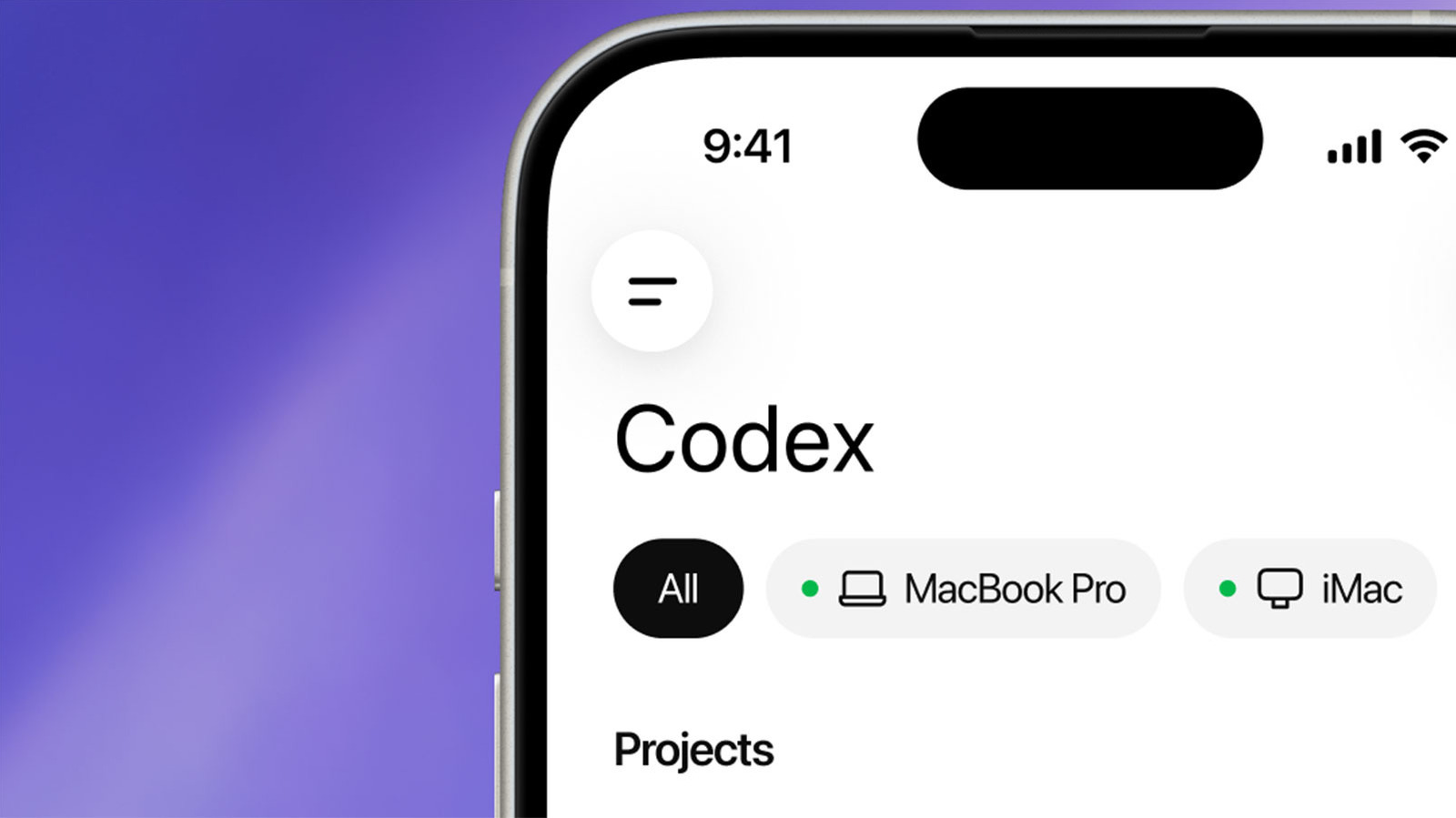
See how OpenAI is shifting developer workflows to mobile-first environments.
30-Second TL;DR
What Changed
Codex coding app is now available on mobile devices
Why It Matters
This move lowers the barrier for developers to stay connected to their codebase, potentially increasing productivity for remote or mobile-first engineering workflows.
What To Do Next
Download the mobile app and sync your active repositories to test the real-time notification latency for code commits.
Key Points
- •Codex coding app is now available on mobile devices
- •Enables real-time project tracking for developers on the go
- •Expands the accessibility of OpenAI's developer ecosystem
Deep Insight
Background and context from public sources — not the original article. 20 sources cited.
Enhanced Key Takeaways
- •OpenAI's Codex functionality is integrated into the existing ChatGPT mobile application for Android and iOS, rather than being a standalone 'Codex app', allowing developers to interact with their coding projects remotely.
- •The mobile integration leverages a secure relay layer to maintain active session state and context, enabling developers to receive updates, screenshots, and test results, and prompt Codex from their phone without exposing their trusted machines directly to the public internet.
- •This mobile expansion is part of OpenAI's broader strategy to build a 'super app' that combines ChatGPT, Codex, and other tools like the Atlas web browser into a cohesive, multi-platform experience.
- •The current iteration of Codex, often referred to as Codex-1, functions as a cloud-based, autonomous software engineering agent capable of executing high-level development tasks within a sandboxed virtual environment.
- •Codex is included with various ChatGPT subscription tiers (Plus, Pro, Business, Enterprise, Edu), with temporary access also available for Free and Go users to explore its features across different platforms.
Competitor Analysis
- OpenAI Codex (via ChatGPT App)
- Agentic code generation, review, debugging, project management, multi-step task execution, cloud-based sandboxed environment.
- GitHub Copilot
- Context-aware code completion, generation, refactoring, debugging, pull request creation, issue management.
- Anthropic Claude Code
- Agentic coding assistant for writing, managing, and automating code; conversational problem-solving.
- Amazon CodeWhisperer / Q Developer
- AWS-specific code generation, security scans, vulnerability detection, enterprise-focused.
- Tabnine
- Predictive code completion, inline suggestions, context-aware.
- OpenAI Codex (via ChatGPT App)
- Yes, via ChatGPT app (monitoring, management, prompting).
- GitHub Copilot
- Yes, via GitHub Mobile (chat, suggestions, issue management, PRs).
- Anthropic Claude Code
- Yes, mobile access available since Fall 2025.
- Amazon CodeWhisperer / Q Developer
- Not explicitly detailed for mobile app, but integrates with IDEs.
- Tabnine
- Not explicitly detailed for mobile app, focuses on IDE integration.
- OpenAI Codex (via ChatGPT App)
- GPT-5.3-Codex, GPT-5.2-Codex (tuned for agentic tasks), GPT-5.4 (flagship for reasoning).
- GitHub Copilot
- GPT-4 based (after transitioning from original Codex).
- Anthropic Claude Code
- Claude (via API and Claude Code).
- Amazon CodeWhisperer / Q Developer
- Proprietary models, optimized for AWS.
- Tabnine
- Proprietary AI models.
- OpenAI Codex (via ChatGPT App)
- ChatGPT app, CLI, IDE extensions (VS Code, Cursor, Windsurf), macOS/Windows app, Codex Cloud.
- GitHub Copilot
- VS Code, JetBrains, Neovim, GitHub Mobile, GitHub CLI.
- Anthropic Claude Code
- Integrated into various platforms, including mobile.
- Amazon CodeWhisperer / Q Developer
- VS Code, JetBrains, AWS services.
- Tabnine
- VS Code, JetBrains, other IDEs.
- OpenAI Codex (via ChatGPT App)
- Included with ChatGPT Plus ($20/month), Pro/Business ($200/month), Enterprise, Edu. Temporary access for Free/Go tiers.
- GitHub Copilot
- $10/month for individuals; free for students, teachers, open-source maintainers.
- Anthropic Claude Code
- Not explicitly stated, but noted as a competitor.
- Amazon CodeWhisperer / Q Developer
- Free preview, post-preview pricing unclear.
- Tabnine
- Free / $12+ monthly.
- OpenAI Codex (via ChatGPT App)
- Agentic capabilities, multi-step reasoning, project-wide understanding, secure sandboxed execution.
- GitHub Copilot
- Seamless IDE integration, strong context awareness, excellent for boilerplate, learns coding style.
- Anthropic Claude Code
- Conversational approach, complex problem-solving, debugging, code reviews.
- Amazon CodeWhisperer / Q Developer
- Strong for AWS-specific tasks, security features.
- Tabnine
- Solid predictive completions.
| Feature / Product | OpenAI Codex (via ChatGPT App) | GitHub Copilot | Anthropic Claude Code | Amazon CodeWhisperer / Q Developer | Tabnine |
|---|---|---|---|---|---|
| Core Functionality | Agentic code generation, review, debugging, project management, multi-step task execution, cloud-based sandboxed environment. | Context-aware code completion, generation, refactoring, debugging, pull request creation, issue management. | Agentic coding assistant for writing, managing, and automating code; conversational problem-solving. | AWS-specific code generation, security scans, vulnerability detection, enterprise-focused. | Predictive code completion, inline suggestions, context-aware. |
| Mobile Access | Yes, via ChatGPT app (monitoring, management, prompting). | Yes, via GitHub Mobile (chat, suggestions, issue management, PRs). | Yes, mobile access available since Fall 2025. | Not explicitly detailed for mobile app, but integrates with IDEs. | Not explicitly detailed for mobile app, focuses on IDE integration. |
| Underlying Model | GPT-5.3-Codex, GPT-5.2-Codex (tuned for agentic tasks), GPT-5.4 (flagship for reasoning). | GPT-4 based (after transitioning from original Codex). | Claude (via API and Claude Code). | Proprietary models, optimized for AWS. | Proprietary AI models. |
| Integration | ChatGPT app, CLI, IDE extensions (VS Code, Cursor, Windsurf), macOS/Windows app, Codex Cloud. | VS Code, JetBrains, Neovim, GitHub Mobile, GitHub CLI. | Integrated into various platforms, including mobile. | VS Code, JetBrains, AWS services. | VS Code, JetBrains, other IDEs. |
| Pricing | Included with ChatGPT Plus ($20/month), Pro/Business ($200/month), Enterprise, Edu. Temporary access for Free/Go tiers. | $10/month for individuals; free for students, teachers, open-source maintainers. | Not explicitly stated, but noted as a competitor. | Free preview, post-preview pricing unclear. | Free / $12+ monthly. |
| Performance/Strengths | Agentic capabilities, multi-step reasoning, project-wide understanding, secure sandboxed execution. | Seamless IDE integration, strong context awareness, excellent for boilerplate, learns coding style. | Conversational approach, complex problem-solving, debugging, code reviews. | Strong for AWS-specific tasks, security features. | Solid predictive completions. |
Technical Deep Dive
- Architecture: Codex operates on a large-scale transformer neural network architecture.
- Model Lineage: It is a descendant of GPT-3, extensively fine-tuned for code understanding and generation. The current implementation, often referred to as
codex-1, is a version of OpenAI'so3AI reasoning model specifically optimized for software engineering tasks. - Agentic Capabilities: Codex functions as a cloud-based software engineering agent, designed to run in a secure, sandboxed virtual computer environment. This allows it to execute code, connect with GitHub repositories, operate independently, and handle multiple programming tasks concurrently.
- Contextual Understanding: It analyzes natural language instructions and existing code within the broader project context, considering variables, functions, and dependencies to generate relevant code.
- Model Evolution: As of April 2026, the underlying model layer for Codex shifted, with GPT-5.4 serving as the flagship for complex reasoning, while specialized models like GPT-5.3-Codex and GPT-5.2-Codex are tuned for agentic coding workflows.
- Secure Relay Layer: For mobile access, Codex utilizes a secure relay layer that enables trusted machines to be reachable across devices without direct exposure to the public internet, ensuring active session state and context are synced.
Future ImplicationsAI analysis grounded in cited sources
Timeline
- 2021-08OpenAI introduces Codex as an AI model for translating natural language into code, a fine-tuned GPT-3 descendant.
- 2023-03Original Codex models are deprecated from OpenAI's API; GitHub Copilot transitions to more advanced GPT-4 models.
- 2025-05OpenAI launches a 'new Codex' (Codex-1), evolving it into an autonomous software engineering agent.
- 2026-02-02OpenAI releases the Codex app for macOS, a specialized desktop interface for managing AI agents and concurrent activities.
- 2026-03-04OpenAI expands Codex availability by launching a dedicated Windows app.
- 2026-05-14OpenAI brings Codex functionality to mobile platforms via the ChatGPT app on Android and iOS.
Sources (20)
Factual claims are grounded in the sources below. Forward-looking analysis is AI-generated interpretation.
Weekly AI Recap
Read this week's curated digest of top AI events →
Related Updates

AI-curated news aggregator. All content rights belong to original publishers.
Original source: Engadget ↗
This is a summary, not the original. Read the source, or get the weekly briefing.
The weekly digest
One email a week. Unsubscribe anytime.