Oil Price Spikes and the Sovereign Debt Trap
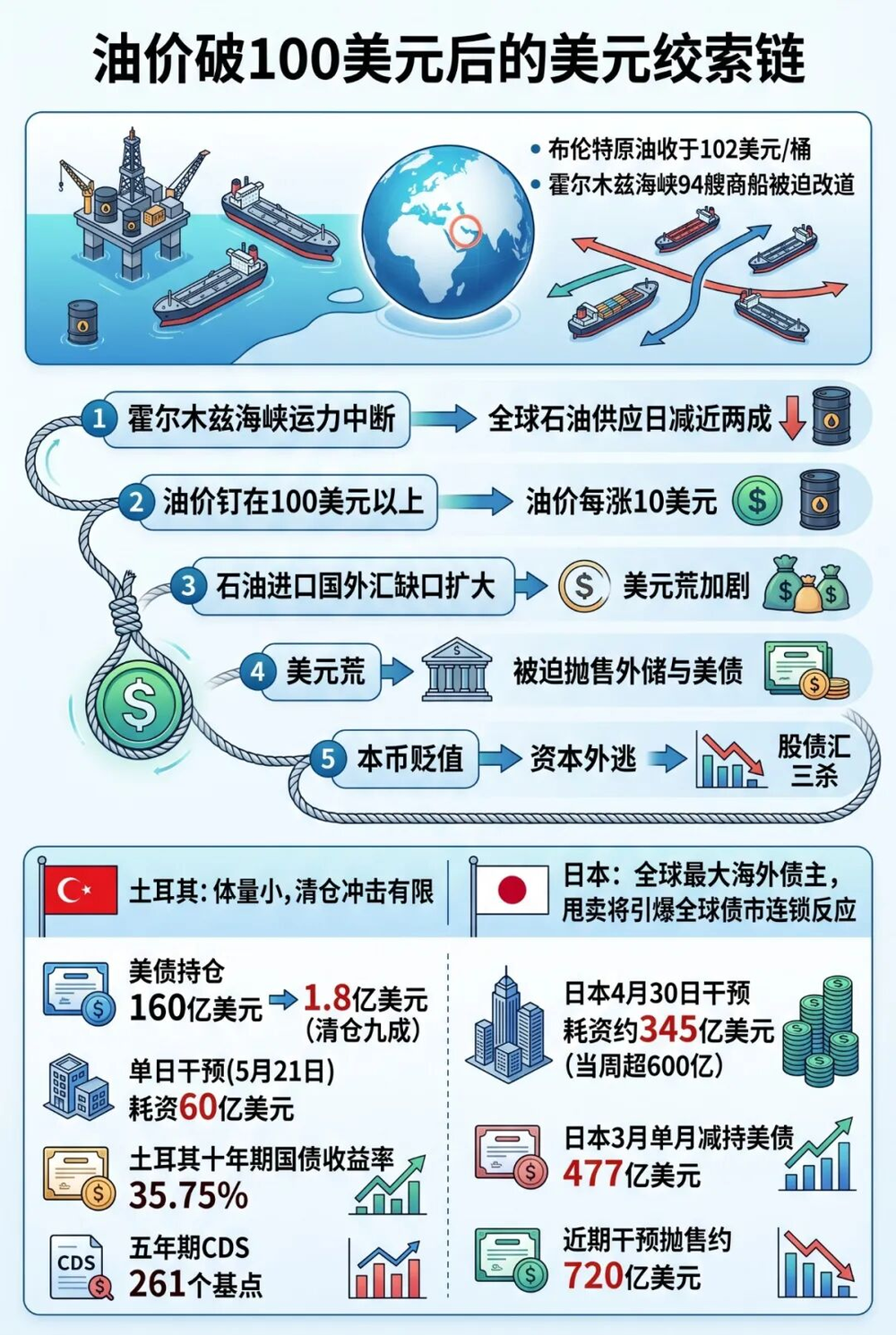
Understand the macroeconomic risks that could impact the global supply chain for AI infrastructure.
30-Second TL;DR
What Changed
油價維持高位導致進口國面臨嚴重的美元荒。
Why It Matters
Macroeconomic instability caused by energy prices can disrupt global supply chains and capital flows, indirectly affecting the cost of infrastructure and hardware for AI development.
What To Do Next
Monitor global energy prices and currency fluctuations as leading indicators for potential supply chain disruptions in GPU and server hardware procurement.
Key Points
- •油價維持高位導致進口國面臨嚴重的美元荒。
- •土耳其透過拋售外匯儲備與美債來支撐本幣,導致經濟脆弱性增加。
- •日本作為全球最大債權國,其干預匯率的行為對全球債市具有連鎖風險。
- •能源地緣政治與美元霸權使得石油進口國被迫承接高昂的成本。
Deep Insight
Background and context from public sources — not the original article. 23 sources cited.
Enhanced Key Takeaways
- •The International Monetary Fund (IMF) is actively preparing to assist countries facing balance of payment concerns due to heightened uncertainty from Middle East conflicts and rising oil prices, with approximately 50 countries already relying on its programs.
- •A sustained 10% increase in energy prices over a year could lead to a 40-basis-point rise in global inflation and a slowdown in economic growth by 0.1% to 0.2%.
- •The petrodollar system, where oil is predominantly traded in U.S. dollars and exporting nations reinvest these revenues into dollar-denominated assets, significantly reinforces the dollar's global dominance and influences international capital flows and interest rates.
- •Japan's foreign exchange interventions, notably in 2003-04 and more recently in April/May 2026, aim to stabilize the yen but also demonstrate a global portfolio balance effect, potentially lowering long-term interest rates in other countries through the investment of intervention proceeds in U.S. bonds.
- •Turkey's recent economic stabilization program, which included efforts to rebuild foreign exchange reserves, faced substantial setbacks due to the spike in energy prices from geopolitical conflicts, necessitating significant foreign currency sales to defend the lira and increasing government energy subsidies.
Technical Deep Dive
- Petrodollar Recycling Mechanism: Oil-importing countries pay for energy in U.S. dollars, and oil-exporting countries then reinvest these dollar revenues, often into dollar-denominated assets such as U.S. government bonds. This creates a cyclical flow that influences global financial markets and liquidity.
- Currency Intervention Mechanics (Japan): In Japan, the Ministry of Finance (MoF) directs the Bank of Japan (BoJ) to execute foreign exchange interventions. When the BoJ buys yen (selling dollars), it utilizes dollar funds from the Foreign Exchange Fund Special Account (FEFSA). To mitigate disruption to the U.S. bond market, Japan endeavors to fund these interventions using cash deposits, maturing assets, and interest income, rather than liquidating its holdings of U.S. Treasuries.
- Impact of Oil Shocks on Sovereign Debt (NARDL Method): Research employing the nonlinear autoregressive distributed lag (NARDL) method reveals asymmetric relationships between oil shocks, interest rates, and balance of payments on sovereign debt, as observed in countries like those in the Central African Economic and Monetary Community (CEMAC). A positive long-term oil price shock can increase sovereign debt, while negative short-term shocks can worsen debt services, indicating a procyclical behavior of debt.
- Mundell-Fleming Trilemma in Practice: Turkey's attempts to simultaneously maintain a stable exchange rate, an independent monetary policy, and free capital movement by expending its reserves illustrate the practical challenges of the Mundell-Fleming trilemma, which posits that a country can typically achieve only two of these three policy goals.
Future ImplicationsAI analysis grounded in cited sources
Timeline
- 1973-1974Arab Oil Embargo leads to significant oil price spike, contributing to a US recession and initiating the first major petrodollar recycling surge.
- 1979-1980The Iranian Revolution and Iran/Iraq War trigger a second major oil shock, causing oil prices to more than double and contributing to the Latin American debt crisis.
- 1982Mexico defaults on its debt, marking the beginning of the Latin American debt crisis and expanding the role of the IMF in global financial stabilization.
- 2003-2004Japan conducts substantial foreign exchange interventions, purchasing JPY 35 trillion (USD 340 billion) to manage the yen's value, with proceeds invested in US bonds, influencing global interest rates.
- 2026-02-28US-Israel strikes on Iran commence, causing global oil prices to surge and significantly impacting sovereign bond spreads in developing and emerging markets.
- 2026-04-04Turkey's foreign exchange reserves decline significantly, and the Central Bank of the Republic of Turkey (CBRT) sells over $26 billion in foreign currency to defend the lira amidst rising oil prices and geopolitical uncertainty.
Sources (23)
Factual claims are grounded in the sources below. Forward-looking analysis is AI-generated interpretation.
Weekly AI Recap
Read this week's curated digest of top AI events →
AI-curated news aggregator. All content rights belong to original publishers.
Original source: 虎嗅 ↗
This is a summary, not the original. Read the source, or get the weekly briefing.
The weekly digest
One email a week. Unsubscribe anytime.