OBSBOT Tail 2 Scales AI Esports Production
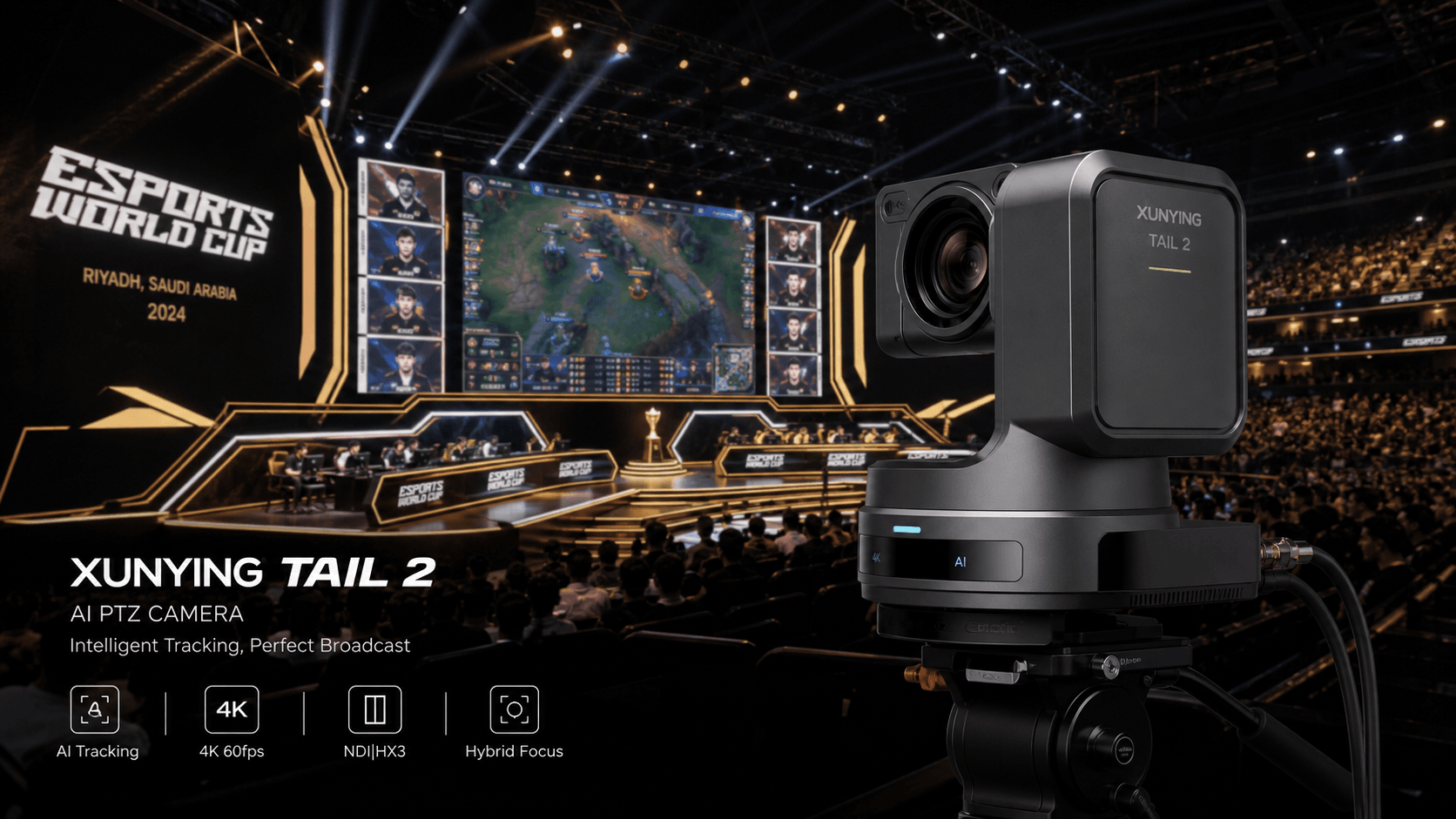
See how AI tracking lets one operator replace a 16-person esports camera team.
30-Second TL;DR
What Changed
500 OBSBOT Tail 2 AI cameras were deployed at EWC Paris.
Why It Matters
The deployment demonstrates how AI camera automation can reduce staffing requirements for large-scale live events while expanding production capacity. For production companies, it may accelerate adoption of autonomous tracking and remotely operated camera systems.
What To Do Next
Benchmark OBSBOT Tail 2’s AI tracking and PTZR controls against your current multi-camera workflow using a small live-event pilot.
Key Points
- •500 OBSBOT Tail 2 AI cameras were deployed at EWC Paris.
- •AI tracking allows one operator to manage 60–70 cameras.
- •PTZR gimbals help replace camera workflows previously requiring 16-person teams.
- •OBSBOT remains EWC’s official partner for a second consecutive year.
Deep Insight
AI-generated analysis for this event — not the original article.
Enhanced Key Takeaways
- •The OBSBOT Tail 2 utilizes a proprietary 'AI-Powered Auto-Director' algorithm that integrates multi-camera switching logic directly into the hardware ecosystem.
- •The deployment at the Esports World Cup (EWC) utilized a customized low-latency NDI (Network Device Interface) protocol to ensure real-time synchronization across the 500-unit camera network.
- •OBSBOT has integrated a new 'Gesture Control 3.0' system that allows esports players and casters to trigger specific camera movements or focus shifts without external operator intervention.
- •The Tail 2 hardware features an upgraded 1-inch CMOS sensor, a significant departure from the smaller sensors used in the original OBSBOT Tail, specifically optimized for low-light arena environments.
- •The partnership expansion includes a collaborative R&D initiative between OBSBOT and EWC organizers to develop automated 'highlight clipping' features that leverage AI to identify and record high-intensity gameplay moments.
Competitor Analysis
- OBSBOT Tail 2
- AI Esports/Streaming
- Insta360 Link
- Desktop/Personal
- Sony FR7
- Professional Cinema
- PTZOptics Move 4K
- Broadcast/Enterprise
- OBSBOT Tail 2
- Advanced AI Auto-Director
- Insta360 Link
- Gimbal-based AI
- Sony FR7
- AI Subject Tracking
- PTZOptics Move 4K
- AI Auto-Tracking
- OBSBOT Tail 2
- High (Massive Arrays)
- Insta360 Link
- Low (Single Unit)
- Sony FR7
- Medium (Studio)
- PTZOptics Move 4K
- Medium (Fixed)
- OBSBOT Tail 2
- Mid-Range
- Insta360 Link
- Entry-Level
- Sony FR7
- High-End
- PTZOptics Move 4K
- Mid-High
| Feature | OBSBOT Tail 2 | Insta360 Link | Sony FR7 | PTZOptics Move 4K |
|---|---|---|---|---|
| Primary Use | AI Esports/Streaming | Desktop/Personal | Professional Cinema | Broadcast/Enterprise |
| Tracking Tech | Advanced AI Auto-Director | Gimbal-based AI | AI Subject Tracking | AI Auto-Tracking |
| Deployment Scale | High (Massive Arrays) | Low (Single Unit) | Medium (Studio) | Medium (Fixed) |
| Pricing | Mid-Range | Entry-Level | High-End | Mid-High |
Technical Deep Dive
- Sensor: 1-inch CMOS sensor with enhanced dynamic range for high-contrast esports lighting.
- Gimbal: 3-axis mechanical gimbal with PTZR (Pan, Tilt, Zoom, Roll) capabilities and silent brushless motors.
- Connectivity: Integrated NDI|HX3 support for low-latency IP-based video production workflows.
- AI Processing: Dedicated Neural Processing Unit (NPU) for real-time subject tracking, skeleton recognition, and auto-framing.
- Control Interface: Supports OBSBOT Center software for centralized management of up to 70+ cameras via a single dashboard.
Future ImplicationsAI analysis grounded in cited sources
Timeline
- 2019-04OBSBOT launches the original OBSBOT Tail, the world's first AI-powered auto-director camera.
- 2022-09OBSBOT releases the Insta360 Link-competitor, the OBSBOT Tiny 4K, expanding into the webcam market.
- 2025-07OBSBOT establishes its first official partnership with the Esports World Cup, deploying initial AI camera fleets.
- 2026-05OBSBOT officially announces the Tail 2 with enhanced NDI support and multi-camera orchestration features.
- 2026-07OBSBOT Tail 2 is deployed at scale for the second consecutive EWC in Paris.
Weekly AI Recap
Read this week's curated digest of top AI events →
Related Updates




AI-curated news aggregator. All content rights belong to original publishers.
Original source: Pandaily ↗
This is a summary, not the original. Read the source, or get the weekly briefing.
The weekly digest
One email a week. Unsubscribe anytime.