Oak Fruit Launches Embodied Instinct Model Natus AGE-0
A new embodied model targets the data bottleneck in robotics and wins backing from two major investors.
30-Second TL;DR
What Changed
Natus AGE-0 is positioned as a new embodied AI model category focused on instinctive capabilities.
Why It Matters
The launch signals growing investment in embodied AI approaches intended to reduce dependence on large-scale real-world training data. If the model demonstrates transferable behaviors, it could attract attention from robotics developers and industrial AI companies.
What To Do Next
Track Natus AGE-0’s upcoming technical release and benchmark its zero-shot or few-shot control performance against your current robotics policy model.
Key Points
- •Natus AGE-0 is positioned as a new embodied AI model category focused on instinctive capabilities.
- •橡木果 claims the model is the world’s first embodied instinct model.
- •The startup secured angel-round funding from China Merchants Venture Capital and NIO Capital.
Deep Insight
AI-generated analysis for this event — not the original article.
Enhanced Key Takeaways
- •Oak Fruit (橡木果) was founded by former senior executives from leading Chinese tech firms, focusing specifically on bridging the gap between high-level reasoning and low-level motor control in robotics.
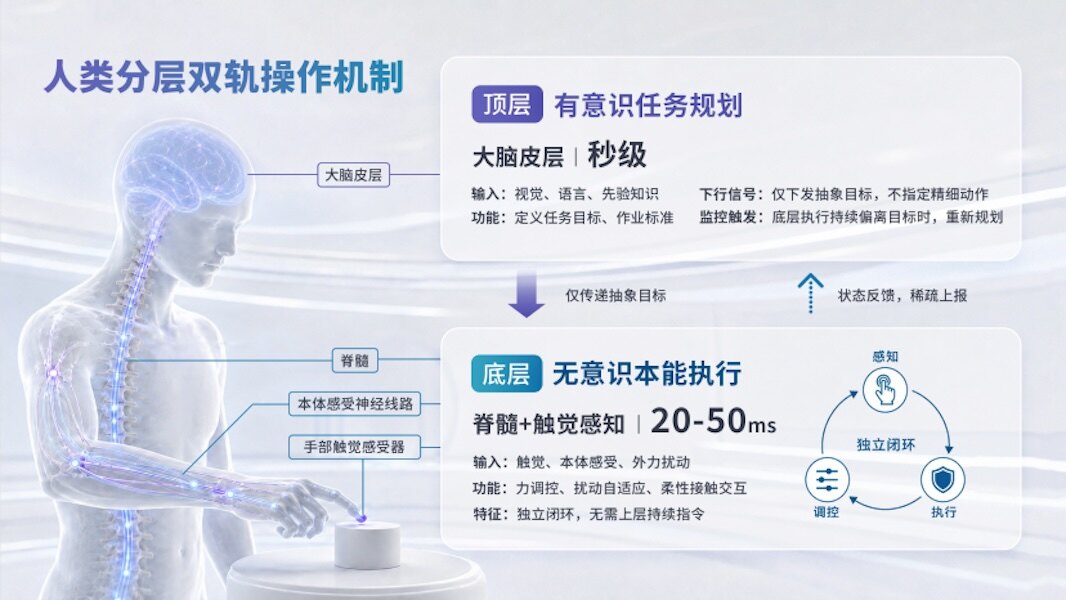
- •The 'Instinct' architecture in Natus AGE-0 is designed to mimic biological reflex loops, allowing robots to react to environmental stimuli in milliseconds without needing to query a central LLM.
- •The company is headquartered in Shanghai, leveraging the city's robust robotics supply chain to integrate their software models directly with proprietary hardware prototypes.
- •Natus AGE-0 utilizes a multimodal sensory-motor transformer architecture that processes tactile, visual, and proprioceptive data simultaneously to achieve 'instinctive' navigation.
- •The investment from NIO Capital suggests a strategic alignment with automotive and autonomous driving hardware, potentially positioning Oak Fruit's models for use in future humanoid or mobile robotic platforms.
Competitor Analysis
- Oak Fruit (Natus AGE-0)
- Embodied Instinct/Reflexes
- Tesla (Optimus/FSD)
- End-to-End Neural Control
- Figure AI
- General Purpose Humanoid
- Oak Fruit (Natus AGE-0)
- Instinct-based Reflex Loops
- Tesla (Optimus/FSD)
- Vision-Language-Action (VLA)
- Figure AI
- Foundation Model for Robotics
- Oak Fruit (Natus AGE-0)
- Specialized Reflex Layer
- Tesla (Optimus/FSD)
- Vertical Integration (Car/Bot)
- Figure AI
- General Purpose Embodied AI
| Feature | Oak Fruit (Natus AGE-0) | Tesla (Optimus/FSD) | Figure AI |
|---|---|---|---|
| Core Focus | Embodied Instinct/Reflexes | End-to-End Neural Control | General Purpose Humanoid |
| Architecture | Instinct-based Reflex Loops | Vision-Language-Action (VLA) | Foundation Model for Robotics |
| Market Positioning | Specialized Reflex Layer | Vertical Integration (Car/Bot) | General Purpose Embodied AI |
Technical Deep Dive
- Architecture: Employs a hierarchical control structure where the Instinct Layer operates at a higher frequency (sub-10ms latency) than the cognitive reasoning layer.
- Sensory Integration: Supports native fusion of high-frequency tactile feedback and visual depth maps to enable reactive grasping and obstacle avoidance.
- Training Methodology: Uses a combination of imitation learning from human teleoperation and large-scale reinforcement learning in simulated physics environments.
- Deployment: Designed to run on edge computing hardware, minimizing reliance on cloud-based inference for real-time motor commands.
Future ImplicationsAI analysis grounded in cited sources
Timeline
- 2025-06Oak Fruit (橡木果) is officially incorporated in Shanghai.
- 2026-03Company completes internal validation of the Natus AGE-0 prototype architecture.
- 2026-07Oak Fruit secures angel-round funding from China Merchants Venture Capital and NIO Capital.
- 2026-08Official public launch of the Natus AGE-0 embodied instinct model.
Weekly AI Recap
Read this week's curated digest of top AI events →
Related Updates


AI-curated news aggregator. All content rights belong to original publishers.
Original source: InfoQ中国 ↗
This is a summary, not the original. Read the source, or get the weekly briefing.
The weekly digest
One email a week. Unsubscribe anytime.