Nvidia Vera Targets Grok Agentic Workloads
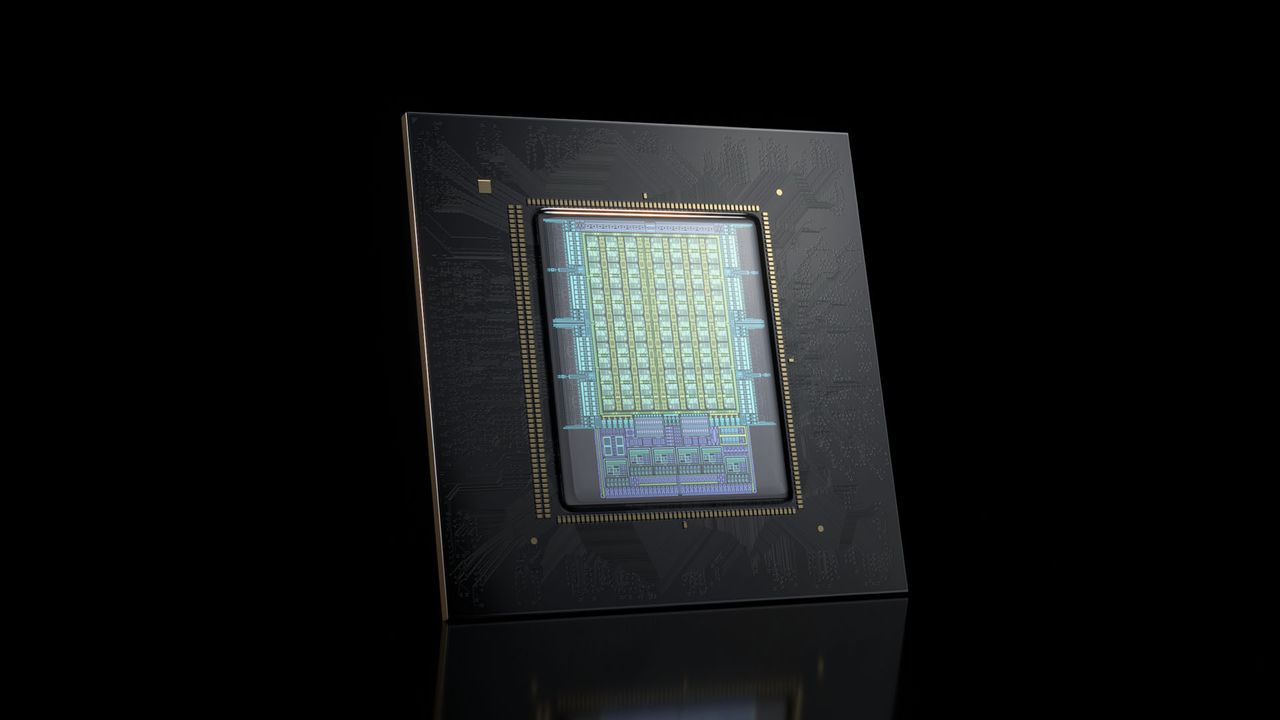
💡Nvidia claims Vera delivers 1.8x x86 performance for agentic AI tasks—even in space.
⚡ 30-Second TL;DR
What Changed
SpaceXAI plans to use standalone Nvidia Vera CPUs for Grok's agentic workloads.
Why It Matters
A dedicated CPU platform for agentic workloads could reduce reliance on conventional x86 systems in AI infrastructure. Space deployment would also test whether specialized AI computing can operate under highly constrained satellite environments.
What To Do Next
Benchmark your agent orchestration and reinforcement-learning pipelines against Vera-based systems when Nvidia releases supported SDKs and hardware access.
Key Points
- •SpaceXAI plans to use standalone Nvidia Vera CPUs for Grok's agentic workloads.
- •An optimized Vera Rubin NVL72 system is planned for deployment with the Starmind satellite.
- •Nvidia claims up to 1.8x faster performance than x86 processors for agentic, reinforcement-learning, and data-processing tasks.
🧠 Deep Insight
Background and context from public sources — not the original article. 14 sources cited.
🔑 Enhanced Key Takeaways
- •Nvidia Vera utilizes a custom-designed 'Olympus' core architecture, marking a strategic shift away from the stock Arm designs previously employed in the Grace CPU series.
- •The chip incorporates 'Spatial Multithreading' technology specifically engineered to mitigate bottlenecks in pointer-intensive, non-linear code typical of agentic AI workflows.
- •Nvidia utilizes a monolithic compute die design for the Vera CPU to eliminate the latency variability inherent in chiplet-based architectures.
- •The Vera CPU is designed to act as an orchestration layer that prevents GPU idle time by offloading complex tool-calling and logic processing from the Rubin GPUs.
- •Beyond AI applications, Nvidia is deploying Vera CPUs internally to accelerate its own Electronic Design Automation (EDA) workflows for hardware engineering.
📊 Competitor Analysis▸ Show
| Feature | Nvidia Vera | Intel Xeon (Emerald/Diamond Rapids) | AMD EPYC (Turin) |
|---|---|---|---|
| Core Architecture | Custom 'Olympus' | x86 (P-Core/E-Core) | x86 (Zen 5) |
| Primary Focus | Agentic AI Orchestration | General Purpose/Cloud | High-Performance Computing |
| Memory Bandwidth | 1.2 TB/s (LPDDR5X) | ~300-400 GB/s (DDR5) | ~400-500 GB/s (DDR5) |
| Integration | Rubin NVL72 Ecosystem | Standalone/Modular | Standalone/Modular |
🛠️ Technical Deep Dive
- Core Count: 88 custom Olympus cores.
- Memory Support: LPDDR5X with 1.2 TB/s peak bandwidth.
- Architecture: Monolithic compute die to minimize latency.
- Platform Integration: Part of the Vera Rubin NVL72 rack-scale system, including Rubin GPUs, Groq 3 LPX accelerators, and BlueField-4 storage processors.
- Optimization: Spatial Multithreading for handling irregular, pointer-heavy agentic code.
🔮 Future ImplicationsAI analysis grounded in cited sources
⏳ Timeline
📎 Sources (14)
Factual claims are grounded in the sources below. Forward-looking analysis is AI-generated interpretation.
Weekly AI Recap
Read this week's curated digest of top AI events →
👉Related Updates

AI-curated news aggregator. All content rights belong to original publishers.
Original source: Tom's Hardware ↗
This is a summary, not the original. Read the source, or get the weekly briefing.
Weekly AI briefing
One email a week. Unsubscribe anytime.