Intel Reveals Crescent Island AI Accelerator Details
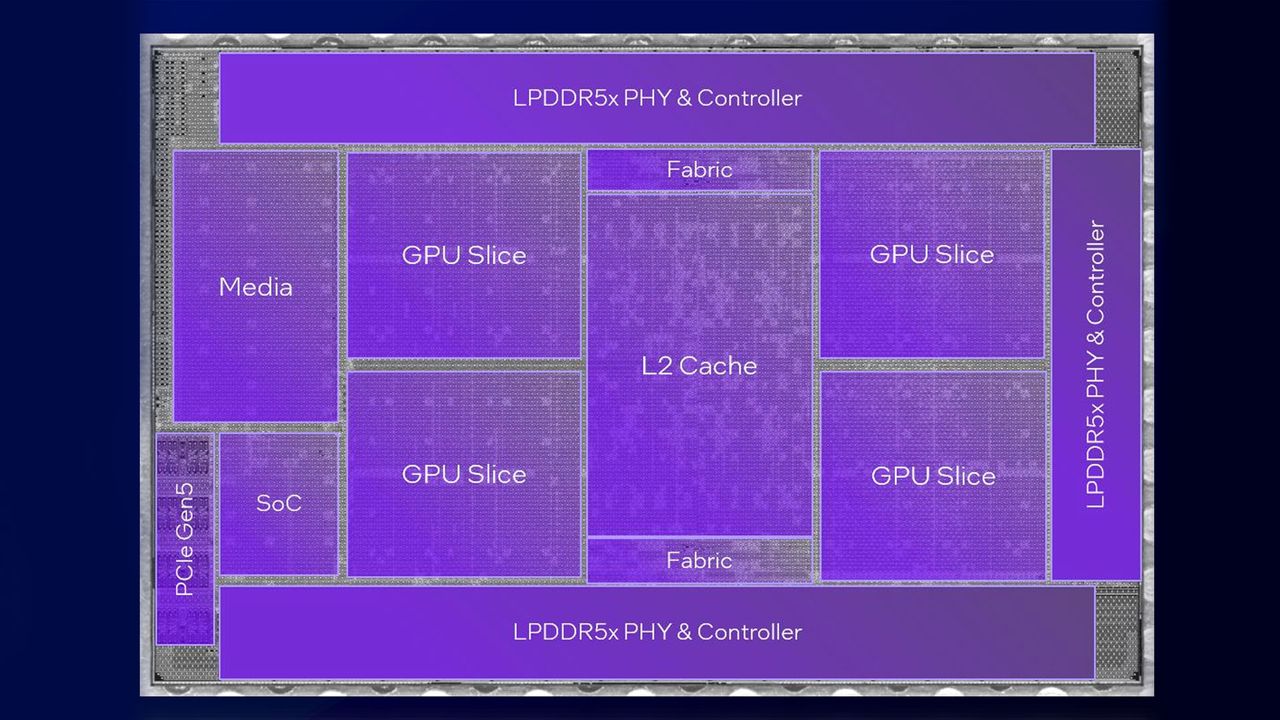
💡Intel's new Xe3P accelerator targets efficient, HBM4-powered data-center inference.
⚡ 30-Second TL;DR
What Changed
Crescent Island uses Intel's Xe3P architecture.
Why It Matters
Crescent Island could increase competition in data-center inference hardware, particularly where power efficiency and memory bandwidth are critical. Its practical impact will depend on availability, software support, and independent performance benchmarks.
What To Do Next
Track Intel's upcoming Crescent Island software stack and benchmark releases before considering it for inference-cluster evaluation.
Key Points
- •Crescent Island uses Intel's Xe3P architecture.
- •The accelerator targets data-center inference workloads.
- •HBM4, larger caches, and deeper XMX engines are designed to maximize AI FLOPS per watt.
- •Liquid-cooled chips support the accelerator's high-performance design.
🧠 Deep Insight
Background and context from public sources — not the original article. 8 sources cited.
🔑 Enhanced Key Takeaways
- •Crescent Island utilizes a 350W air-cooled PCIe form factor, specifically designed to bypass the need for the exotic liquid cooling infrastructure required by high-end competitors.
- •The architecture features 32 Xe3P cores organized into four slices, totaling 256 Xe Vector Engines and 256 XMX matrix accelerators.
- •The device supports up to 480 GB of LPDDR5X memory, providing a high-capacity, cost-effective alternative to HBM-based memory architectures for large model inference.
- •Intel has implemented a 16-deep systolic design for its XMX units, a four-fold increase in depth compared to previous generation architectures.
- •The Xe3P architecture introduces native hardware support for FP8 and FP4 data formats to maximize throughput for modern AI inference workloads.
📊 Competitor Analysis▸ Show
| Feature | Intel Crescent Island | Nvidia Rubin | AMD MI455X |
|---|---|---|---|
| Primary Focus | Inference-first | Training & Inference | Training & Inference |
| Cooling | Air-cooled (350W) | Liquid-cooled | Liquid-cooled |
| Memory Type | LPDDR5X | HBM4 | HBM4 |
🛠️ Technical Deep Dive
- Architecture: Xe3P (evolution of Panther Lake Xe3 graphics).
- Core Configuration: 32 cores, 4 slices, 256 Xe Vector Engines, 256 XMX units.
- Cache Hierarchy: 1 MB general-purpose register file per core; 512 KB L1 cache/shared local memory per core.
- Matrix Acceleration: 16-deep systolic XMX design.
- Data Formats: Native FP8 and FP4 support.
🔮 Future ImplicationsAI analysis grounded in cited sources
⏳ Timeline
📎 Sources (8)
Factual claims are grounded in the sources below. Forward-looking analysis is AI-generated interpretation.
Weekly AI Recap
Read this week's curated digest of top AI events →
👉Related Updates


AI-curated news aggregator. All content rights belong to original publishers.
Original source: Tom's Hardware ↗
This is a summary, not the original. Read the source, or get the weekly briefing.
Weekly AI briefing
One email a week. Unsubscribe anytime.