NVIDIA Teams with BYD, Geely for Robotaxis
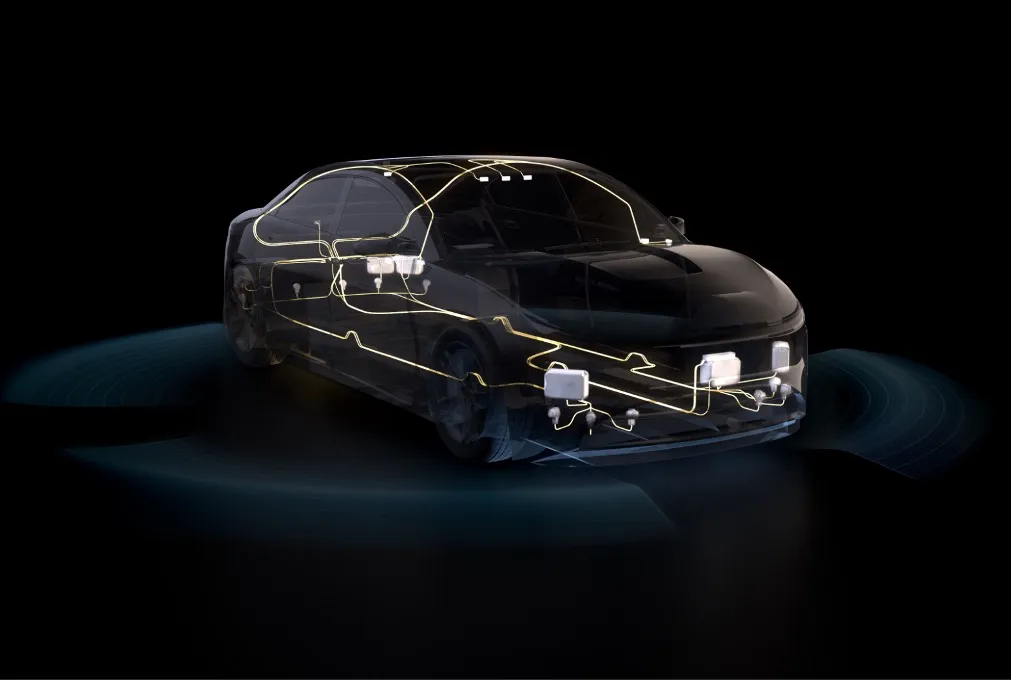
💡NVIDIA's AV platform hits Chinese giants BYD/Geely – edge AI boost for robotaxis
⚡ 30-Second TL;DR
What Changed
BYD and Geely adopt Drive Hyperion for robotaxis
Why It Matters
Strengthens NVIDIA's AV ecosystem with major Chinese and Japanese automakers, accelerating edge AI deployment in mobility and potentially lowering barriers for robotaxi scaling.
What To Do Next
Integrate Drive Hyperion SDK into your AV simulation pipeline for NVIDIA GPU-accelerated testing.
Key Points
- •BYD and Geely adopt Drive Hyperion for robotaxis
- •Nissan and Isuzu integrate platform for L4 AVs
- •Announced at NVIDIA GTC annual conference
🧠 Deep Insight
Background and context from public sources — not the original article. 8 sources cited.
🔑 Enhanced Key Takeaways
- •NVIDIA DRIVE Hyperion robotaxis will launch with Uber across 28 cities by 2028, beginning in Los Angeles and San Francisco in H1 2027, representing the first major commercial autonomous ride-hailing deployment using NVIDIA's full software stack[1][7]
- •NVIDIA introduced Halos OS, a new safety architecture built on ASIL D DriveOS foundations designed to meet automotive-grade safety standards and five-star NCAP ratings for autonomous vehicles[3]
- •Beyond automakers, mobility platforms including Bolt, Grab, Lyft, and TIER IV are scaling global robotaxi development using DRIVE Hyperion, signaling broader industry standardization around NVIDIA's platform[1][3]
- •Hyundai Motor Group expanded its partnership with NVIDIA to build autonomous driving systems on DRIVE Hyperion, combining the automaker's fleet data and software-defined vehicle capabilities with NVIDIA's AI computing, supporting deployment from Level 2 to Level 4 autonomy[6][8]
- •NVIDIA's Alpamayo AI model portfolio has been downloaded by over 100,000 developers, with version 1.5 released to accelerate autonomous vehicle development[1]
📊 Competitor Analysis▸ Show
| Aspect | NVIDIA DRIVE Hyperion | Tesla Autopilot/FSD | Waymo Driver |
|---|---|---|---|
| Platform Type | Reference architecture with standardized hardware/software stack | Vertically integrated in-house system | Proprietary autonomous driving software |
| Automaker Adoption | BYD, Geely, Nissan, Isuzu, Hyundai, Kia; mobility partners: Uber, Lyft, Bolt, Grab | Limited (primarily Tesla vehicles) | Limited partnerships; primarily Alphabet/Waymo owned |
| Robotaxi Deployment | 28 cities by 2028 (Uber partnership) | Limited robotaxi focus | Operating in select US cities |
| Safety Architecture | Halos OS (ASIL D certified) | Proprietary safety systems | Proprietary safety systems |
| Developer Ecosystem | 100,000+ Alpamayo model downloads | Closed ecosystem | Limited third-party access |
🛠️ Technical Deep Dive
- •DRIVE Hyperion is a comprehensive reference architecture integrating high-performance computing, sensors (cameras, radar, lidar), networking, and safety systems into a standardized platform[2]
- •The platform uses NVIDIA Drive AGX Thor system-on-chip for Level 4 autonomous vehicles, as demonstrated in Isuzu's autonomous bus project with TIER IV[3]
- •Halos OS implements a three-layer safety framework built on DriveOS foundations, incorporating active safety stacks designed to meet five-star NCAP ratings and ASIL D automotive safety standards[3]
- •DRIVE Hyperion enables continuous development cycles combining large-scale real-world driving data collection, AI model training and refinement, simulation, validation, and production deployment[6]
- •Alpamayo steerable driving models serve as open AI components within the platform, reducing development complexity by providing pre-trained models for autonomous driving tasks[1]
🔮 Future ImplicationsAI analysis grounded in cited sources
⏳ Timeline
📎 Sources (8)
Factual claims are grounded in the sources below. Forward-looking analysis is AI-generated interpretation.
- stocktitan.net — Byd Geely Isuzu and Nissan Adopt Nvidia Drive Hyperion for Level 4 Hvp9k0b7rlun
- electriccarsreport.com — Nvidia Drive Hyperion Adoption Accelerates As Global Automakers Push Toward Level 4 Autonomy
- motortrend.com — Nvidias Drive Hyperion Platform Gains New Automaker Partners for Level 4 Autonomous Vehicles
- techbuzz.ai — Nvidia Lands Byd Geely Nissan for Level 4 Robotaxis
- global.nissannews.com — Wayve and Nissan to Exhibit Global Robotaxi Prototype Vehicle at Nvidia Gtc 2026
- stocktitan.net — Hyundai Motor Kia and Nvidia Expand Strategic Partnership for Next Xt8p96ano707
- nvidianews.nvidia.com — Byd Geely Isuzu and Nissan Adopt Nvidia Drive Hyperion for Level 4 Vehicles
- nvidianews.nvidia.com — Hyundai Motor Kia Autonomous Driving
Weekly AI Recap
Read this week's curated digest of top AI events →
👉Related Updates


AI-curated news aggregator. All content rights belong to original publishers.
Original source: cnBeta (Full RSS) ↗
This is a summary, not the original. Read the source, or get the weekly briefing.
Weekly AI briefing
One email a week. Unsubscribe anytime.