NVIDIA RTX Spark chip could redefine Windows PCs
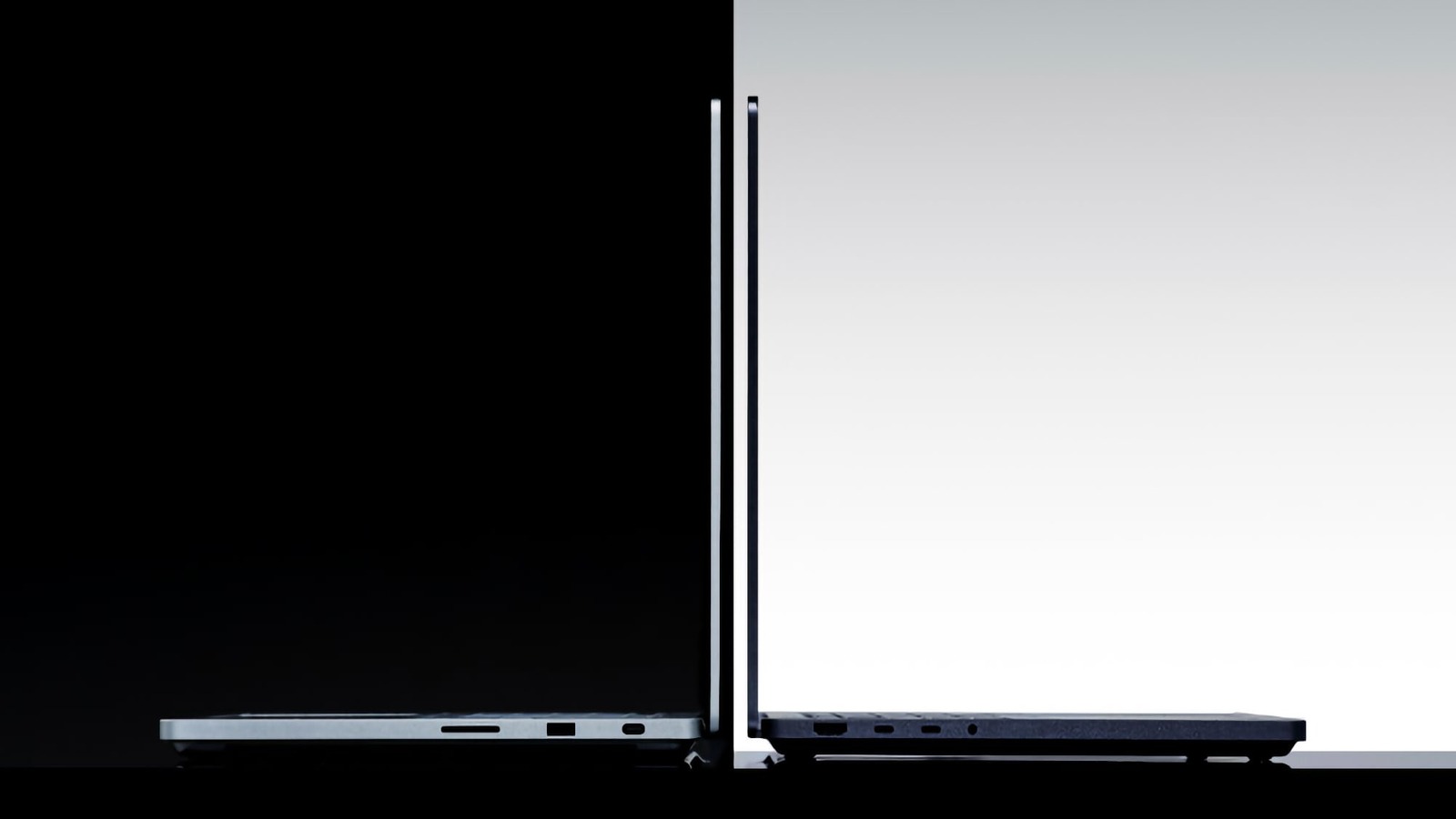
💡NVIDIA's move into ARM-based PC chips could disrupt the current Windows hardware landscape.
⚡ 30-Second TL;DR
What Changed
Integrates Arm CPU cores with high-performance GPU
Why It Matters
This chip could significantly narrow the performance gap between Windows laptops and Apple's M-series devices. It signals a major shift toward ARM-based architectures in the high-end PC market.
What To Do Next
Evaluate your software's compatibility with ARM-based Windows environments to prepare for future hardware shifts.
Key Points
- •Integrates Arm CPU cores with high-performance GPU
- •Utilizes unified RAM architecture for improved efficiency
- •Targets a paradigm shift in Windows PC hardware performance
🧠 Deep Insight
Background and context from public sources — not the original article. 17 sources cited.
🔑 Enhanced Key Takeaways
- •The NVIDIA RTX Spark chip was officially announced on May 31, 2026, at Computex, marking NVIDIA's formal entry into the Arm-based Windows PC processor market.
- •The chip integrates a 20-core NVIDIA Grace CPU with a Blackwell RTX GPU featuring 6,144 CUDA cores and fifth-generation Tensor Cores, delivering up to one petaflop of AI compute.
- •NVIDIA collaborated with MediaTek on the custom Arm CPU design, focusing on power efficiency, performance, and connectivity for the RTX Spark platform.
- •Microsoft is partnering with NVIDIA, providing Windows on RTX Spark with optimizations for unified memory, heterogeneous scheduling, power/thermal management, and the Windows 11 Prism emulator for x86/x64 applications.
- •RTX Spark is designed to enable demanding local AI workloads, such as running 120B-parameter large language models with up to 1 million tokens context, 12K video editing, and AAA gaming at 1440p and over 100 frames per second.
📊 Competitor Analysis▸ Show
| Feature / Competitor | NVIDIA RTX Spark | Qualcomm Snapdragon X Elite | Apple M-series (e.g., M4 Max) |
|---|---|---|---|
| CPU Cores | 20-core NVIDIA Grace (Arm) | Up to 12-core Oryon (Arm) | Up to 12-core (Arm) |
| GPU Architecture | Blackwell RTX (6,144 CUDA cores) | Adreno X1 | Integrated Apple GPU |
| Unified Memory | Up to 128 GB LPDDR5X-9400 | Up to 64 GB LPDDR5X | Up to 128 GB LPDDR5X/HBM3 |
| AI Performance (TOPS) | >100 TOPS (FP4) | ~45 TOPS (NPU) | High (specific TOPS not consistently cited for M4 Max) |
| Interconnect | NVLink-C2C (600 GB/s) | N/A (traditional SoC) | Unified Memory Architecture |
| Software Ecosystem | CUDA, RTX, DLSS, TensorRT, OpenShell | QNN, DirectML | Metal, Core ML |
| Target Market | Premium Windows laptops & compact desktops for AI, creators, gaming | Windows laptops for AI, productivity | MacBooks, Mac mini/Studio/Pro for creators, developers |
| Pricing | Unannounced (expected premium) | Varies by OEM | Varies by Apple product configuration |
🛠️ Technical Deep Dive
- CPU Architecture: Features a 20-core NVIDIA Grace CPU, which is Arm-based and leverages the Neoverse V2 architecture.
- GPU Architecture: Integrates a Blackwell RTX GPU with 6,144 CUDA cores and fifth-generation Tensor Cores, supporting FP4 precision.
- Interconnect: Utilizes NVIDIA's NVLink-C2C chip-to-chip interconnect, providing 600 GB/s of bidirectional bandwidth between the CPU and GPU.
- Unified Memory: Supports up to 128 GB of unified LPDDR5X-9400 memory, accessible by both CPU and GPU in a single address space.
- Manufacturing Process: Built on TSMC's 3nm process with 2.5D packaging.
- AI Compute Performance: Capable of delivering up to 1 petaflop of AI compute.
- Power Envelope: The flagship N1X (RTX Spark) is designed for a 45W to 80W package power range, with lower-power N1 variants targeting 18W to 45W.
- Software Optimizations: Windows on RTX Spark includes specific optimizations for unified memory, heterogeneous scheduling, power and thermal management, and the Windows 11 Prism emulator for x86 and x64 applications.
- Security Features: Incorporates NVIDIA OpenShell, offering policy capabilities for users to define agent actions, intelligently route queries, and disguise personal information for cloud models.
🔮 Future ImplicationsAI analysis grounded in cited sources
⏳ Timeline
📎 Sources (17)
Factual claims are grounded in the sources below. Forward-looking analysis is AI-generated interpretation.
Weekly AI Recap
Read this week's curated digest of top AI events →
👉Related Updates

AI-curated news aggregator. All content rights belong to original publishers.
Original source: Engadget ↗
This is a summary, not the original. Read the source, or get the weekly briefing.
The weekly digest
One email a week. Unsubscribe anytime.