Nvidia Projects $20B Vera Rubin Q3 Ramp
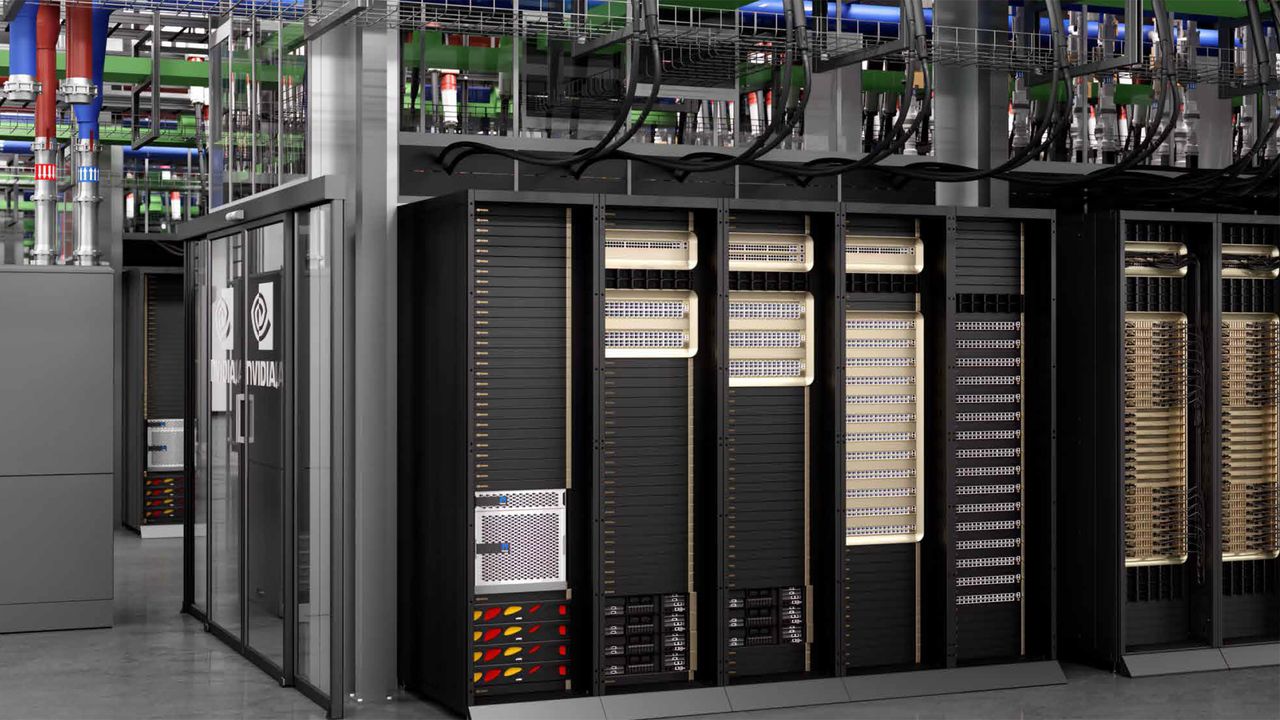
💡A projected $20B Q3 ramp could reshape GPU procurement and AI cluster planning.
⚡ 30-Second TL;DR
What Changed
Vera Rubin shipments are scheduled to begin in Nvidia’s third fiscal quarter.
Why It Matters
A fast Vera Rubin ramp could accelerate the replacement cycle for AI data-center infrastructure and intensify demand for advanced systems. Cloud providers and enterprise AI teams may face earlier procurement decisions, capacity constraints, and platform migration planning.
What To Do Next
Ask your infrastructure vendor for Vera Rubin availability, pricing, power, and migration timelines, then compare them with your current GPU cluster refresh plan.
Key Points
- •Vera Rubin shipments are scheduled to begin in Nvidia’s third fiscal quarter.
- •Nvidia projects $20 billion in Vera Rubin system sales during that quarter.
- •Vera Rubin hardware could account for 20% of data center revenue.
- •Nvidia describes the ramp as the fastest in its company history.
🧠 Deep Insight
Background and context from public sources — not the original article. 13 sources cited.
🔑 Enhanced Key Takeaways
- •The Vera Rubin platform utilizes a rack-scale architecture (NVL72) that integrates 72 Rubin GPUs and 36 Vera CPUs into a single liquid-cooled unit, moving away from standalone chip sales.
- •Nvidia projects an additional $20 billion in standalone revenue for the Vera CPU for the current fiscal year, targeting a new $200 billion total addressable market.
- •The platform achieves a tenfold increase in token throughput per megawatt compared to previous generations, specifically optimized for agentic AI workloads.
- •Nvidia is utilizing co-packaged-optics (CPO) technology with 200Gb/s SerDes in its new Spectrum-X Ethernet Photonics switches to support clusters reaching a million GPUs.
- •The production ecosystem for the MGX rack-scale systems involves over 150 partners in Taiwan and more than 350 factories across 30 countries.
📊 Competitor Analysis▸ Show
| Feature | Nvidia Vera Rubin (NVL72) | AMD Instinct MI400 Series | Intel Gaudi 4 |
|---|---|---|---|
| Architecture | Rack-scale (72 GPU/36 CPU) | Modular OAM/PCIe | Modular OAM |
| Interconnect | NVLink 6 | Infinity Fabric | Ethernet-based |
| Primary Focus | Agentic AI / Million-GPU clusters | High-performance compute / HPC | Cost-efficient inference |
🛠️ Technical Deep Dive
- Integration of six specialized chips: Rubin GPU, Vera CPU, NVLink 6 switch, ConnectX-9 SuperNIC, and BlueField-4 DPU.
- Rack-scale design utilizing liquid cooling for high-density thermal management.
- Implementation of Spectrum-X Ethernet Photonics for high-bandwidth, low-latency communication.
- 200Gb/s SerDes technology for inter-rack and intra-rack connectivity.
- Optimized for high-throughput token generation in large-scale agentic AI models.
🔮 Future ImplicationsAI analysis grounded in cited sources
⏳ Timeline
📎 Sources (13)
Factual claims are grounded in the sources below. Forward-looking analysis is AI-generated interpretation.
Weekly AI Recap
Read this week's curated digest of top AI events →
👉Related Updates


AI-curated news aggregator. All content rights belong to original publishers.
Original source: Tom's Hardware ↗
This is a summary, not the original. Read the source, or get the weekly briefing.
Weekly AI briefing
One email a week. Unsubscribe anytime.