NVIDIA Opens Alpamayo 2 Super for Commercial AVs
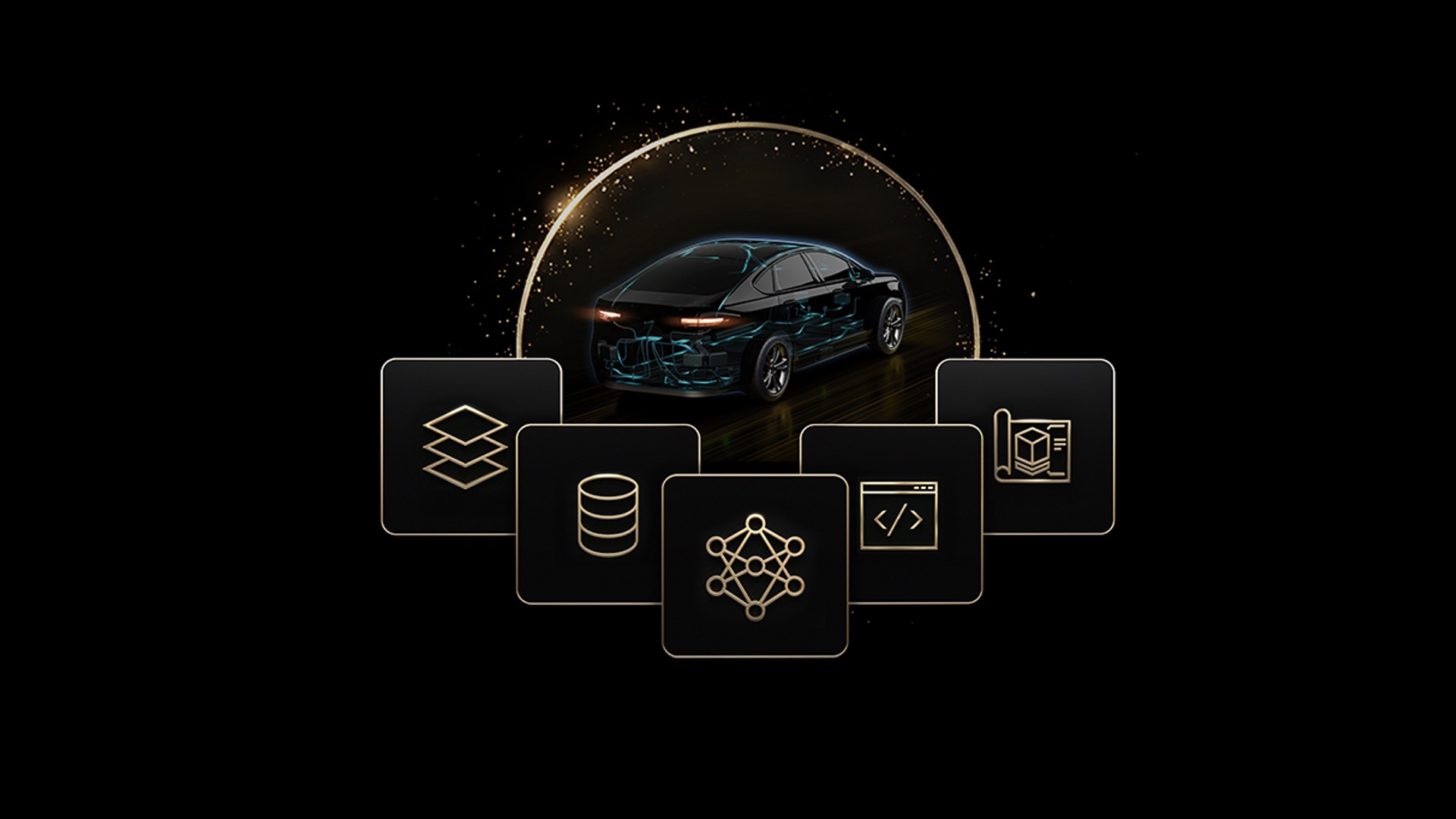
See how NVIDIA’s open model targets the hardest long-tail problems in autonomous driving.
30-Second TL;DR
What Changed
Alpamayo 2 Super is now available for commercial deployment.
Why It Matters
Commercial availability could lower the barrier for AV developers building systems for rare and difficult driving situations. Teams can evaluate an open model as part of their autonomy stack rather than relying only on conventional perception and prediction components.
What To Do Next
Download NVIDIA Alpamayo 2 Super and test it on a small set of rare, complex AV scenarios before considering production integration.
Key Points
- •Alpamayo 2 Super is now available for commercial deployment.
- •The model is designed for robotaxis and other autonomous vehicles.
- •It addresses rare, complex long-tail events beyond routine detection and motion prediction.
- •Its capabilities include situation understanding, causal reasoning, and action selection.
Deep Insight
AI-generated analysis for this event — not the original article.
Enhanced Key Takeaways
- •Alpamayo 2 Super utilizes a novel 'World Model' architecture that simulates physical interactions to predict multi-agent behavior in urban environments.
- •The model integrates NVIDIA's Blackwell-based GPU acceleration, specifically optimized for real-time inference on the DRIVE Thor platform.
- •NVIDIA has introduced a new 'Safety-First' training pipeline that uses synthetic data generated from Omniverse to stress-test the model against edge cases before deployment.
- •The release includes a proprietary 'Explainability Module' that provides human-readable logs for decision-making, aimed at meeting emerging regulatory requirements for autonomous vehicle transparency.
- •Alpamayo 2 Super supports multi-modal sensor fusion, allowing it to process raw LiDAR, radar, and camera data simultaneously without the need for intermediate pre-processing layers.
Competitor Analysis
- NVIDIA Alpamayo 2 Super
- World Model / Causal Reasoning
- Waymo Driver (Gen 6)
- End-to-End Neural Network
- Tesla FSD (v13+)
- Vision-Only Transformer
- NVIDIA Alpamayo 2 Super
- DRIVE Thor (Blackwell)
- Waymo Driver (Gen 6)
- Custom Compute Platform
- Tesla FSD (v13+)
- AI5 (Hardware 5)
- NVIDIA Alpamayo 2 Super
- Commercial API / SDK
- Waymo Driver (Gen 6)
- Vertically Integrated
- Tesla FSD (v13+)
- Consumer/Fleet Hybrid
- NVIDIA Alpamayo 2 Super
- Long-tail reasoning
- Waymo Driver (Gen 6)
- Proven safety record
- Tesla FSD (v13+)
- Massive real-world data fleet
| Feature | NVIDIA Alpamayo 2 Super | Waymo Driver (Gen 6) | Tesla FSD (v13+) |
|---|---|---|---|
| Architecture | World Model / Causal Reasoning | End-to-End Neural Network | Vision-Only Transformer |
| Hardware | DRIVE Thor (Blackwell) | Custom Compute Platform | AI5 (Hardware 5) |
| Deployment | Commercial API / SDK | Vertically Integrated | Consumer/Fleet Hybrid |
| Key Strength | Long-tail reasoning | Proven safety record | Massive real-world data fleet |
Technical Deep Dive
- Architecture: Employs a Transformer-based World Model capable of predicting temporal sequences of physical events.
- Inference Engine: Optimized for TensorRT-LLM to reduce latency in causal reasoning tasks.
- Training Data: Leverages a hybrid dataset consisting of 80% synthetic data from NVIDIA Omniverse and 20% real-world fleet telemetry.
- Latency: Achieves sub-50ms inference time for complex scene understanding on DRIVE Thor hardware.
- Integration: Compatible with NVIDIA DRIVE OS and supports modular integration with existing perception stacks.
Future ImplicationsAI analysis grounded in cited sources
Timeline
- 2024-03NVIDIA announces the DRIVE Thor platform at GTC.
- 2025-01Initial research preview of Alpamayo 1 released to select partners.
- 2025-11NVIDIA integrates Blackwell GPU architecture support into the DRIVE ecosystem.
- 2026-06Beta testing of Alpamayo 2 concludes with major robotaxi fleet operators.
- 2026-08Commercial launch of Alpamayo 2 Super.
Event Coverage
Weekly AI Recap
Read this week's curated digest of top AI events →
Related Updates
AI-curated news aggregator. All content rights belong to original publishers.
Original source: NVIDIA Blog ↗
This is a summary, not the original. Read the source, or get the weekly briefing.
The weekly digest
One email a week. Unsubscribe anytime.