Nvidia LPU Eyes HBM Market Share
💡Nvidia SRAM LPU: 20x faster inference, HBM threat or complement?
⚡ 30-Second TL;DR
What Changed
Nvidia to reveal Groq LPU at March 16 GTC for ultra-low latency inference.
Why It Matters
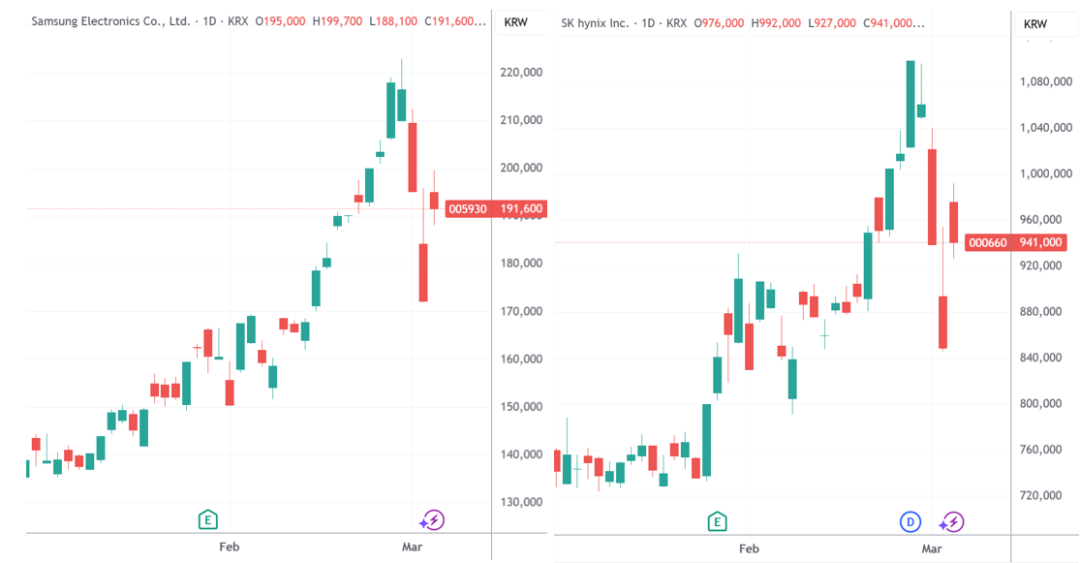
LPU could accelerate edge AI inference in robotics/autonomous driving, diversifying options but preserving HBM for training/large models. Memory stocks volatile amid rumors, rebounding on analysis.
What To Do Next
Watch Nvidia GTC keynote March 18 (US time) for LPU benchmarks vs HBM inference.
Key Points
- •Nvidia to reveal Groq LPU at March 16 GTC for ultra-low latency inference.
- •LPU integrates hundreds of Mb SRAM on-chip, 20x faster access than HBM.
- •Nvidia's $20B investment secures Groq team and non-exclusive patents.
- •SRAM requires 5-10x more area than DRAM for same capacity, limiting scale.
- •Huang: SRAM models ~100x smaller than HBM-supported large models.
🧠 Deep Insight
Background and context from public sources — not the original article. 7 sources cited.
🔑 Enhanced Key Takeaways
- •Nvidia's deal with Groq was structured as a $20B acqui-hire and non-exclusive IP licensing, acquiring founder Jonathan Ross (ex-Google TPU lead) and core engineers without buying the company itself.[1][2][5]
- •Groq's LPU achieves ~80 TB/s on-chip SRAM bandwidth and 10x energy efficiency (1-3 Joules per token vs. 10-30 on GPUs), eliminating GPU idle time from HBM fetches.[2][3][4]
- •Nvidia plans LPX racks with 64 LPUs initially (32 RealScale ASIC tiles), scaling to 256 LPUs by GTC 2026 for millisecond-latency token generation in real-time workloads.[6]
🛠️ Technical Deep Dive
- •LPU uses tensor-streaming processor with static scheduling and on-chip SRAM as primary weight storage (hundreds of MB), delivering 80 TB/s bandwidth without cache or HBM dependency.[1][2][3]
- •LPX rack integrates 64 LPUs as 32 RealScale ASIC tiles, enabling 10,000 thought tokens in ~2 seconds at small batch sizes; scales to 256 LPUs with 52-layer M9 Q-glass PCBs.[6]
- •Architecture ensures no wasted operations via deterministic compiler, outperforming GPUs by 10x throughput in batch-size-1 inference like NLP or real-time agents.[1][2]
🔮 Future ImplicationsAI analysis grounded in cited sources
⏳ Timeline
📎 Sources (7)
Factual claims are grounded in the sources below. Forward-looking analysis is AI-generated interpretation.
- youtube.com — Watch
- intuitionlabs.ai — Nvidia Groq AI Inference Deal
- markets.financialcontent.com — Tokenring 2026 1 19 the Inference Revolution How Groqs Lpu Architecture Forced Nvidias 20 Billion Strategic Pivot
- dev.to — The 20 Billion Strategic Warning Shot Why Nvidia Fused the Lpu Into the Cuda Empire 1394
- eetimes.com — Groq Nvidias 20 Billion Bet on AI Inference
- tspasemiconductor.substack.com — Gtc 2026 Outlook How Nvidia Is Redefining
- viksnewsletter.com — Gtc 2026 Preview Implications of Sram Decode
Weekly AI Recap
Read this week's curated digest of top AI events →
👉Related Updates

AI-curated news aggregator. All content rights belong to original publishers.
Original source: 虎嗅 ↗
This is a summary, not the original. Read the source, or get the weekly briefing.
Weekly AI briefing
One email a week. Unsubscribe anytime.