NVIDIA Launches Cosmos 3 Open Omni-model for Physical AI

💡NVIDIA's new open-weights model for physical AI could be the foundation for the next generation of robotic agents.
⚡ 30-Second TL;DR
What Changed
First open omni-model focused on physical AI reasoning
Why It Matters
This release significantly lowers the barrier for developers building embodied AI agents, potentially accelerating the deployment of intelligent robotic systems.
What To Do Next
Visit the Hugging Face hub to download the Cosmos 3 weights and test its reasoning capabilities on your robotic simulation environment.
Key Points
- •First open omni-model focused on physical AI reasoning
- •Designed to enable advanced action capabilities for robotics
- •Open-weights release to foster community development in embodied AI
🧠 Deep Insight
Background and context from public sources — not the original article. 12 sources cited.
🔑 Enhanced Key Takeaways
- •NVIDIA Cosmos 3 is distinguished as the world's first fully open omni-model, offering native vision reasoning and multimodal generation capabilities across text, image, video, ambient sound, and action for advanced synthetic data generation and physical AI policy model development.
- •The model is built upon a breakthrough mixture-of-transformers architecture, which integrates vision reasoning, world generation, and action prediction into a single system.
- •Cosmos 3 is designed to significantly reduce the time required for physical AI training and evaluation cycles, potentially cutting them from months to just days.
- •NVIDIA has established the NVIDIA Cosmos Coalition, a collaborative initiative with leading AI labs and robotics companies, to collectively advance the development of next-generation open world models.
- •The launch of Cosmos 3 aligns with NVIDIA's broader 'moonshot' robotics strategy, which prioritizes complex humanoid robot development, with the expectation that resulting AI advancements will benefit all robotics and autonomous systems.
🛠️ Technical Deep Dive
- Cosmos 3 is based on a breakthrough mixture-of-transformers architecture.
- It unifies synthetic world generation, vision reasoning, and action simulation capabilities.
- The model supports native multimodal generation across text, image, video, ambient sound, and actions.
- It is designed to accelerate physical AI training and evaluation, reducing cycles from months to days.
- Cosmos 3 is integrated within NVIDIA's comprehensive physical AI ecosystem, which includes the DGX for training, Omniverse (with Isaac Lab and Newton physics backend) for simulation, and Jetson (including Jetson Thor) for edge deployment.
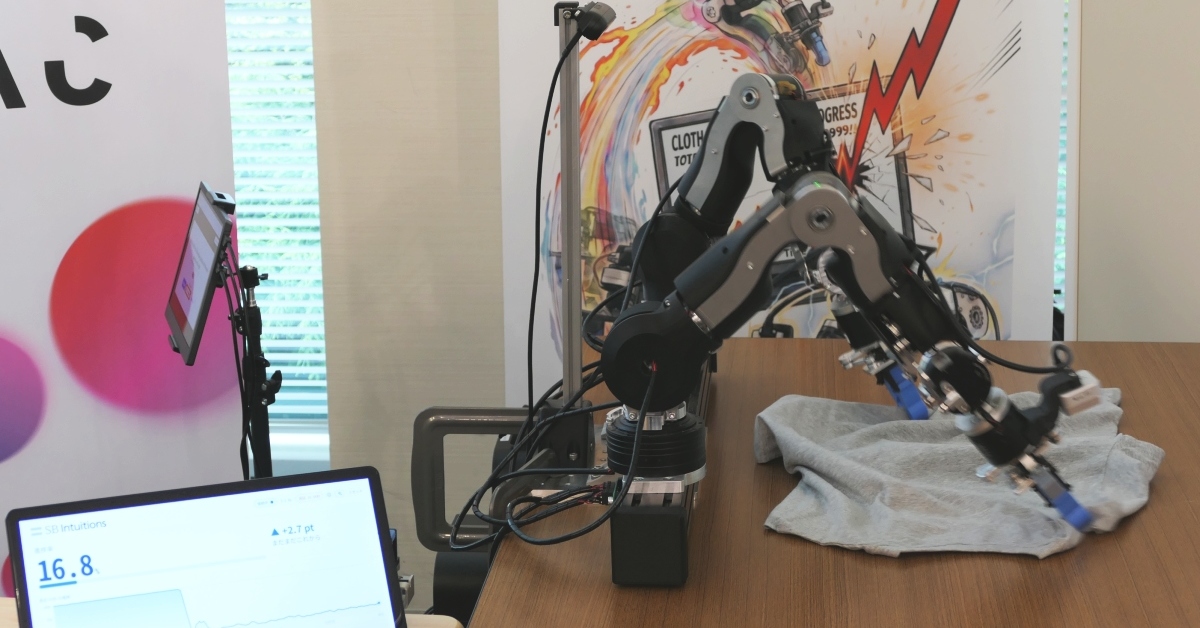
- Its primary function is to enable robots, autonomous vehicles, and vision AI agents to perform advanced reasoning and plan actions in the physical world.
🔮 Future ImplicationsAI analysis grounded in cited sources
⏳ Timeline
📎 Sources (12)
Factual claims are grounded in the sources below. Forward-looking analysis is AI-generated interpretation.
Weekly AI Recap
Read this week's curated digest of top AI events →
👉Related Updates

AI-curated news aggregator. All content rights belong to original publishers.
Original source: Hugging Face Blog ↗
This is a summary, not the original. Read the source, or get the weekly briefing.
The weekly digest
One email a week. Unsubscribe anytime.