NVIDIA Kyber Rack Packs 340TB of Memory
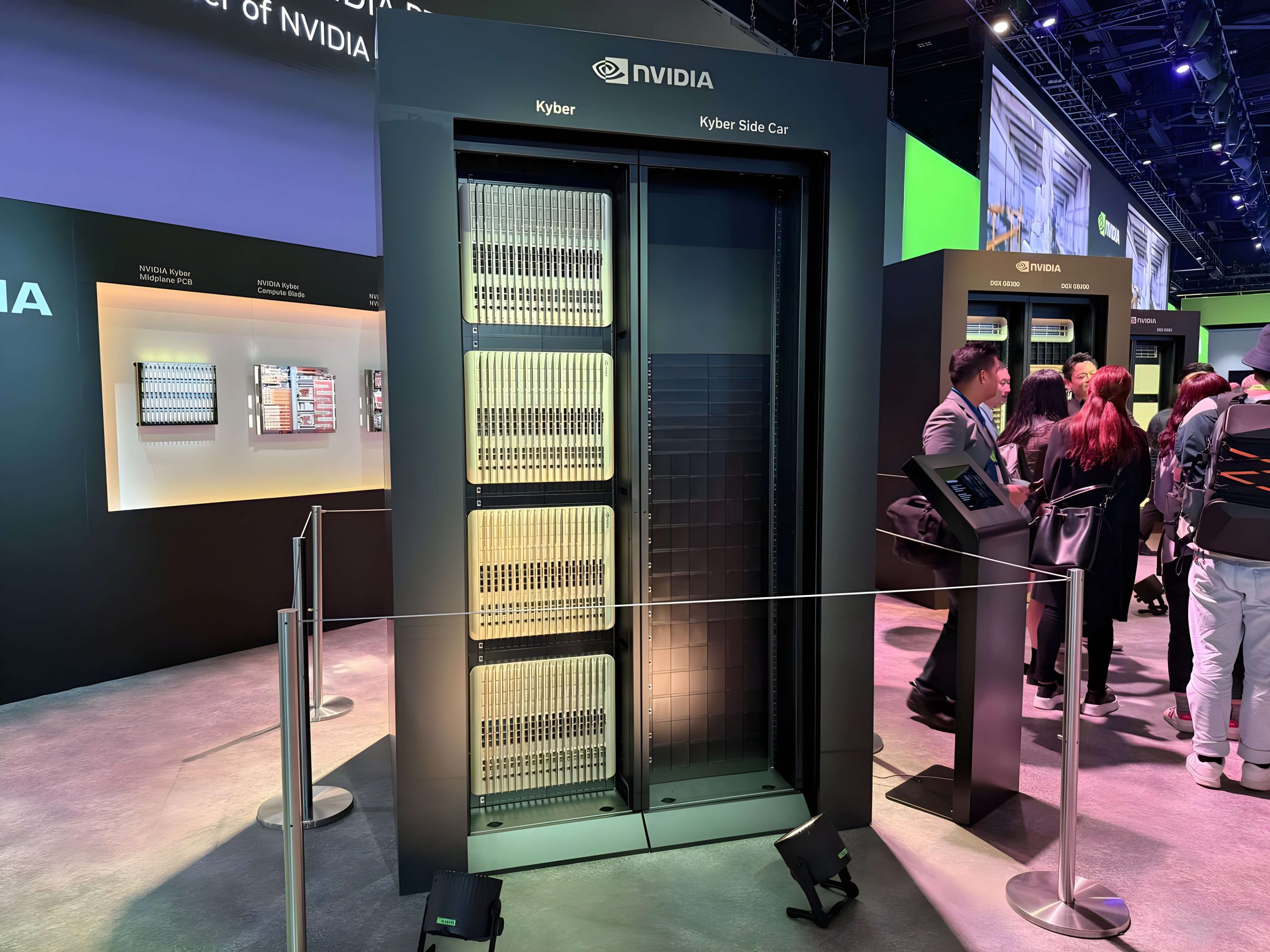
💡Kyber's projected 340TB memory footprint could redefine the cost of frontier AI racks.
⚡ 30-Second TL;DR
What Changed
The upcoming Vera Rubin Ultra Kyber rack is reported to include 340.4TB of total memory.
Why It Matters
The reported configuration highlights how memory, not just GPUs, is becoming a major constraint and cost driver for frontier AI infrastructure. If accurate, operators may need to revise cluster budgets, deployment density assumptions, and memory procurement strategies for next-generation systems.
What To Do Next
Update your AI cluster cost model to separate LPDDR5X and HBM4E costs, then run sensitivity scenarios for memory-price increases and 340.4TB-per-rack configurations.
Key Points
- •The upcoming Vera Rubin Ultra Kyber rack is reported to include 340.4TB of total memory.
- •LPDDR5X procurement costs reportedly exceed HBM4E spending for the first time.
- •Memory price increases and architectural changes are driving the cost shift.
- •The estimated total hardware cost could reach $41.6 million per rack.
🧠 Deep Insight
AI-generated analysis for this event.
🔑 Enhanced Key Takeaways
- •The Vera Rubin Ultra architecture utilizes a disaggregated memory approach, shifting from traditional GPU-local HBM to a tiered memory hierarchy that leverages LPDDR5X for massive capacity expansion.
- •Industry analysts suggest the $41.6 million price tag is driven by the integration of custom NVLink Switch chips that facilitate the massive memory pooling required for 340TB+ configurations.
- •Supply chain reports indicate that NVIDIA has secured long-term capacity agreements with major DRAM manufacturers to prioritize LPDDR5X production specifically for the Kyber rack ecosystem.
- •The shift toward LPDDR5X is necessitated by the physical limitations of HBM4E stacking, which currently cannot achieve the density required for the Kyber rack's target memory footprint.
- •Financial projections from Bank of America highlight that the Kyber rack's power delivery requirements exceed 150kW per rack, necessitating advanced liquid cooling infrastructure.
📊 Competitor Analysis▸ Show
| Feature | NVIDIA Kyber Rack | AMD Instinct MI400 Series | Google Trillium Pod |
|---|---|---|---|
| Memory Capacity | 340.4TB | ~128TB (Estimated) | ~64TB (Estimated) |
| Primary Memory | LPDDR5X / HBM4E Hybrid | HBM3E / HBM4 | HBM3E |
| Interconnect | NVLink Switch System | Infinity Fabric | Custom TPU Interconnect |
| Est. Rack Cost | ~$41.6M | ~$25M - $30M | N/A (Internal Only) |
🛠️ Technical Deep Dive
- Architecture: Utilizes a disaggregated memory fabric allowing GPUs to access a shared pool of LPDDR5X memory across the rack.
- Memory Hierarchy: Combines high-bandwidth HBM4E for local compute tasks with a massive LPDDR5X tier for model weights and context windows.
- Power Density: Designed for 150kW+ per rack, requiring direct-to-chip liquid cooling solutions.
- Interconnect: Employs 6th-generation NVLink Switch chips to maintain low-latency access to the 340TB memory pool.
- Scalability: Supports multi-rack clustering via InfiniBand/Ethernet convergence at 800Gbps+ per port.
🔮 Future ImplicationsAI analysis grounded in cited sources
⏳ Timeline
Weekly AI Recap
Read this week's curated digest of top AI events →
👉Related Updates
AI-curated news aggregator. All content rights belong to original publishers.
Original source: cnBeta (Full RSS) ↗